







How Do Cactus Plants Survive in the Desert?
Have you ever noticed that some plants have beautiful flowers whereas some plants do not have flowers? Some plants have pointed needle-like structures. Some plants have both flowers and spines. One such category of plant is known as the cactus. Cactus comes in lots of shapes, sizes, and varieties. Let’s learn more about Cactus, its benefits, interesting facts about cactus, and much more. First, let's have a look at what a cactus plant looks like.
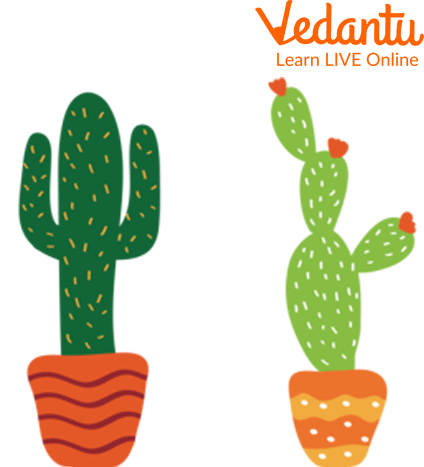
Cactus Plant
What are Cactus?
We can define cactus as a type of plant that grows in hot, dry areas such as deserts. The stem of a cactus plant is very thick and it has sharp points which are like needles. The plant does not have leaves.
A cactus is a thick fleshy plant that grows in different parts of the world. One can grow a cactus plant as an indoor plant in a pot. The Cactus plant has a very unique feature to conserve water which is why they can survive in a dry environment as they can have water stored inside them. This is a unique factor of the cactus plant. Cactus is a desert plant as they grow in dry places, these plants have sharp spines or needles which provide great protection to this plant. The family of cactus is Cactaceae, with nearly 2,000 species. The word Cactus is derived from Latin.

Cactus
Benefits of Cactus
Uses of Cactus include the following.
Cactus can reduce body fat and also can keep the heart strong.
Cactus fruit in diet can help to reduce the risk of strokes and other vascular diseases.
Consuming cactus plants also helps to protect nerve cells.
Cactus is rich in fibre and antioxidants.
This plant helps to keep the atmosphere of the house positive as it helps to clean the air as it removes pollutants from the air and thus improves the quality of air.
Cactus water is made from the fruit of cactus and it's very healthy to drink as it is low in calories and provides nutrients to the body.
Eating cacti is also good for losing weight.
The Cactus plant also helps to cure diabetes as it helps to decrease the blood sugar level and helps people to become healthy.
Cactus is an excellent source of vitamins like A, C, and E. It is loaded with vitamin C.
Regular consumption of cactus juice helps to eliminate viruses from the body and thus strengthens a person's immunity.
How long does Cactus live?
A cactus plant can live for hundreds of years. Cactus plants can be kept indoors or as well as outdoors. Indoor cactus can survive for 10 years or even more. Studies have found the oldest cactus plant which was about 300 years old.
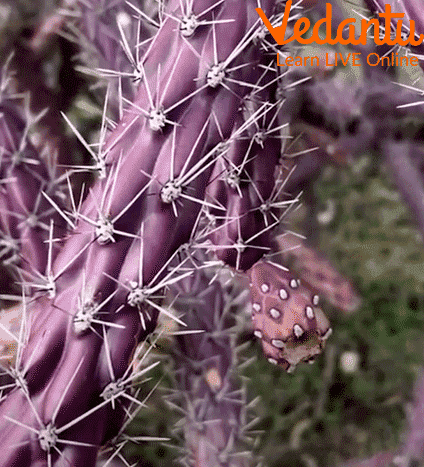
Purple Coloured Cactus Plant
Every kind of cactus plant is unique and requires little maintenance to survive as they are hard and they can live for many years.
Interesting Facts about Cactus
Cactus spines are not thorns, they are highly modified leaves.
The cactus plant needs to rest.
There are about 20 genera with some 1200 species and many hybrids found in the world.
Cactus plants can store an unbelievable amount of water in a short time.
The tallest cactus ever was over 78 feet tall.
Most species occur in arid environments such as deserts, tropical or temperate dry forests, chaparral habitats, sky islands, and rocky hillsides on coastal Mediterranean-type ecosystems.
Summary
From the article, we have learned about the Cactus, its features, interesting facts about the cactus, and much more. We have also learned that the Cactus is a plant that has immense benefits and it is used to keep the body fit and fine. Cactus is a slow-growing plant and the best time to give more water to this plant is in spring or summer and less in winter. Cacti show a wide range of shapes and sizes. On a whole, the cactus is a versatile plant.
FAQs on Cactus Facts Every Student Should Know
1. What is a cactus?
A cactus is a type of succulent plant that is specially adapted to survive in very hot and dry environments like deserts. Instead of leaves, most cacti have sharp spines, and they have thick, fleshy stems that store water to use during long periods without rain. The stem also performs photosynthesis, the process of making food, which is usually done by leaves in other plants.
2. Why do cacti have sharp spines instead of leaves?
Cacti have spines for two very important reasons related to survival in the desert:
Protection: The sharp spines discourage desert animals from eating the cactus to get to the water stored inside its stem.
Water Conservation: Leaves have tiny pores that release water into the air. By having spines instead of broad leaves, cacti drastically reduce water loss, helping them stay hydrated in the dry climate.
3. How do cacti survive for so long without rain?
Cacti are masters of water storage. Their survival strategy is based on their unique body parts. The thick, fleshy stem acts like a large water tank, soaking up large amounts of water whenever it rains. This stem has a thick, waxy coating that seals the water in and prevents it from evaporating under the hot desert sun. This stored water keeps the plant alive until the next rainfall.
4. If deserts are so dry, why don't cacti grow very deep roots to search for water?
This is a common misconception. Instead of growing deep, cactus roots are usually shallow and widespread, spreading out like a net just below the surface. This is a clever adaptation because, in a desert, rain is rare and often very light. These shallow roots are perfect for quickly absorbing any moisture from dew or brief showers before it can evaporate, making them more efficient than deep roots that might never reach the water table.
5. Can we eat a cactus? Is it a fruit or a vegetable?
Yes, parts of some cactus species, like the prickly pear cactus, are edible and can be considered both a fruit and a vegetable. The flat, green pads (called nopales) are treated as a vegetable in many dishes after their spines are removed. The colourful, pear-shaped fruit (called tuna) that grows on the pads is sweet and eaten as a fruit.
6. Is the water stored inside a cactus stem safe to drink in an emergency?
It is generally not safe to drink the liquid directly from a cactus stem. While it's a common idea in movies, the fluid inside most wild cacti is not pure water. It often contains bitter acids and other compounds that can make a person sick, causing vomiting or diarrhoea, which would lead to more dehydration. Only the juice from specific parts, like the prickly pear fruit, is safe to consume.
7. What are the main characteristics of a cactus plant?
The main characteristics that make a cactus unique are its adaptations to dry climates. These include:
Succulent Stems: Thick, fleshy stems that store water.
Spines: Modified leaves that protect the plant and prevent water loss.
Waxy Skin: A thick, waxy outer layer on the stem to reduce evaporation.
Shallow Root System: Roots that spread out wide near the surface to quickly collect rainwater.
Desert Habitat: They primarily grow in arid and semi-arid regions around the world.
