







Objectives activities and assessment in a preschool shapes and colours lesson plan
As the kids grow in our beautiful world, they see different shapes and colours. Our duty as parents and teachers is to make them identify those shapes and colours by their name. But having a hard time making your child and students learn the shapes and colours? Worry not, for you can resort to our help.
Here, we are presenting a comprehensive lesson plan on shapes and colours for preschool. This plan will be helpful for the kids as well as make the tedious task of making them learn for you easier.
Let us get started on how to teach our little monsters the shapes and colours of this wonderful world.
Concept Chart of the Plan
If the world is observed in a simple manner, we can see that the world is made up of different shapes and colours. So, pick any of the shapes or colours from the wide world, and let’s get started! Why the lesson plan?
The lesson plan is dedicated mainly-
For a Teacher to Plan Their Class - The activities can be carried out by engaging the students in colouring, or making different shapes with chart papers, hanging around the classroom and so on.
To Help The Children to Explore The World Around Them - We know the kids love to explore the world, they are always inquisitive about the shapes or colours, thus engaging them in these activities will satisfy their wandering minds.
Where to Start?
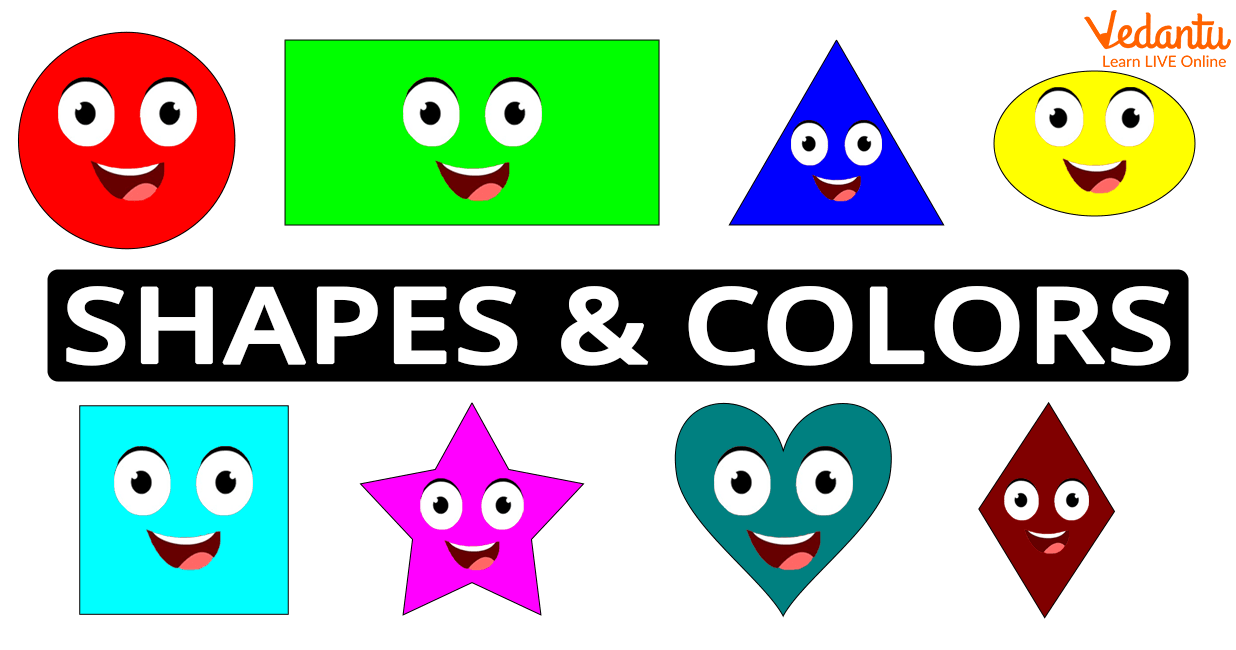
Shapes and Colours
As teachers or parents, we need to understand which pattern or colour attracts our child first. It might be simple structures like circles or even fascinating structures like the stars. They might be also curious about the colours in a rainbow, where you may explain to them the seven colours present in the rainbow.
Well, to Pin Down Your Kick-Start Plan, You Can Use The Format -
1. Firstly ask these questions to the kids -
Do you know what colours/shapes are?
Do you know which colour/shape is this? (pick up any object present nearby)
Don’t you think the colour/shape is brilliant?
Make them repeat the name of the colour/shape.
Now make them spell the colour name/shape name.
2. Practise the name of the colours and shapes regularly.
3. Hang the shapes in the classroom wall.
4. Make them colour in their colouring book with their colour pens.
5. Ask them to choose their favourite colour.
6. Play activities related to the colours and shapes - ask them to arrange the colours first then the shapes.
7. When they develop, ask them to draw the shapes and write their names.
8. After elementary teaching, ask them to pick up appropriate colours for each structure (like sun yellow, tree green).
These pointers are only tips and suggestions you can plan according to your preference.
Help at Home - Help for Parents
At home also you can engage your child with the colours and shapes. For some tips and suggestions, these pointers might be helpful -
Know your kid's favourite colour.
Make them meals of their favourite colours.
You can play with your child with shapes - like making castles with different structures or helping them to build blocks.
Involve in the fun activity with them like - painting or colouring their favourite drawing or colouring book.
Make colourful days - like making them wear a blue colour dress on Mondays, in green on Tuesdays, pink on Wednesdays, etc.
Whenever they question you about anything, answer them and ask them back questions on the same structure about its shape and colour. This will make them realise the different shapes and colours.
While taking a walk, ask them to objectify the structures with shapes and colours like 7 structures with red colour or 7 square-shaped structures.
Colour their bedroom wall with their favourite colours.
Hang shapes in their rooms.
This was a comprehensive plan on the lesson of shapes and colours which you can use as a teacher or parent. Make sure to revise the colours and shapes regularly and let them get inquisitive.
FAQs on Lesson Plan on Shapes and Colours for Preschool Children
1. What is a lesson plan on shapes and colours for preschool?
A lesson plan on shapes and colours for preschool is a structured guide that helps teachers introduce basic shapes and colours through fun and simple activities. It usually includes clear learning objectives, materials, activities, and assessment methods.
- Objective: Identify basic shapes and colours
- Materials: Flashcards, blocks, crayons
- Activities: Sorting, colouring, matching games
- Assessment: Oral questioning or worksheet tasks
2. How do you introduce shapes and colours to preschoolers?
You introduce shapes and colours to preschoolers by using visual aids, real objects, and interactive activities. Start with simple and familiar examples.
- Show a circle, square, and triangle using flashcards
- Display basic colours like red, blue, and yellow
- Ask children to point to objects in the classroom
- Sing songs or rhymes about shapes and colours
3. What are the basic shapes taught in preschool?
The basic shapes taught in preschool are simple geometric forms that children can easily recognize and draw. These commonly include:
- Circle
- Square
- Triangle
- Rectangle
- Oval
4. What colours should preschoolers learn first?
Preschoolers usually learn basic primary and common colours first to build a strong foundation. The most common starting colours are:
- Red
- Blue
- Yellow
- Green
- Orange
5. What are the objectives of teaching shapes and colours in preschool?
The main objective of teaching shapes and colours in preschool is to develop early cognitive and visual recognition skills. Key learning objectives include:
- Identify and name basic shapes
- Recognize and name common colours
- Sort objects by shape or colour
- Improve fine motor skills through colouring and drawing
6. What activities can be used to teach shapes and colours?
Fun and interactive activities are the most effective way to teach shapes and colours in preschool. Popular activities include:
- Shape sorting games
- Colour matching worksheets
- Drawing and colouring tasks
- Building shapes with blocks
- Scavenger hunts for coloured objects
7. How do you assess preschoolers’ understanding of shapes and colours?
You assess preschoolers’ understanding of shapes and colours through simple observation and interactive tasks. Effective assessment methods include:
- Asking children to name a shown shape or colour
- Matching shapes to outlines
- Sorting objects by colour
- Completing a simple colouring worksheet correctly
8. Why is teaching shapes and colours important in early childhood education?
Teaching shapes and colours is important because it builds foundational skills for math, reading, and writing. Learning these concepts helps children:
- Develop visual discrimination
- Improve vocabulary and descriptive language
- Strengthen memory and attention
- Prepare for geometry and pattern recognition
9. How long should a preschool lesson on shapes and colours be?
A preschool lesson on shapes and colours should typically last 20 to 30 minutes to match young children’s attention spans. A balanced lesson may include:
- 5 minutes for introduction
- 10–15 minutes for activities
- 5–10 minutes for review and recap
10. Can you give an example of a simple lesson plan on shapes and colours?
A simple lesson plan on shapes and colours for preschool includes a clear objective, materials, and engaging activities. Example structure:
- Objective: Students will identify circle and square and name red and blue.
- Materials: Shape flashcards, coloured paper, crayons.
- Activity: Children colour a circle red and a square blue.
- Review: Ask, “What shape is this?” and “What colour is it?”
