







What Are Human Rights For Kids Definition Types and Real Life Examples
Human Rights are the basic requirements guaranteed to a human because he or she simply belongs to the human race. If we think of whom all comes under the category of rights, it is everybody, regardless of colour, race, gender, nationality, language, or religion. Some basic human rights lists contain the right to travel, the right to freedom of speech, the right to life and liberty, the right to practice any religion, and so on. In this article, we will talk about basic human rights, the human rights and responsibilities list, the definition of rights, and their importance.
Basic Human Rights for Kids
To understand the whole human race as one and to give them the basic requirements in the set of rules and regulations is known as basic human rights. There stands a difference between human rights and civil rights which are guaranteed by the government to their citizens. Human rights are also known as universal rights as they are available to everybody irrespective of age, gender, race, or religion and so they are also known as basic human rights.
Children's rights are a part of human rights, ensuring the protection and well-being of children as individuals. These rights include:
Protection from harm, including freedom from slavery, torture, and mistreatment.
Access to education, healthcare, shelter, and proper nutrition.
The right to express opinions and speak freely.
The right to equality.
A clean environment and a safe living space.
The right to life.
Personal security.
Freedom from cruel, inhuman, or degrading treatment.
The right to identity and nationality.
A decent standard of living.
The United Nations Convention on the Rights of the Child (UNCRC), adopted in 1989, is the most widely ratified human rights treaty. It focuses on protecting children from harm, ensuring their growth and development, and empowering them to participate in society.
Before this, the Declaration of the Rights of the Child, adopted by the UN General Assembly in 1959, laid the foundation for international laws concerning children's rights.
Also Check: Speech on Human Rights
Definition of Human Rights for Kids
What is a Right for Kids?
The definition of rights stands as basic guaranteed powers regardless of any difference to the human race as one and they are duties of the government to be protected in every situation. They are basic in nature and stand valid for all in every situation leaving some critical rare situations.
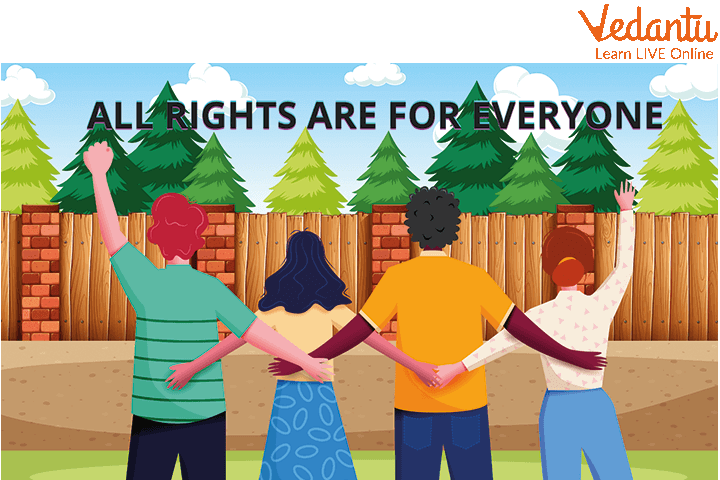
The Importance of All Rights for All the People
5 Basic Human Rights
Many human rights are recognised by all the countries around the globe but the five human rights which are widely guaranteed are firstly the right to life secondly the right to freedom from torture, the right to freedom of work followed by the right to freedom of expression, and the last right to religion all these constitute 5 basic human rights. There are many other things on the list leaving all these 5 basic human rights.
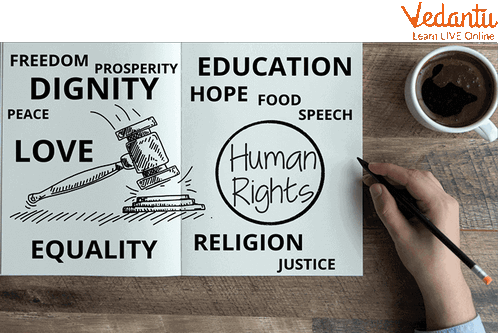
Different Basic Human Rights
The Human Right to Travel
Basic human rights are guaranteed by the government and some are recognised worldwide by different international bodies as a united nation which was formed for the betterment and safeguards of rights.
According to the UN Universal Declaration of Human Rights (Article 13.1), everyone has the right to the freedom of movement and residence within the borders of each state, and everyone has the right to leave any country, including his own, and to return there. In some countries like India, the right to travel comes under the right to liberty.
This right is not limitless as it comes with some restrictions for the safety, border, and resident period but the right to move allows the human right to travel for visits, jobs, vacation, and settlements and are based on periods as per different countries’ rules.
Human Rights Day Celebrated Worldwide
Human Rights and Responsibility List
As human rights are the fundamental source to the protection of life it is to be protected and guarded which comes with the responsibilities of the government. The human rights list and the responsibilities list are as follows.
Read About: Speech on Human Rights Day
How are Children’s Rights Violated?
Sadly, children’s rights are often violated worldwide, starting from birth. For example, 290 million children lack birth registration, leaving them without legal identity or proof of existence. This prevents access to education, healthcare, and future opportunities like jobs. Girls in low-income countries face even higher risks, with only a 50% chance of having a legal identity and claiming their rights.
Globally, over 61 million children are out of primary school. Each year, 150 million girls and 73 million boys face sexual abuse. In some places, girls as young as nine are forced into marriage, and children as young as six are treated as adults in criminal courts. Around 330,000 migrant and refugee children are held in detention yearly, often separated from their families.
Extreme poverty affects one in six children, increasing risks like domestic violence, child labour, exploitation, and early marriage. During the Covid-19 pandemic, this number grew significantly. Additionally, in 2020, nearly 820 million children lacked basic handwashing facilities at school, violating their right to health and exposing them to greater risks of infection.
List of Human Rights for Kids
The Declaration of Human Rights for Kids explains the basic rights that every child should have, like the right to be safe, go to school, have enough food, and live without fear. It ensures all children are treated with fairness, respect, and care, no matter where they are from.
Right to life
Right to freedom of expression
Right against exploitation
Right to education
Right to Religion
Right to equality
Right to equality before the law
Right to constitutional remedies
Right to Movement
Right to assemble and many more
Responsibilities List
The government has to provide basic human rights to its citizens.
Government has to promote and protect the human rights of the individual
Government has to think about new ideas for better implementation of rights
The government has to protect the basic human rights of outsiders from nationals.
Punish and take violations of human rights seriously.
To summarise, human rights are the basic rights focusing on the whole of mankind as one and are guaranteed based on the oneness of the entire human race. It is known as basic because of its nature of origin, its adaptability, and how it applies to all irrespective of class, colour, race, location, nationality, gender, or any other difference amongst the whole human tribe. It is different from civil rights which are guaranteed and made as per government but it is still promoted and protected by the government and forms the basis for the human rights and responsibilities list of the government.
FAQs on Human Rights For Kids Explained in Simple Words
1. What are human rights for kids?
Human rights for kids are the basic rights and freedoms that every child has simply because they are human. These rights are designed to protect children and help them grow safely and with dignity.
- They include the right to education, healthcare, and protection.
- They apply to all children regardless of race, gender, religion, or nationality.
- They are recognized globally in the UN Convention on the Rights of the Child (UNCRC).
2. Why are human rights important for children?
Human rights are important for children because they ensure safety, equality, and healthy development. These rights help children live with dignity and opportunity.
- They protect children from abuse, neglect, and exploitation.
- They guarantee access to education and healthcare.
- They promote fairness and equal treatment in society.
3. What is the UN Convention on the Rights of the Child?
The UN Convention on the Rights of the Child (UNCRC) is an international agreement that sets out the civil, political, economic, social, and cultural rights of children. Adopted in 1989, it guides governments in protecting children’s rights.
- It defines a child as anyone under 18 years old.
- It outlines rights such as education, protection, and participation.
- Most countries in the world have agreed to follow it.
4. What are the basic rights of every child?
The basic rights of every child include the right to survival, development, protection, and participation. These four core categories summarize children’s human rights.
- Survival rights: food, shelter, healthcare.
- Development rights: education and play.
- Protection rights: safety from harm and abuse.
- Participation rights: expressing opinions and being heard.
5. Do all children have the same human rights?
Yes, all children have the same human rights regardless of background or ability. Children’s rights are based on the principle of non-discrimination.
- Rights apply equally to boys and girls.
- They apply to children of all races, religions, and nationalities.
- Children with disabilities have the same rights and may need extra support to enjoy them fully.
6. What is the right to education for children?
The right to education means every child is entitled to free and compulsory primary education. This right ensures children can learn and develop skills for the future.
- Schools should be safe and inclusive.
- Education should promote respect and understanding.
- Children should not be denied education because of poverty or discrimination.
7. What does the right to protection mean for kids?
The right to protection means children must be kept safe from violence, abuse, neglect, and exploitation. Governments and adults are responsible for ensuring this safety.
- Children should be protected from child labor and trafficking.
- They must be safe from physical and emotional harm.
- Special protection is needed in emergencies like war or natural disasters.
8. Can children express their opinions under human rights?
Yes, children have the right to express their views freely in matters that affect them. This is known as the right to participation.
- Adults should listen to children’s opinions seriously.
- Children can share their thoughts at school and at home.
- Their views should be considered according to their age and maturity.
9. What responsibilities come with children’s human rights?
Children’s human rights come with the responsibility to respect the rights of others. Rights and responsibilities work together in a fair society.
- Children should respect other people’s opinions and cultures.
- They should follow school rules and laws.
- Using rights responsibly helps maintain equality and peace.
10. How can children learn about their human rights?
Children can learn about their human rights through education, discussion, and awareness programs. Understanding rights helps children protect themselves and others.
- Schools can teach lessons about children’s rights and the UNCRC.
- Parents and teachers can discuss fairness and equality.
- Books, child-friendly materials, and community programs also promote awareness.
