







Rules and Examples for Converting Assertive to Interrogative Sentences
Understanding How to convert assertive sentences to interrogative sentences is a key skill in mastering English grammar. This transformation not only helps in forming questions, but also in varying sentence structures for effective communication. In this guide, we’ll explore the meaning, definition, and uses of assertive and interrogative sentences, with clear examples and tips to ensure you can confidently convert between the two.
 Table of Content
What is Assertive and Interrogative Sentences?
An assertive sentence is a statement that declares something as true, while an interrogative sentence is a question that seeks information. The process of converting assertive sentences to interrogative sentences involves altering the word order and sometimes adding auxiliary verbs to create a question.
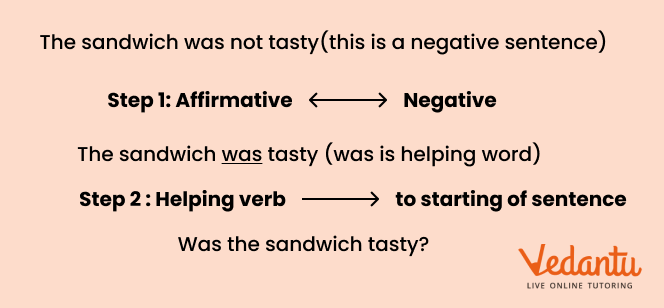
You can easily convert an assertive sentence to an interrogative one in two simple steps:
Change the sentence from positive to negative, or vice versa.
Move the helping verb to the beginning of the sentence.
Let us understand with an example:
Examples
Assertive to Interrogative:
Assertive: She is coming to the party.
Interrogative: Is she coming to the party?
Assertive: They have completed the project.
Interrogative: Have they completed the project?
More Examples:
Assertive: You like coffee.
Interrogative: Do you like coffee?
Assertive: He can solve the problem.
Interrogative: Can he solve the problem?
Common Confusions:
Auxiliary Verbs: Sometimes, adding auxiliary verbs (do, does, did) is necessary when converting assertive sentences without them into interrogative sentences.
Word Order: The typical word order of an interrogative sentence is the auxiliary verb (if present), followed by the subject and the main verb.
Mistakes in word order can lead to incorrect questions.
Tips for Learning:
Regularly practice converting assertive sentences by switching the subject and auxiliary verbs to form questions.
Identify whether an auxiliary verb is present in the assertive sentence, and know when to add one if it’s missing.
Reinforce learning by converting assertive sentences into interrogative forms and checking for accuracy.
Exercise to Solve
Exercise 1:
Convert the following assertive sentences into interrogative sentences.
She is going to the market.
They have finished their homework.
You can play the piano well.
He was late for the meeting.
The sun rises in the east.
Exercise 2:
Convert the following assertive sentences into interrogative sentences.
She loves reading books.
They will attend the concert tomorrow.
The teacher is explaining the lesson.
You have completed the project.
The train arrives at 8 PM.
Answer Key
Exercise 1:
Is she going to the market?
Have they finished their homework?
Can you play the piano well?
Was he late for the meeting?
Does the sun rise in the east?
Exercise 2:
Does she love reading books?
Will they attend the concert tomorrow?
Is the teacher explaining the lesson?
Have you completed the project?
Does the train arrive at 8 PM?
Test Your Understanding of the Topic by Completing the Following Tasks:
1. Which of the following is the correct interrogative form of the assertive sentence: "She is reading a book"?
a) Is she reading a book?
b) Does she reading a book?
c) Was she reading a book?
d) Did she reading a book?
2. How do you convert the assertive sentence "They are going to the park" into an interrogative sentence?
a) Are they go to the park?
b) Are they going to the park?
c) Do they going to the park?
d) Did they going to the park?
3. Identify the correct interrogative form of the sentence: "He can solve the problem."
a) Does he can solve the problem?
b) Can he solve the problem?
c) Will he solve the problem?
d) Could he solve the problem?
4. What is the correct interrogative form of "You have finished your homework"?
a) Did you have finished your homework?
b) Are you finished your homework?
c) Have you finished your homework?
d) Will you finish your homework?
5. Which auxiliary verb would you add to convert "She plays the piano" into an interrogative sentence?
a) Does
b) Is
c) Has
d) Do
Check the Answers Below
a) Is she reading a book?
b) Are they going to the park?
b) Can he solve the problem?
c) Have you finished your homework?
a) Does
Takeaways from the Topic “Conversion of Assertive Sentences to Interrogative Sentences”
Converting assertive sentences to interrogative sentences is a vital grammar skill that improves written and spoken communication.
Students can confidently create questions from statements by understanding the rules and practising regularly, enhancing their overall language proficiency.
FAQs on How to Change Assertive Sentences into Interrogative Sentences
1. What is an assertive sentence and how is it different from an interrogative sentence?
An assertive sentence states a fact or opinion, while an interrogative sentence asks a question. An assertive sentence ends with a period (.), whereas an interrogative sentence ends with a question mark (?).
- Assertive: She is your sister.
- Interrogative: Is she your sister?
2. How do you convert an assertive sentence into an interrogative sentence?
To convert an assertive sentence into an interrogative sentence, change the word order and use an appropriate auxiliary or helping verb. Follow these steps:
- Identify the subject and verb.
- Add or move the auxiliary verb before the subject.
- Add a question mark at the end.
3. What are the rules for changing assertive sentences to interrogative sentences?
The main rule for changing assertive to interrogative sentences is to place the auxiliary verb before the subject. Key rules include:
- If there is a helping verb (is, are, have, can), move it before the subject.
- If there is no helping verb, use do, does, or did.
- Keep the main verb in base form when using do/does/did.
4. How do you change assertive sentences without helping verbs into interrogative sentences?
If an assertive sentence has no helping verb, use do, does, or did to form the interrogative. The choice depends on tense and subject:
- Use do with plural subjects and I/you.
- Use does with singular third person (he, she, it).
- Use did for past tense.
5. How do you convert assertive sentences with ‘be’ verbs into interrogative sentences?
To convert sentences with be verbs (am, is, are, was, were), simply place the verb before the subject. No extra helping verb is needed.
- Assertive: She is ready.
- Interrogative: Is she ready?
6. How do you change assertive sentences with modal verbs into interrogative sentences?
When an assertive sentence contains a modal verb (can, could, will, would, shall, should, may, might, must), move the modal before the subject. The structure becomes: Modal + Subject + Base Verb.
- Assertive: She can swim.
- Interrogative: Can she swim?
7. What is the structure of an interrogative sentence in English grammar?
The basic structure of an interrogative sentence is Auxiliary Verb + Subject + Main Verb + ?. In WH-questions, the structure is Wh-word + Auxiliary + Subject + Main Verb.
- Yes/No Question: Do you like tea?
- WH-Question: Why do you like tea?
8. How do you convert negative assertive sentences into interrogative sentences?
To convert a negative assertive sentence into an interrogative sentence, move the auxiliary before the subject and keep the word not in its correct position.
- Assertive: She is not coming.
- Interrogative: Is she not coming?
9. Can you give examples of assertive to interrogative sentence conversion?
Yes, assertive sentences can be changed into interrogative sentences by adjusting word order and adding auxiliaries if needed. Examples:
- They are friends. → Are they friends?
- He finished his work. → Did he finish his work?
- You will help me. → Will you help me?
10. What are common mistakes when converting assertive sentences to interrogative sentences?
Common mistakes in converting assertive to interrogative sentences include incorrect word order and wrong verb forms. Frequent errors are:
- Not using do/does/did when required.
- Keeping the verb in the wrong form (Does he likes? ❌).
- Forgetting the question mark.
