









How to Use Paint Brush Tools Features and Drawing Techniques
Hands On With Paint Brush introduces students to the basic drawing and editing features of Microsoft Paint in Windows 10. It is one of the simplest graphic programs used to create, edit, and colour digital images. In computer science education, learning Paint helps beginners understand fundamental concepts of graphical user interfaces, drawing tools, shapes, colours, and image manipulation. By exploring the Paint Brush tools, students develop creativity while gaining practical knowledge of basic computer operations and graphic design principles.
Definition and Meaning
Hands On With Paint Brush refers to practical learning and usage of the Microsoft Paint program to create drawings and edit images using various tools available in the toolbox.
- Paint is a basic graphics editing software included with Windows operating systems.
- Paint Brush allows users to draw freehand lines and designs using different brush styles.
- It helps in creating simple images, colouring drawings, and editing pictures.
- Common file formats supported include JPEG, PNG, BMP, and GIF.
How It Works - Working Principle
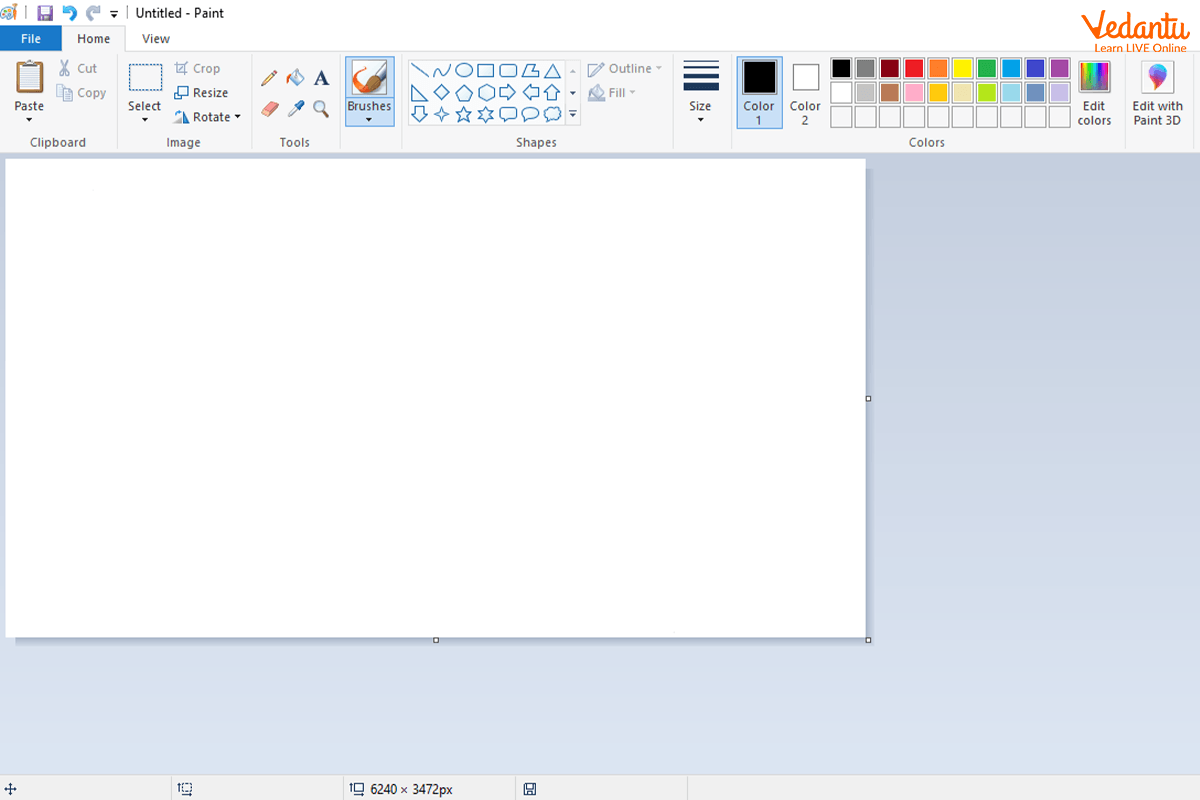
The Paint program works through a graphical user interface where users select tools and apply them to a drawing area called the canvas. Each tool performs a specific function such as drawing, colouring, selecting, or editing.
- Open Microsoft Paint from the Start menu.
- Select a drawing tool such as Brush, Pencil, or Shape from the toolbox.
- Choose a colour from the colour palette.
- Click and drag the mouse on the canvas to draw or apply the selected tool.
- Use editing tools like Eraser or Fill to modify the drawing.
- Save the file in the desired image format.
The program responds to mouse inputs and applies graphical changes directly to the image in real time.
Types and Classification of Paint Tools
Paint tools can be classified based on their functions.
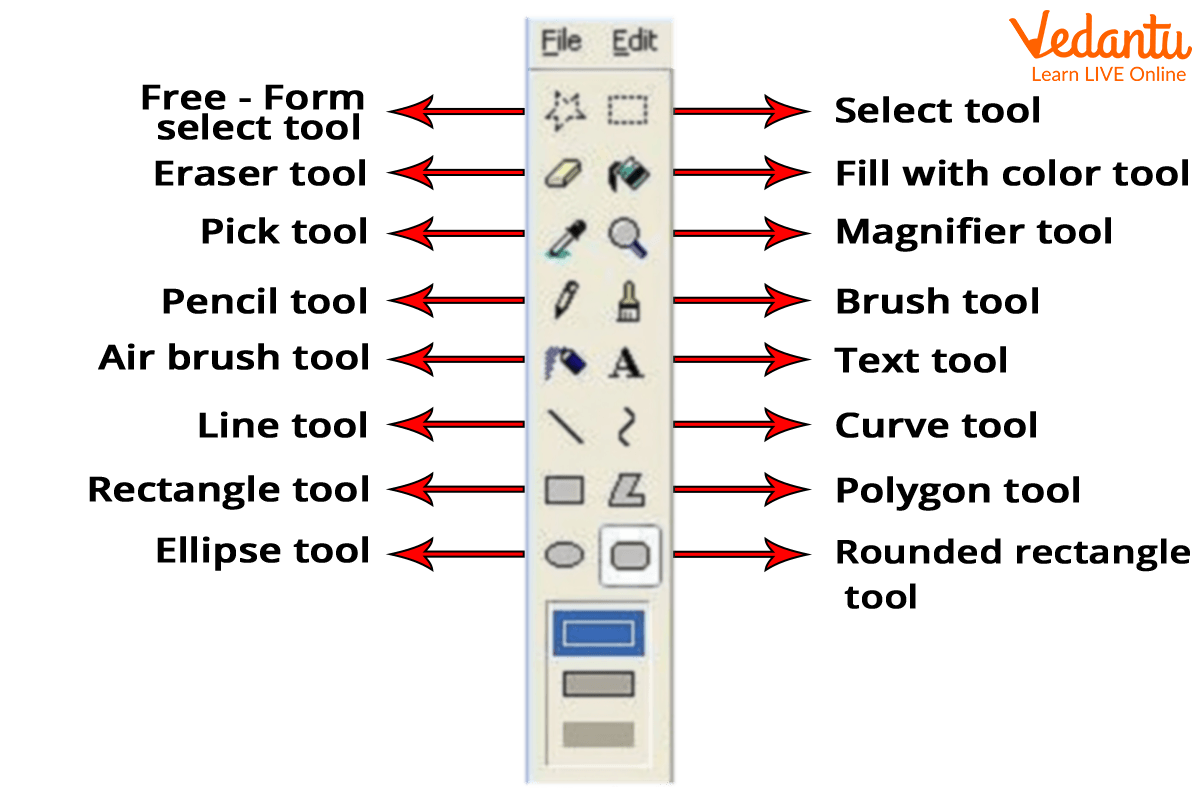
- Drawing Tools - Pencil, Brush, Airbrush for freehand drawing.
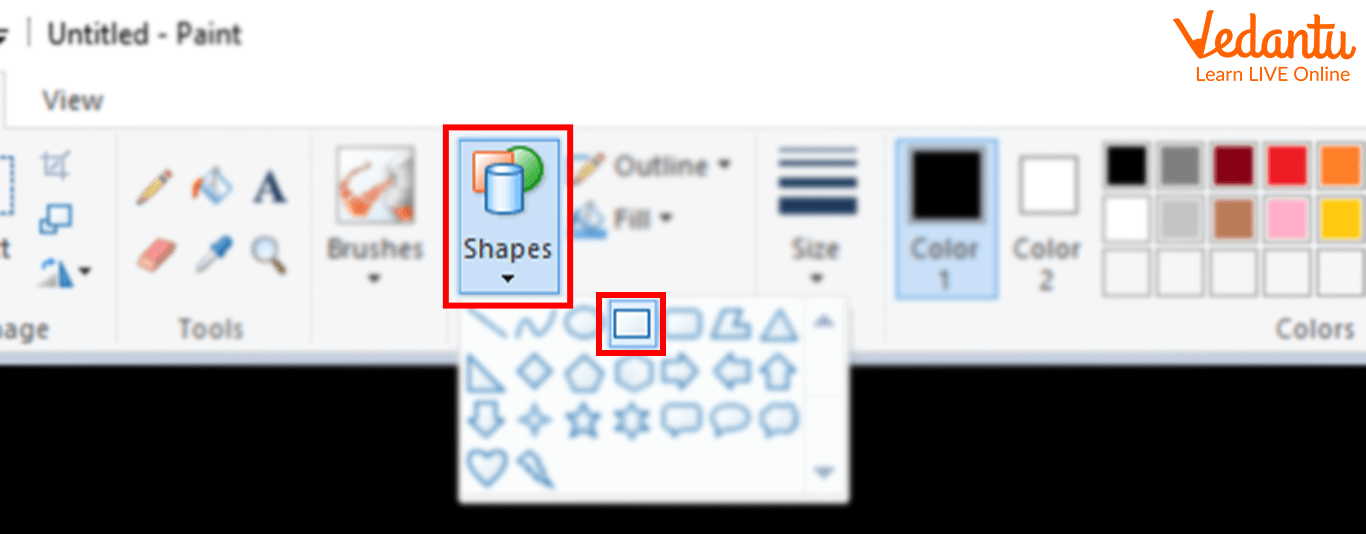
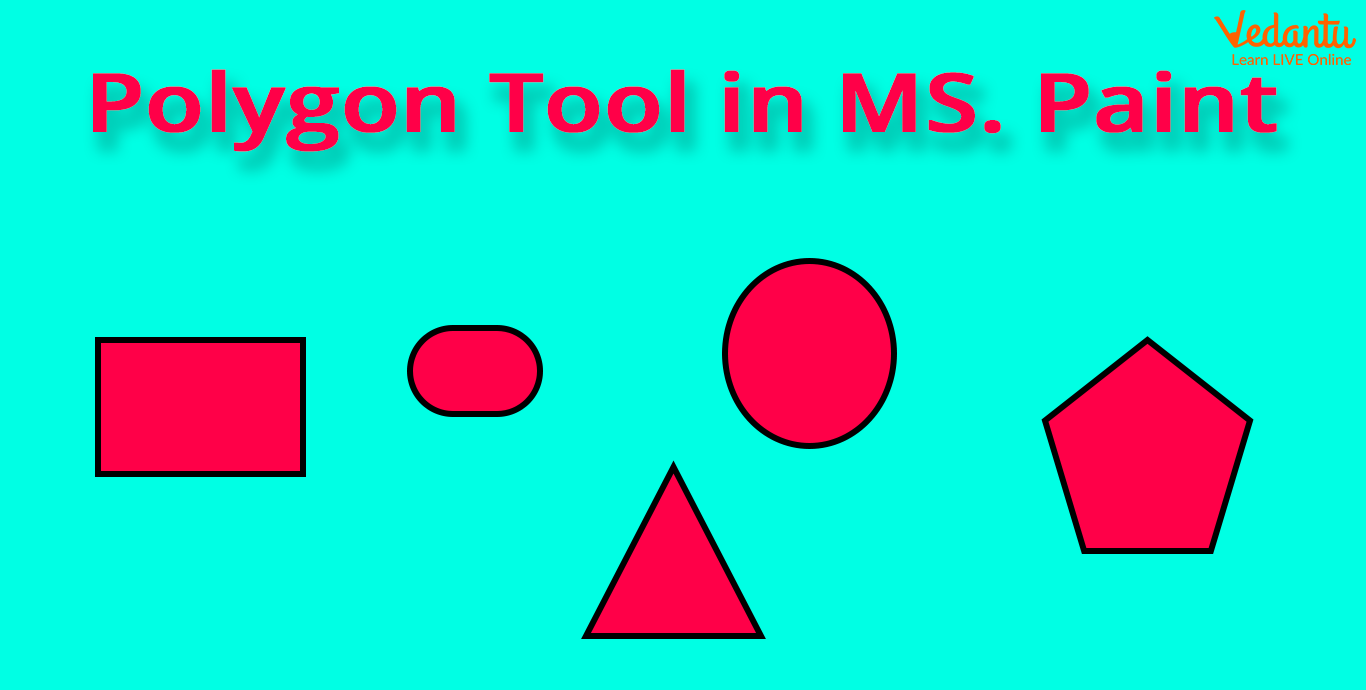
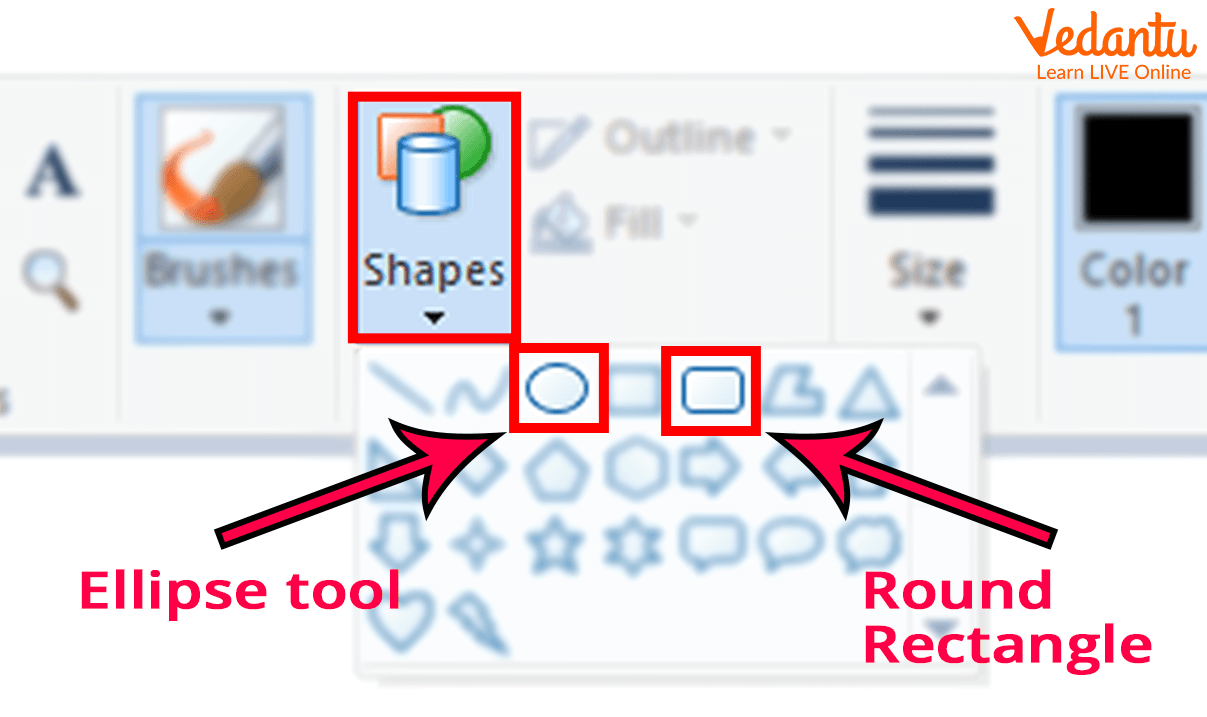
- Shape Tools - Rectangle, Ellipse, Polygon, Rounded Rectangle for geometric shapes.
- Editing Tools - Eraser, Colour Picker, Magnifier.
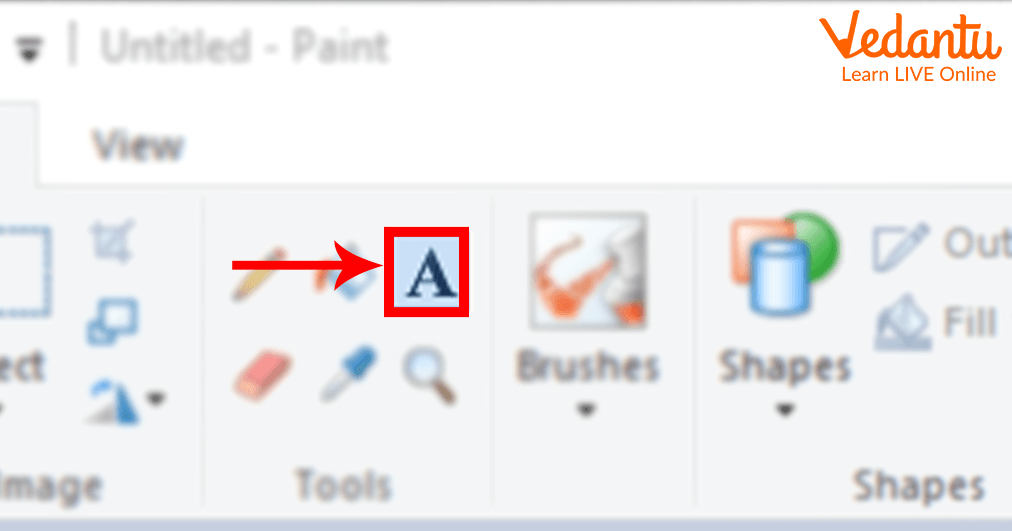
- Text Tool - Used to insert text into images.
- Fill Tool - Used to fill closed shapes with colour.
Main Tools in Paint with Images
Microsoft Paint Interface (Windows 10)
Tool Box of Paint Program
Fill with Colour Tool
Eraser Tool
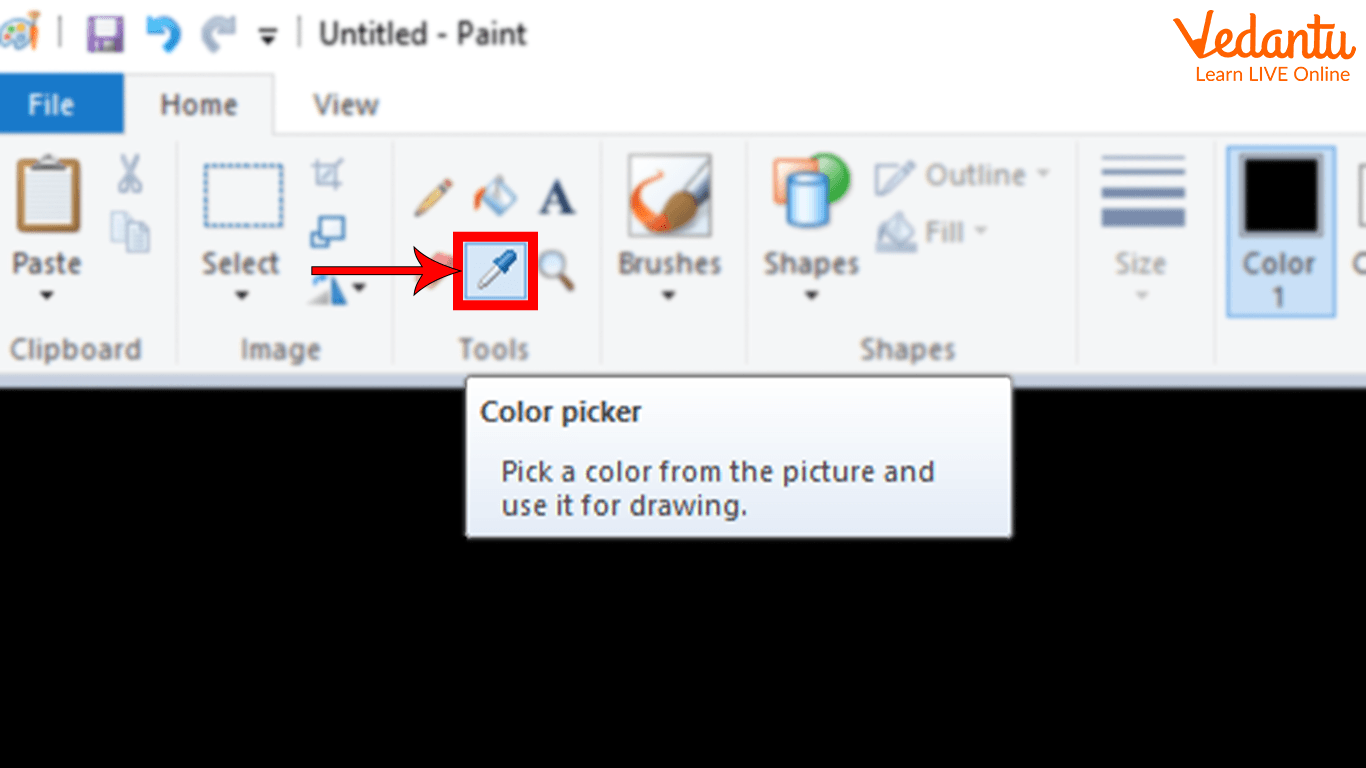
Colour Picker Tool
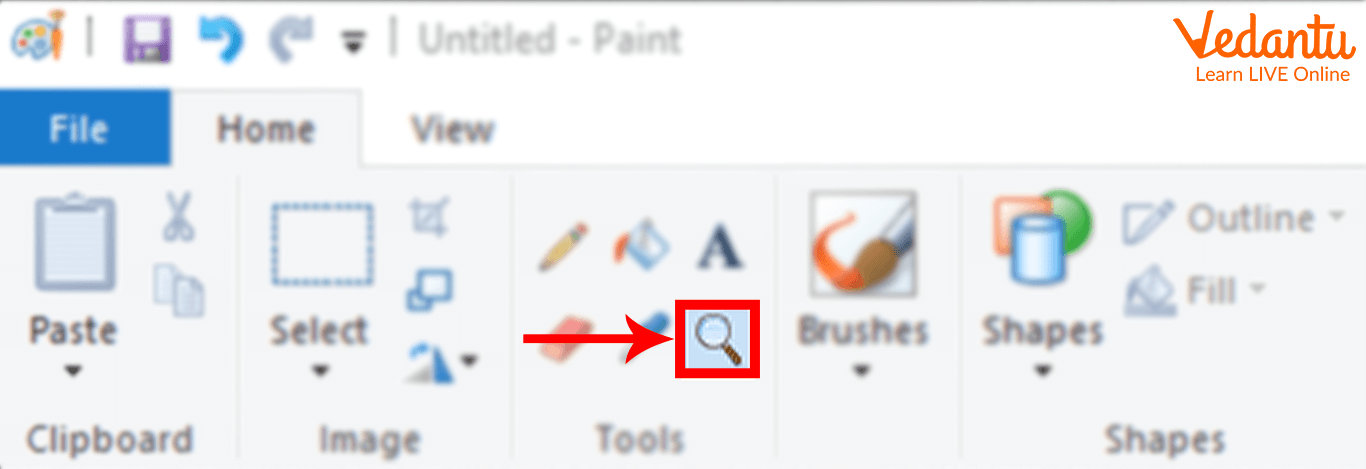
Magnifier Tool
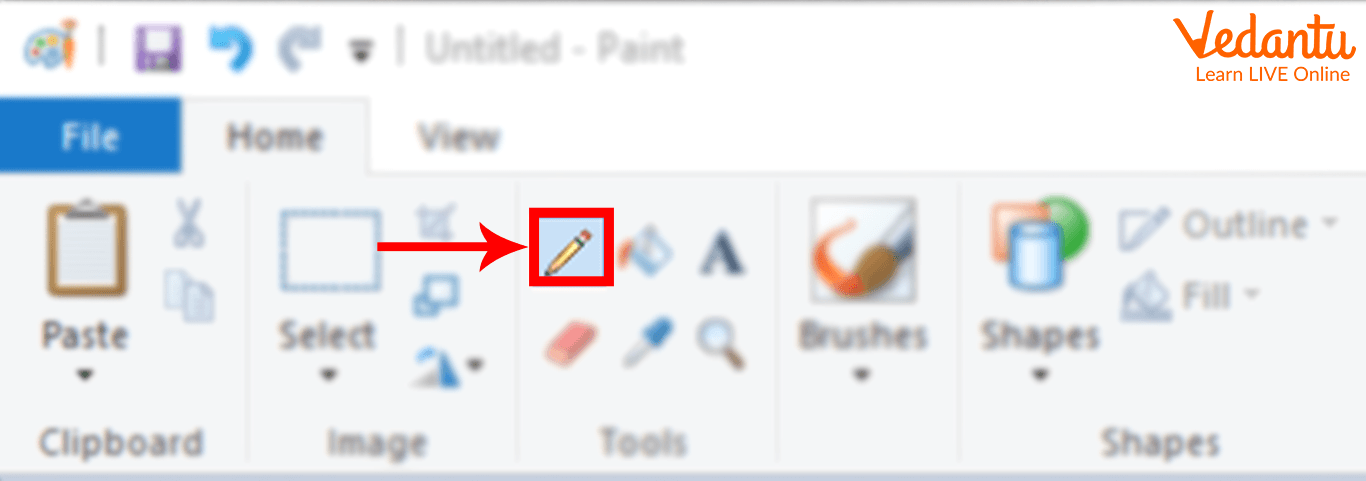
Brush and Pencil Tools
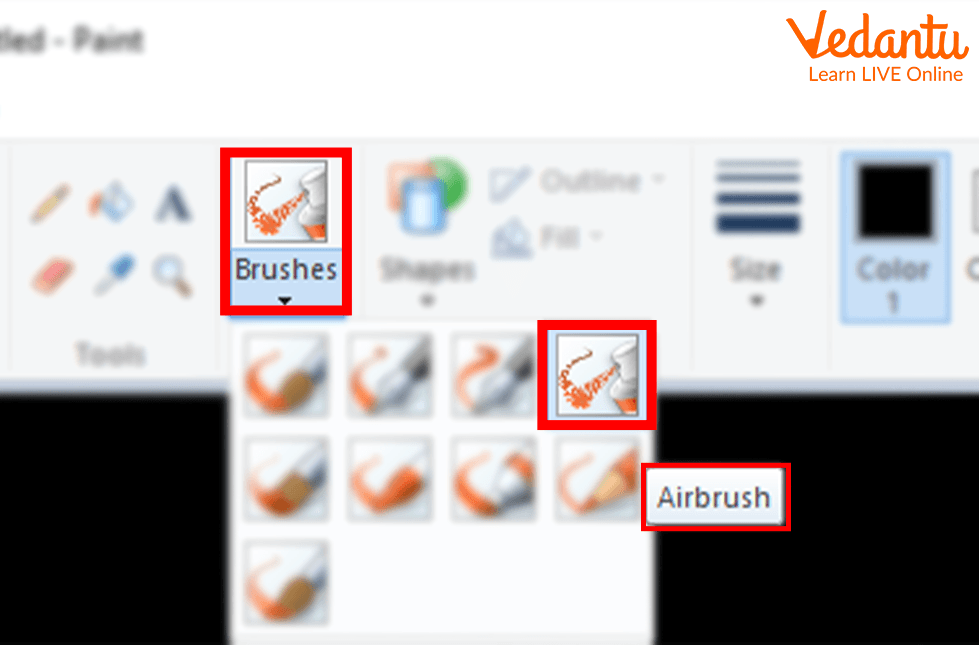
Airbrush Tool
Text Tool
Rectangle Tool
Polygon Tool
Rounded Rectangle and Ellipse Tools
Features and Characteristics
- Simple and user friendly interface.
- Supports multiple image formats.
- Provides various drawing and editing tools.
- Allows resizing, cropping, and rotating images.
- Includes zoom functionality for detailed work.
Advantages
- Easy to learn for beginners.
- Pre installed in Windows operating systems.
- Lightweight and fast.
- Useful for basic drawing and image editing.
Disadvantages / Limitations
- Limited advanced editing features.
- No support for layers.
- Not suitable for professional graphic design.
Applications and Use Cases
- Creating simple drawings and diagrams.
- Editing screenshots.
- Designing basic posters and greeting cards.
- Educational activities for school students.
- Practicing mouse control and creativity.
Quick Facts About Paint
| Category | Details |
|---|---|
| Software Type | Graphics Editing Program |
| Developed By | Microsoft |
| Platform | Windows |
| Common File Formats | JPEG, PNG, BMP, GIF |
| Used For | Drawing and Basic Image Editing |
These quick facts summarise important information related to Hands On With Paint Brush in computer science.
Interesting Facts About Paint Brush
- Microsoft Paint was first introduced in 1985.
- It was originally included with Windows 1.0.
- Paint supports touch input in modern Windows versions.
- It is widely used in schools for basic computer training.
- Many beginners create their first digital drawing using Paint.
- Despite being simple, it remains popular for quick edits.
Conclusion
Hands On With Paint Brush helps students understand the basics of digital drawing and image editing in computer science. By exploring different tools such as Brush, Fill, Eraser, and Shape tools, learners gain practical experience with graphical interfaces and image handling. Although it is simple and limited compared to advanced software, Paint remains an important starting point for developing creativity and fundamental computer skills.
FAQs on Hands On With Paint Brush Practical Guide for Computer Learners
1. What is Hands On With Paint Brush in Computer Science?
Hands On With Paint Brush refers to practical learning and usage of a basic graphics editing software used to create and edit digital images on a computer.
- Commonly associated with Microsoft Paint (MS Paint) in Windows
- Used for drawing, coloring, editing images, and basic image manipulation
- Introduces students to computer graphics and bitmap image concepts
2. What are the main features of Paint Brush software?
The Paint Brush software provides basic image editing and drawing features for beginner-level graphics design.
- Brush, Pencil, and Eraser tools for drawing
- Shapes and Text insertion options
- Color palette and fill options
- Support for saving images in formats like JPEG, PNG, BMP, GIF
3. How does the Paint Brush tool work in image editing?
The Paint Brush tool works by allowing users to draw freehand graphics on a digital canvas using input devices like a mouse or touchscreen.
- Uses pixel-based (bitmap) graphics
- Each stroke modifies pixel color values
- Supports adjustable brush size and color selection
4. What are the components of the Paint Brush interface?
The Paint Brush interface consists of tools and panels that help users create and edit images easily.
- Title Bar and Menu/Ribbon
- Toolbox with drawing and editing tools
- Drawing Canvas or workspace
- Color Box for selecting foreground and background colors
5. What is the difference between Paint Brush and advanced graphic design software?
The main difference is that Paint Brush offers basic image editing, while advanced tools provide professional-level graphic design features.
- Paint Brush supports basic bitmap editing
- Advanced software like Adobe Photoshop or GIMP supports layers, filters, and advanced effects
- Paint Brush is suitable for beginners and school-level learning
6. What are the advantages of using Paint Brush?
The advantages of Paint Brush include simplicity, ease of use, and quick image editing capabilities.
- User-friendly interface for beginners
- Pre-installed in many Windows operating systems
- Lightweight and requires minimal system resources
7. What are the limitations or disadvantages of Paint Brush?
The main limitation of Paint Brush is its lack of advanced image processing and professional design tools.
- No support for layers or advanced filters
- Limited editing and transformation options
- Not suitable for complex graphic design or web development projects
8. What are the common applications of Paint Brush in education?
In education, Paint Brush is used to teach basic computer graphics and digital creativity skills.
- Creating diagrams, charts, and simple illustrations
- Learning about image formats and file handling
- Practicing mouse control and basic software operations
9. What file formats are supported by Paint Brush?
Paint Brush supports several common image file formats used in digital graphics.
- BMP (Bitmap) for uncompressed images
- JPEG and PNG for compressed images
- GIF for simple graphics with limited colors
10. Why is Hands On With Paint Brush important for exams and interviews?
Hands On With Paint Brush is important because it builds foundational knowledge of computer graphics, software tools, and operating system utilities commonly asked in school and basic IT exams.
- Frequently included in computer fundamentals syllabus
- Helps in understanding bitmap images and graphic tools
- Useful for practical exams and beginner-level technical interviews
