




What type of chemical bond holds atoms together within a water molecule?
Answer
 Verified
601.2k+ views
Hint: Covalent Bonds are generally formed by equal sharing of electrons from both the participating non-metallic atoms. Covalent as is sharing of electrons is generally between which are not able to lose an electron or are not able to accommodate an electron due to high ionization energy or low electron affinity.
Complete step by step answer:
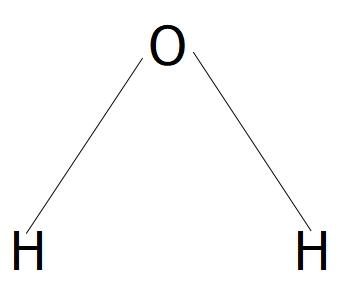
A water molecule is formed by the reaction within a hydrogen atom and an oxygen atom.
Now hydrogen’s configuration as we know is $1{s^1}$, therefore it means that it has 1 electron its outermost orbit, which will be very difficult to take out of its orbit, which is very close to the nucleus therefore, a lot of energy would be needed therefore the electron in the last orbit will get shared
Oxygen’s configuration is $1{s^2}2{s^2}2{p^4}$, therefore it means that it has 4 electrons in its outermost orbit, among which 2 are together while 2 electrons are free, ready to be bonded. Oxygen is an electronegative element, so it is again very difficult to take out an electron out of its outermost orbit.
So here we have hydrogen and oxygen who have no tendency to give or take any electron from each other but as are non-metals have no problem sharing electrons. Therefore, two H atoms will share the two unbonded electrons present in the outermost orbit, resulting in both having complete orbital covalently.
Thus Covalent Bond is present in the water molecule.
Note: Generally, when the electron is very close to the nucleus is an electronegative atom then its very difficult to gain or lose electrons from each other, a lot of heat is required to do that and the bond formed by such atoms are by sharing of electrons. H acts as a metal and non-metal both
Complete step by step answer:
A water molecule is formed by the reaction within a hydrogen atom and an oxygen atom.
Now hydrogen’s configuration as we know is $1{s^1}$, therefore it means that it has 1 electron its outermost orbit, which will be very difficult to take out of its orbit, which is very close to the nucleus therefore, a lot of energy would be needed therefore the electron in the last orbit will get shared
Oxygen’s configuration is $1{s^2}2{s^2}2{p^4}$, therefore it means that it has 4 electrons in its outermost orbit, among which 2 are together while 2 electrons are free, ready to be bonded. Oxygen is an electronegative element, so it is again very difficult to take out an electron out of its outermost orbit.
So here we have hydrogen and oxygen who have no tendency to give or take any electron from each other but as are non-metals have no problem sharing electrons. Therefore, two H atoms will share the two unbonded electrons present in the outermost orbit, resulting in both having complete orbital covalently.
Thus Covalent Bond is present in the water molecule.
Note: Generally, when the electron is very close to the nucleus is an electronegative atom then its very difficult to gain or lose electrons from each other, a lot of heat is required to do that and the bond formed by such atoms are by sharing of electrons. H acts as a metal and non-metal both

Recently Updated Pages
Master Class 8 English: Engaging Questions & Answers for Success

Master Class 8 Science: Engaging Questions & Answers for Success
Master Class 8 Maths: Engaging Questions & Answers for Success
Master Class 7 English: Engaging Questions & Answers for Success
Master Class 7 Maths: Engaging Questions & Answers for Success
Class 7 Question and Answer - Your Ultimate Solutions Guide
Trending doubts
What is BLO What is the full form of BLO class 8 social science CBSE
Name the states through which the Tropic of Cancer class 8 social science CBSE
Which Indian state shares the longest international class 8 social science CBSE
Citizens of India can vote at the age of A 18 years class 8 social science CBSE
Full form of STD, ISD and PCO
What are the methods of reducing friction. Explain