




Explain the structure of the rib cage with a neat diagram. What are its functions? How are the
last two pairs of bones different from other bones of the rib cage?
Answer
 Verified
591.9k+ views
Hint: The skeletal forms the internal framework of the human body. The axial skeleton and the appendicular skeleton are the crucial human skeleton. The vertebral columns, the rib cage and the associated bones are the part of the axial skeleton.
Complete answer:
The rib cage is the part of the axial skeleton and it is the arrangement of rib bones which remains attached to the vertebral column and the sternum in the thorax. The rib cage is a crucial bone arrangement as it encloses the heart and the lungs and shelters them.
The rib cage is called the thoracic cage and is a bony and cartilaginous structure. As the rib cage is all around the thoracic cavity it is known as the thoracic cage. The rib cage in humans is composed of twenty four ribs in twelve pairs. The rib cage consists of sternum, xiphoid process, the costal cartilages and twelve thoracic vertebrae.
The ribs are curved long bones and form the part of the rib cage. The ribs are joined to the last of the thoracic vertebrae. The ribs are present in pairs and numbered on the basis of thoracic vertebrae to which they are attached. They are attached to the costal cartilage. The sternum is present in the mid-position of the chest and forms the front of the rib cage. It is one of the largest and longest bones called breastbone. The xiphoid process is a small, spine-like process of the sternum and is called meta- sternum.
The first seven pairs of ribs are attached to the sternum and vertebrae and are called true ribs. The ribs from the second to the seventh pairs are less curved and long. The last five ribs are known as false ribs connected by the costal cartilages.
The last two pairs of bones are different from other bones of the rib cage as they are connected with the vertebrae only and are called floating ribs.
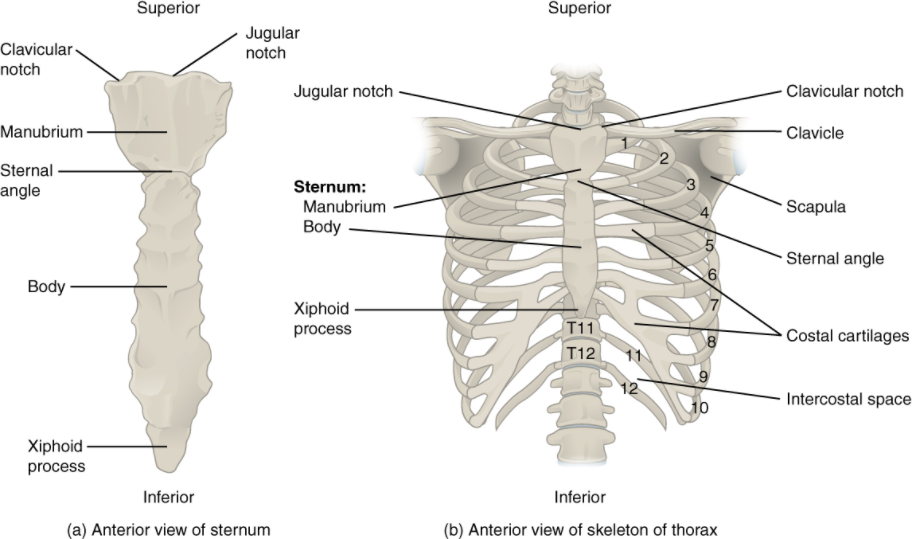
Functions of rib cage:
The rib cage is the primary skeletal structure that shelters the soft and delicate visceral organs like lungs and the heart. The rib cage along with the cartilages and muscles form the thoracic walls. It provides the attachment for the muscles of the neck, thorax and upper abdomen. It also performs an important function during exhalation and inhalations.
Note: The rib cage is the protective bony cage like structure formed by rib bones, thoracic bones and the cartilages. In humans there are a total of twelve pairs of ribs that form the rib cage. It shelters the organs like heart and pair of lungs and helps during respiration.
Complete answer:
The rib cage is the part of the axial skeleton and it is the arrangement of rib bones which remains attached to the vertebral column and the sternum in the thorax. The rib cage is a crucial bone arrangement as it encloses the heart and the lungs and shelters them.
The rib cage is called the thoracic cage and is a bony and cartilaginous structure. As the rib cage is all around the thoracic cavity it is known as the thoracic cage. The rib cage in humans is composed of twenty four ribs in twelve pairs. The rib cage consists of sternum, xiphoid process, the costal cartilages and twelve thoracic vertebrae.
The ribs are curved long bones and form the part of the rib cage. The ribs are joined to the last of the thoracic vertebrae. The ribs are present in pairs and numbered on the basis of thoracic vertebrae to which they are attached. They are attached to the costal cartilage. The sternum is present in the mid-position of the chest and forms the front of the rib cage. It is one of the largest and longest bones called breastbone. The xiphoid process is a small, spine-like process of the sternum and is called meta- sternum.
The first seven pairs of ribs are attached to the sternum and vertebrae and are called true ribs. The ribs from the second to the seventh pairs are less curved and long. The last five ribs are known as false ribs connected by the costal cartilages.
The last two pairs of bones are different from other bones of the rib cage as they are connected with the vertebrae only and are called floating ribs.
Functions of rib cage:
The rib cage is the primary skeletal structure that shelters the soft and delicate visceral organs like lungs and the heart. The rib cage along with the cartilages and muscles form the thoracic walls. It provides the attachment for the muscles of the neck, thorax and upper abdomen. It also performs an important function during exhalation and inhalations.
Note: The rib cage is the protective bony cage like structure formed by rib bones, thoracic bones and the cartilages. In humans there are a total of twelve pairs of ribs that form the rib cage. It shelters the organs like heart and pair of lungs and helps during respiration.
Recently Updated Pages
Master Class 12 Business Studies: Engaging Questions & Answers for Success

Master Class 12 Biology: Engaging Questions & Answers for Success
Master Class 12 Chemistry: Engaging Questions & Answers for Success
Class 12 Question and Answer - Your Ultimate Solutions Guide
Master Class 11 Social Science: Engaging Questions & Answers for Success
Master Class 11 English: Engaging Questions & Answers for Success
Trending doubts
Explain the Treaty of Vienna of 1815 class 10 social science CBSE
Which Indian city is known as the "City of Victory"?
Which instrument is used to measure the Blood Pressure?
Who Won 36 Oscar Awards? Record Holder Revealed
What is the median of the first 10 natural numbers class 10 maths CBSE
Why is it 530 pm in india when it is 1200 afternoon class 10 social science CBSE