








How Does the Thyroid Gland Function in NEET Biology?
The thyroid gland is a critical endocrine organ in the human body, playing a central role in regulating metabolism, growth, and development. For NEET aspirants, understanding the thyroid gland is essential as it forms a foundational topic in Biology, connecting physiology, hormone action, and various clinical conditions. Mastering this concept not only aids in answering direct questions but also strengthens your grasp on related hormonal and metabolic topics in the NEET syllabus. This page offers a clear yet thorough explanation that will help you confidently tackle any thyroid gland questions in your exam.
What is the Thyroid Gland?
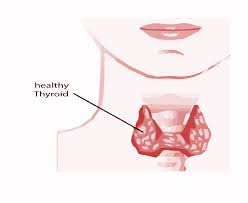
The thyroid gland is a butterfly-shaped endocrine gland located in the front of the neck, just below the larynx (voice box). It consists of two lobes connected by a thin tissue called the isthmus. The gland secretes important hormones that regulate the metabolic activities of nearly every cell in the body. In simple terms, the thyroid gland acts as the body’s metabolic controller, making sure the rate of energy use and various bodily processes remain balanced and healthy.
Core Ideas and Fundamentals of the Thyroid Gland
Structure and Location
The thyroid gland is situated anterior to the trachea and consists of right and left lobes joined by the isthmus. Its unique butterfly structure allows it to wrap around the front of the windpipe. The gland is rich in blood supply to efficiently release hormones into the bloodstream.
Hormones Secreted by the Thyroid Gland
The thyroid primarily produces three hormones:
- Thyroxine (T4)
- Triiodothyronine (T3)
- Calcitonin
Role of Thyroid Hormones
T3 and T4 control metabolism, growth, heat generation, and overall development of body tissues. Calcitonin is important for calcium homeostasis, helping to lower blood calcium levels when they become too high.
Important Sub-Concepts Related to the Thyroid Gland
Functions of Thyroid Hormones
- Regulate basal metabolic rate (BMR) - the rate at which the body uses energy at rest.
- Aid in physical and mental growth, especially in children.
- Control protein, carbohydrate, and fat metabolism.
- Essential for the development of the nervous system.
- Calcitonin helps regulate calcium and phosphate balance in body fluids.
Regulation of Thyroid Function (Feedback Mechanism)
Thyroid hormone secretion is regulated by a classic negative feedback system involving:
- The hypothalamus, which releases thyrotropin-releasing hormone (TRH).
- TRH stimulates the anterior pituitary to secrete thyroid-stimulating hormone (TSH).
- TSH stimulates the thyroid to release T3 and T4. High levels of T3/T4 inhibit TRH and TSH production, thus maintaining hormonal balance.
Common Thyroid Disorders
- Hypothyroidism - Deficiency of thyroid hormones leading to slowed metabolism, weight gain, fatigue, and sometimes developmental issues (e.g., cretinism in children).
- Hyperthyroidism - Excess thyroid hormone production resulting in increased metabolism, weight loss, irritability, and other symptoms (e.g., Graves’ disease).
- Goitre - Enlargement of the thyroid gland, commonly due to iodine deficiency.
Key Principles and Relationships in Thyroid Gland Physiology
Although there are no standalone formulas, key regulatory relationships and feedback mechanisms are vital for NEET-level understanding.
| Hormone or Regulator | Produced By | Effect on Thyroid Gland |
|---|---|---|
| TRH (Thyrotropin-Releasing Hormone) | Hypothalamus | Stimulates TSH release |
| TSH (Thyroid-Stimulating Hormone) | Anterior Pituitary | Stimulates thyroid hormone synthesis & release |
| T3/T4 | Thyroid Gland | Increase metabolism; exert negative feedback on TRH & TSH |
| Calcitonin | Thyroid (C-cells) | Lowers blood calcium, inhibits bone resorption |
Understanding these relationships helps students grasp how disturbances in one part of the feedback loop can lead to thyroid disorders and related clinical symptoms, a common theme in NEET questions.
Features and Importance of the Thyroid Gland
- Highly vascular, ensuring rapid hormone delivery to tissues
- Regulates metabolism, growth, and development
- Directly involved in calcium homeostasis (via calcitonin)
- Disorders (e.g., goitre, hypothyroidism, hyperthyroidism) have clear clinical signals commonly mentioned in NEET MCQs
Why is the Thyroid Gland Important for NEET?
The thyroid gland is regularly tested in NEET because it links foundational Biological processes with practical medical applications. You may encounter questions about hormone pathways, feedback regulation, clinical symptoms, or the effects of iodine deficiency. Understanding this topic also helps in mastering broader themes like the endocrine system, homeostasis, and metabolism - all highly relevant for NEET-level multiple choice questions. Additionally, knowledge of thyroid disorders helps link concepts between Biology and Human Physiology, enabling better reasoning skills in the exam.
How to Study the Thyroid Gland Effectively for NEET
- Start by visualizing and labeling the gland’s structure using diagrams. Refer to high-quality images for clarity.
- Understand hormone names, sources, and actions. Make summary tables to compare T3, T4, calcitonin, and regulatory hormones.
- Map the feedback mechanism connecting hypothalamus, pituitary, and thyroid. Draw your own flowcharts.
- Learn the symptoms and causes of hypothyroidism, hyperthyroidism, and goitre with characteristic signs to recognize clinical vignettes.
- Regularly practice NEET MCQs based on thyroid gland structure, functions, disorders, and regulatory pathways.
- Revise key relationships, such as hormone feedback control, before exams to avoid confusion.
- Group discussions or teaching your peers about the thyroid’s function can reinforce your own understanding.
Common Mistakes Students Make in the Thyroid Gland Concept
- Confusing T3 and T4 - their relative potency, quantity produced, and main actions
- Misunderstanding negative feedback control - especially the direction of feedback and involvement of TRH and TSH
- Mixing up symptoms of hypo- and hyperthyroidism
- Forgetting the role of calcitonin in calcium homeostasis
- Ignoring connections between iodine deficiency and goitre
Quick Revision Points on the Thyroid Gland
- Thyroid gland is a butterfly-shaped endocrine organ in the neck
- Main hormones: T3 (triiodothyronine), T4 (thyroxine), and calcitonin
- T3/T4 increase metabolism; calcitonin lowers blood calcium
- Controlled by TRH (hypothalamus) and TSH (anterior pituitary) via negative feedback
- Hypothyroidism slows metabolism; hyperthyroidism increases it
- Goitre is often caused by iodine deficiency
- Key for NEET: understand hormone feedback and identify disorder symptoms in MCQs
FAQs on Thyroid Gland: Essential NEET Biology Overview
1. What is the thyroid gland and where is it located? (NEET)
The thyroid gland is a butterfly-shaped endocrine gland located in the front of the neck, below the Adam's apple. It plays a crucial role in regulating metabolism for NEET students to remember.
- Location: In front of the trachea, just below the larynx
- Shape: Resembles a butterfly with two lateral lobes connected by an isthmus
- Significance: Key for maintaining metabolic and energy balance
2. What are the main hormones produced by the thyroid gland?
The thyroid gland mainly secretes thyroxine (T4), triiodothyronine (T3), and calcitonin. These hormones are essential for multiple body functions.
- T3 (Triiodothyronine): More active, regulates metabolism
- T4 (Thyroxine): Most abundant, precursor to T3
- Calcitonin: Lowers blood calcium levels
3. What is the function of the thyroid gland in the human body?
The thyroid gland regulates metabolism, growth, and development by releasing hormones. NEET aspirants should remember these functions:
- Controls basal metabolic rate (BMR)
- Regulates protein synthesis
- Influences growth and development (physical and mental, especially in children)
- Modulates calcium homeostasis via calcitonin
4. What are common disorders of the thyroid gland?
Common thyroid disorders include hypothyroidism, hyperthyroidism, goitre, and Graves' disease. For NEET, focus on:
- Hypothyroidism: Underactive thyroid, symptoms include fatigue, weight gain
- Hyperthyroidism: Overactive thyroid, causes weight loss, irritability
- Goitre: Enlarged thyroid, often from iodine deficiency
- Graves' disease: An autoimmune form of hyperthyroidism
5. How is the activity of the thyroid gland controlled? (NEET relevant)
The thyroid gland is regulated by a feedback mechanism involving the hypothalamus, pituitary gland, and its own hormones.
- Hypothalamus releases TRH (Thyrotropin Releasing Hormone)
- Pituitary gland releases TSH (Thyroid Stimulating Hormone)
- Thyroid gland releases T3 and T4
- Negative feedback by T3 & T4 inhibits TSH and TRH
6. What is goitre and why does it occur?
Goitre is the abnormal enlargement of the thyroid gland, usually due to iodine deficiency. Key NEET points:
- Cause: Most commonly from lack of dietary iodine
- Type: Can be endemic (diet-related) or sporadic
- Symptoms: Swelling at the neck, difficulty in swallowing or breathing
7. What are the symptoms of hypothyroidism and hyperthyroidism?
Hypothyroidism and hyperthyroidism have distinct signs, important for NEET:
Hypothyroidism:
- Fatigue and weight gain
- Cold intolerance
- Dry skin, hair loss
- Weight loss and increased appetite
- Nervousness, heat intolerance
- Increased sweating, palpitations
8. How does iodine deficiency affect the thyroid gland?
Iodine deficiency leads to decreased thyroid hormone production and can cause goitre. For NEET:
- Reduces synthesis of T3 and T4 hormones
- Triggers pituitary to secrete more TSH, enlarging the thyroid (goitre)
- In children, can cause cretinism (mental retardation, stunted growth)
9. What is the role of calcitonin secreted by the thyroid gland?
Calcitonin lowers blood calcium levels and is important in calcium homeostasis. NEET highlights:
- Inhibits breakdown of bone (osteoclast activity)
- Promotes calcium deposition in bones
- Acts as an antagonist to parathyroid hormone
10. Name some NEET important diseases/conditions caused due to abnormal thyroid function.
Diseases linked to thyroid dysfunction commonly asked in NEET include:
- Cretinism: Congenital hypothyroidism in infants, mental and physical retardation
- Myxoedema: Severe hypothyroidism in adults
- Graves' disease: Autoimmune hyperthyroidism
- Goitre: Swollen thyroid from iodine deficiency
