









How Does the Endomembrane System Work in NEET Biology?
The endomembrane system is a fundamental concept in Biology that involves a group of interconnected organelles in eukaryotic cells. Understanding this system is essential for NEET aspirants because it forms the core of topics related to cell structure and function. A clear grasp of the endomembrane system not only supports conceptual clarity in cell biology but also helps students tackle application-based and direct NEET questions confidently. This topic lays a strong foundation for understanding essential processes that keep living cells functioning smoothly.
What is the Endomembrane System?
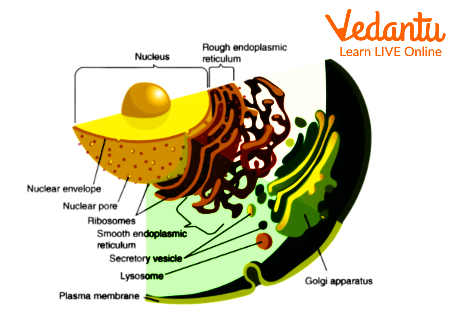
The endomembrane system refers to a set of membrane-bound organelles within eukaryotic cells that work together to modify, package, and transport lipids and proteins. These organelles are functionally connected by direct contact or by transfer of membrane-bound vesicles. Key components include the endoplasmic reticulum (ER), Golgi apparatus, lysosomes, vacuoles, and the plasma membrane. By coordinating various cellular processes, the endomembrane system ensures the proper synthesis, transport, and degradation of molecules.
Core Ideas and Fundamentals of the Endomembrane System
Components and Their Functions
The endomembrane system is made up of several organelles, each having specialized functions, but all contributing to the cell's overall operation. Below are its primary components and their roles:
- Endoplasmic Reticulum (ER): Divided into rough (with ribosomes) and smooth (without ribosomes). It is involved in protein and lipid synthesis.
- Golgi Apparatus (Golgi Complex): Modifies, sorts, and packages proteins and lipids for storage or transport out of the cell.
- Lysosomes: Contain enzymes for digestion and removal of cellular waste.
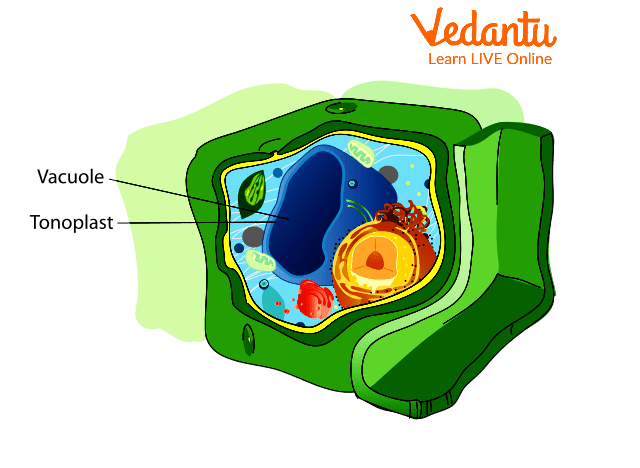
- Vacuoles: Store nutrients, waste products, or provide structural support, primarily important in plant cells.
- Plasma Membrane: Controls the movement of substances in and out of the cell and communicates with the external environment.
How the Components Work Together
Each part of the endomembrane system is interconnected. Proteins made by ribosomes on the rough ER enter its lumen, undergo modifications, and then move via vesicles to the Golgi apparatus for further processing. The Golgi apparatus then directs them to their proper destinations, within or outside the cell, using vesicles. Lysosomes aid in digestion, while vacuoles store vital substances. This coordinated system ensures cellular efficiency and responsiveness.
Important Sub-Concepts Related to the Endomembrane System
Endoplasmic Reticulum (ER)
The ER is one of the largest organelles in the cell, with two types - rough and smooth ER. The rough ER has ribosomes and is mainly involved in protein synthesis, while the smooth ER is important for lipid synthesis and detoxification. Both types contribute to forming vesicles that transfer materials to other parts of the endomembrane system.
Golgi Complex
The Golgi complex acts as the cell's packaging and distribution center. It receives vesicles containing proteins and lipids from the ER, modifies them (such as by adding sugar groups), and sends them where they're needed. It also forms lysosomes and secretory vesicles.

Vacuole
Vacuoles are storage organelles found prominently in plant cells. They help maintain cell shape, store important substances, and manage waste products. Animal cells may have smaller vacuoles for temporary storage and transport functions.
Lysosome
Lysosomes contain hydrolytic enzymes and play a key role in breaking down cellular debris, damaged organelles, and invading pathogens. They are often called the cell’s “suicide bags” because they can cause self-destruction of the cell if needed.
Key Relationships and Processes in the Endomembrane System
Although there are no major formulas in this topic, understanding the pathway and sequence of protein or lipid processing is crucial for NEET. The table below summarizes how proteins are synthesized and transported through the endomembrane system.
Protein Transport Pathway in the Endomembrane System
| Step | Organelle Involved | Function |
|---|---|---|
| 1 | Rough Endoplasmic Reticulum | Protein synthesis and initial modification |
| 2 | Transport Vesicles | Transport proteins to the Golgi complex |
| 3 | Golgi Apparatus | Further processing, sorting, and packaging |
| 4 | Secretory Vesicles/Lysosomes | Send proteins to cell membrane or for digestion |
| 5 | Plasma Membrane | Secretion or integration of proteins |
Understanding this sequence is vital for answering NEET questions related to cell structure, function, and the movement of biological molecules inside the cell.
Features and Importance of the Endomembrane System
- Maintains compartmentalization within eukaryotic cells.
- Ensures efficient synthesis, modification, and transport of biomolecules.
- Critical for the secretion of hormones, enzymes, and other proteins.
- Supports removal of cellular waste via lysosomes and vacuoles.
- Supports vital physiological processes like endocytosis and exocytosis.
Why is the Endomembrane System Important for NEET?
Many NEET Biology questions are based on the functions and interrelations of cell organelles. The endomembrane system explains how proteins and lipids are synthesized, processed, and transported - a topic often tested in both assertion-reason and concept-based MCQs. It also links to other vital concepts like cellular metabolism, enzyme activity, and genetic translation. Mastering this topic gives students an edge in solving related questions quickly and accurately, building both memory and application skills that are highly valuable in NEET exams.
How to Study the Endomembrane System Effectively for NEET
- Visualize and memorize the structure and function of each organelle using clear diagrams.
- Practice drawing flowcharts showing the movement of proteins or lipids through the system.
- Solve NEET-level multiple choice questions related to cell organelles and functional coordination.
- Revise by explaining the pathway of a newly synthesized protein from ribosome to its final destination.
- Group study sessions can help clarify confusing parts with peers.
- Regularly test your understanding with flashcards or quick quizzes.
Common Mistakes Students Make in this Concept
- Confusing the roles of similar-sounding organelles, like Golgi complex and ER.
- Not remembering the correct sequence of organelles involved in protein transport.
- Missing connections between the endomembrane system and processes like secretion or digestion.
- Mixing up plant and animal cell differences (for example, the role of vacuoles).
- Focusing only on theoretical aspects and ignoring application or diagram-based questions.
Quick Revision Points
- Endomembrane system includes ER, Golgi, lysosomes, vacuoles, and the plasma membrane.
- Rough ER is for protein synthesis; smooth ER is for lipid synthesis.
- The Golgi complex modifies and packages proteins/lipids for transport.
- Lysosomes help in digestion and waste removal within the cell.
- Vacuoles are large and more prominent in plant cells for storage and structural support.
- Pathway: Ribosome - ER - Golgi - Vesicle - Final destination (lysosome, vacuole, membrane, outside cell).
- Membrane-bound vesicles help transport materials between organelles.
- Correct diagram labeling and sequences are frequently tested in NEET.
FAQs on Endomembrane System in NEET Biology: Functions and Components
1. What is the endomembrane system and what are its main components?
The endomembrane system is a group of interconnected membrane-bound organelles in eukaryotic cells that work together in the synthesis, modification, packaging, and transport of proteins and lipids, which is crucial for NEET aspirants to understand. Key components include:
- Endoplasmic reticulum (ER): Rough and smooth types involved in protein and lipid synthesis
- Golgi apparatus: Modifies, sorts, and packages proteins and lipids
- Lysosomes: Contain digestive enzymes
- Vacuoles: Storage and transport
- Vesicles: Transport materials within cells
- Nuclear envelope: Surrounds the nucleus and connects to the ER
2. What are the functions of the endomembrane system in eukaryotic cells?
The endomembrane system performs key cellular functions related to the processing and transport of biomolecules, highly relevant for NEET Biology exams. Its main functions include:
- Protein synthesis and modification (ER and Golgi apparatus)
- Lipid synthesis (smooth ER)
- Packaging and transport of proteins, lipids, and enzymes (vesicles, Golgi)
- Intracellular digestion (lysosomes)
- Storage (vacuoles in plants and fungi)
- Detoxification (smooth ER)
3. Why is the endomembrane system not considered a single organelle?
The endomembrane system is not a single organelle because it consists of multiple functionally related but distinct membrane-bound structures. Each part, such as the ER, Golgi apparatus, and lysosomes, has a specialized role, but they work together as a coordinated system. This concept is important for NEET-level understanding.
4. Which organelles are excluded from the endomembrane system and why?
Mitochondria and chloroplasts are excluded from the endomembrane system because they have their own DNA, double membranes, and function independently in energy production. For NEET and class 11, remember:
- Not part of the endomembrane system: Mitochondria, chloroplasts, peroxisomes
- They perform autonomous functions distinct from protein/lipid transport
5. How do proteins and lipids move within the endomembrane system?
Proteins and lipids move between the organelles of the endomembrane system via small membrane-bound vesicles, which is a frequent NEET Biology concept. Steps include:
- Synthesized at the ER
- Transported in vesicles to the Golgi apparatus
- Modified, sorted, and packed in the Golgi
- Dispatched to destinations like the plasma membrane, lysosomes, or outside the cell
6. Is the endoplasmic reticulum a part of the endomembrane system?
Yes, the endoplasmic reticulum (ER) is a vital component of the endomembrane system, as tested in NEET exams. It comes in two forms:
- Rough ER: Studded with ribosomes, synthesizes and processes proteins
- Smooth ER: Lacks ribosomes, synthesizes lipids and helps in detoxification
7. What is the role of the Golgi apparatus in the endomembrane system?
The Golgi apparatus functions as the packaging and distribution center of the endomembrane system, a key NEET Biology point. Main roles:
- Receives proteins and lipids from the ER
- Modifies and sorts proteins/lipids
- Packages substances into vesicles for transport to final destinations (e.g., lysosomes, plasma membrane, outside the cell)
8. What is the relationship between lysosomes and the endomembrane system?
Lysosomes are part of the endomembrane system and act as the cell's digestive organelles. They:
- Originate from the Golgi apparatus
- Contain hydrolytic enzymes to break down waste materials
- Play a crucial role in intracellular digestion
9. How does the endomembrane system maintain cellular organization and efficiency?
The endomembrane system maintains cellular organization and efficiency by compartmentalizing different processes and enabling efficient biomolecule transport. It ensures:
- Separation of incompatible chemical reactions
- Targeted delivery of proteins and enzymes to specific locations
- Regulation of cellular metabolism and homeostasis
10. Explain the significance of the endomembrane system in NEET and medical biology.
The endomembrane system is significant in NEET and medical biology because it underpins vital cellular functions such as secretion, digestion, and membrane maintenance. Key points for NEET preparation:
- Foundation for understanding cell compartmentalization
- Relevant for human physiology and disease pathology
- Frequently asked in NEET Biology due to its systemic and clinical importance
