








What Is Match The Numbers With Examples and Practice Questions
Matching is the process of identifying two similar things based on their shared characteristics. It is possible to match objects based on their colour, size, form, quantity, etc. The first step in learning matching is to develop an eye for observation. Kids can learn this skill by playing a game with bright objects that have been gathered and arranged in groups. One of the best examples of teaching students to match objects easily is colour and shape matching.
Match the Following Numbers:
We can learn how to match numbers in every discipline. First, we anticipate that the numbers will match the corresponding names. Each numeral number corresponds to a name, which we must match with the proper spelling.
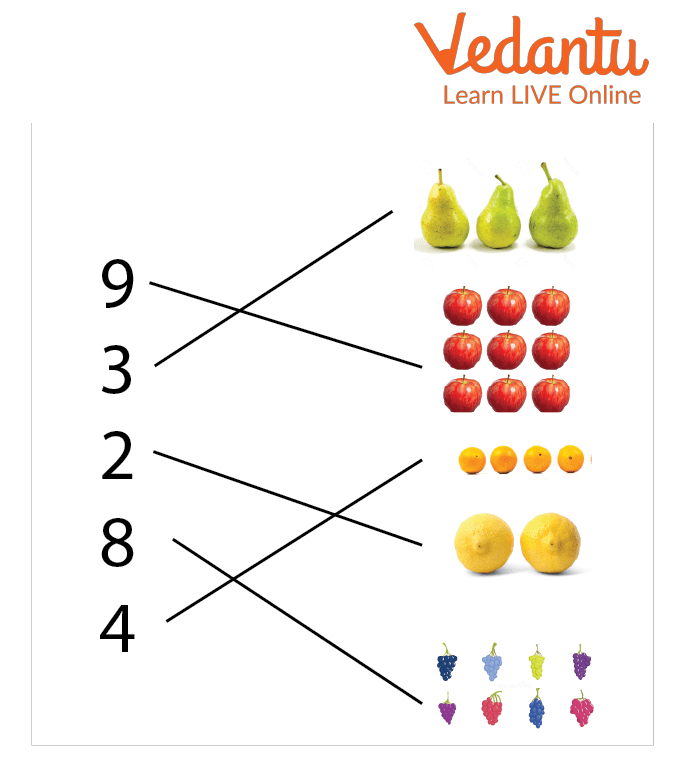
Match the Numbers
Match the Numbers with Numbers:
We must learn how to match numbers in this topic. There are a lot of figures. With their actual number, we must either match it or drag it. Students may learn easily about numbers in this matching exercise. They will quickly pick up on what a number actually means via its symbol.

Match The Numbers
Match the Numbers 1 to 10:
Matching numbers 1 to 10 Will help the students to learn about counting. It can learn numbers, spelling, and counting as well as possible. Students will also learn sorting skills.
Maths numbers name:
In mathematics, both terms are very important,
(1) Numbers and
(2) Names.
Matching the numbers will help to learn about both skills. It also improved my knowledge. Matching numbers will help to learn about numbers with fun and playing games. In mathematics, the number name it’s a way of expressing the number in Word form.
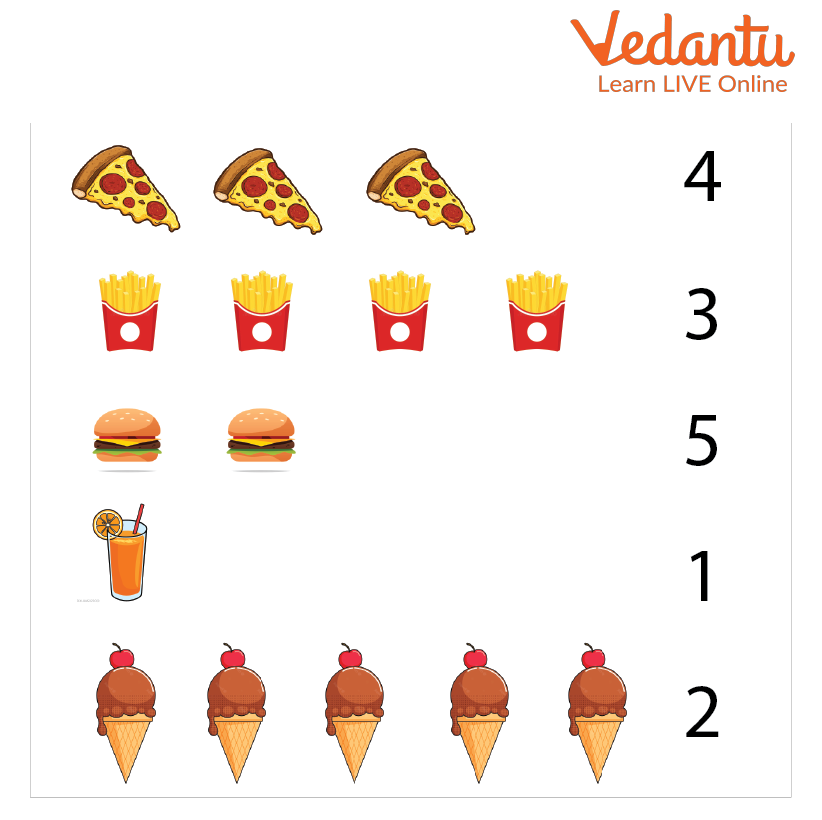
Number Counting
Conclusion:
The student must be familiar with numbers, counting, and names. Making numbers is therefore very simple and useful for teaching kids about a number's numerical value, name spelling, and really counting. A student's numerous skills are also improved by it. The matching game will strengthen children's memory skills and assist them in understanding and remembering numbers in fun ways.
Solved Example:
1: Match the following numbers with respective names.
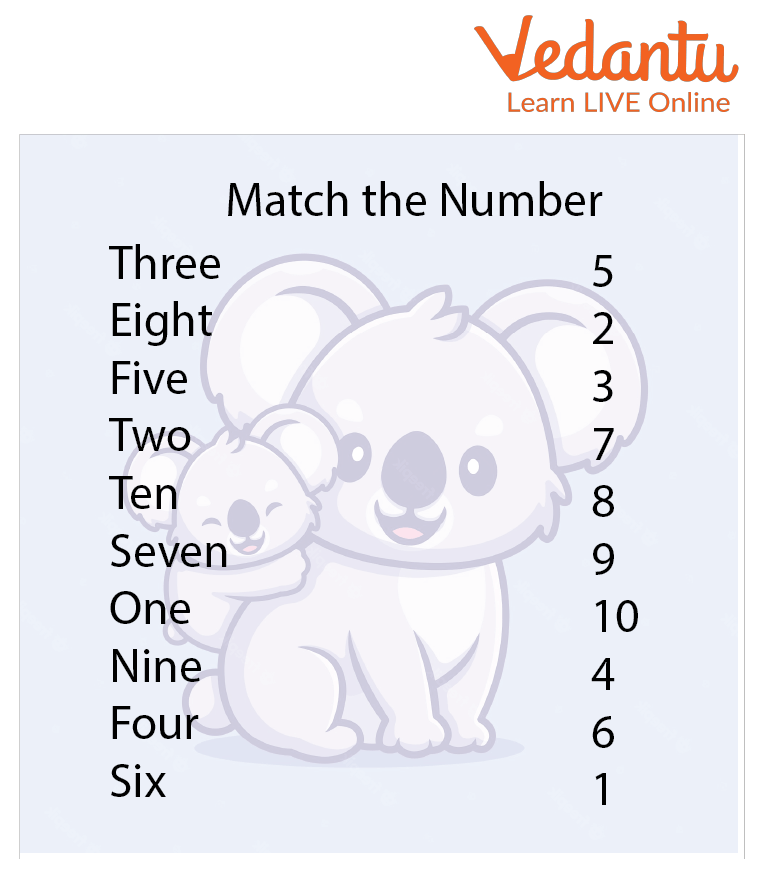
Matching Numbers with Number Names
Ans.
1-One
2-Two
3-Three
4-Four
5-Five
6-Six
7-Seven
8-Eight
9-Nine
10-Ten
2: Match the following numbers.
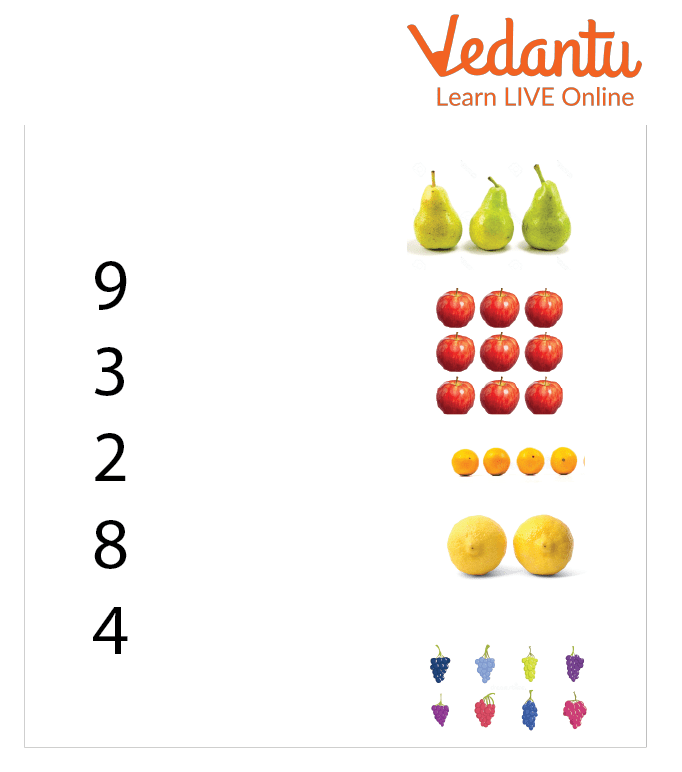
Ans.
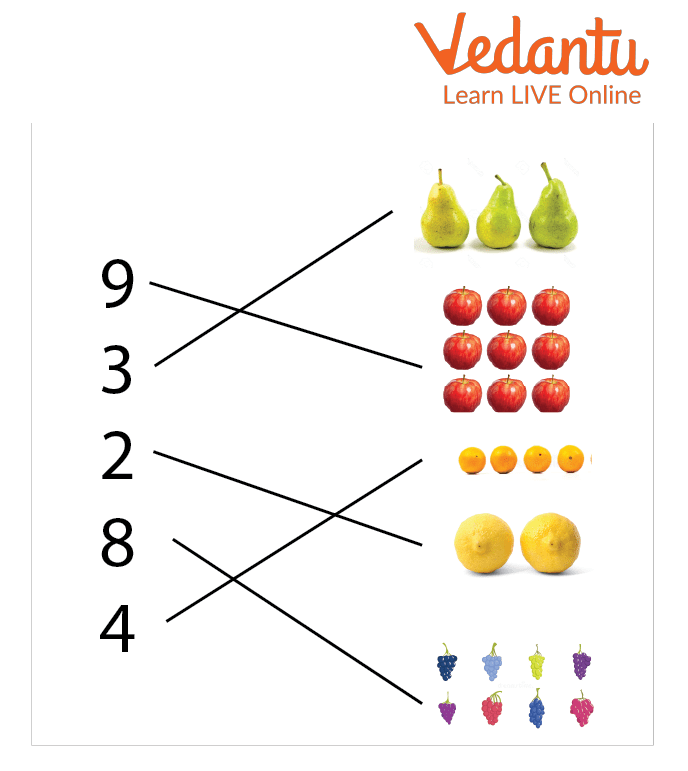
3: Match the following:

Ans.

FAQs on Match The Numbers Activity for Number Recognition
1. What does “Match The Numbers” mean in Maths?
“Match The Numbers” means pairing a number with its correct quantity, word form, or representation. It helps learners connect numerals to actual values.
- Match a numeral (e.g., 5) to five objects.
- Match a number word (e.g., “three”) to 3.
- Match numbers to pictures, dots, or number names.
2. How do you match numbers to quantities?
To match numbers to quantities, count the objects and pair them with the correct numeral. Follow these steps:
- Count the total number of objects carefully.
- Identify the correct number symbol.
- Draw a line or connect the matching pair.
3. Why is matching numbers important for kids?
Matching numbers is important because it builds number sense and strengthens counting skills. It helps children:
- Recognize numerals correctly.
- Understand one-to-one correspondence.
- Connect numbers with real-life quantities.
4. What is an example of a Match The Numbers activity?
A Match The Numbers activity asks students to connect each number with the correct group of objects. Example:
- Number list: 2, 5, 7
- Picture groups: two stars, five balls, seven pencils
5. How do you match number names with numerals?
To match number names with numerals, pair the word form of a number with its digit form. Example:
- “One” → 1
- “Four” → 4
- “Ten” → 10
6. What is one-to-one correspondence in matching numbers?
One-to-one correspondence means assigning one number to one object while counting. For example:
- Touch each object once.
- Say one number per object.
- Stop when all objects are counted.
7. How can you match numbers on a number line?
To match numbers on a number line, locate the correct position of the numeral based on its value. Steps:
- Start from 0 or 1.
- Count forward evenly.
- Mark the correct point.
8. What are common mistakes when matching numbers?
Common mistakes in matching numbers include incorrect counting and skipping objects. Typical errors:
- Counting one object twice.
- Skipping an object while counting.
- Confusing similar numerals like 6 and 9.
9. How do you match larger numbers like 20 or 50?
To match larger numbers, group objects into tens and ones for easier counting. Example for 23:
- 2 groups of ten = 20
- 3 single ones = 3
- Total = 23
10. Can Match The Numbers help with addition and subtraction?
Yes, Match The Numbers supports addition and subtraction by strengthening number recognition and quantity understanding. For example:
- If 3 apples are matched and 2 more are added, count all to get 5.
- If 5 objects are matched and 2 are removed, 3 remain.
