







Easy Butterfly Drawing Steps for Kids and Beginners
Kids adore butterflies and find it fascinating to watch them flap their wings and move about. Most parents find it difficult to teach their children how to draw a butterfly. To assist you, we've created a step-by-step lesson on how to teach your child to draw a butterfly in simple methods. Butterflies make excellent sketching or painting subjects because their wings follow a pattern that can be sketched with a few simple steps. You can draw a butterfly without any particular sketching abilities once you understand the basics of drawing it.
In this lesson, we'll teach you how to draw a monarch butterfly from scratch, step by step. You may adapt this technique to draw any other butterfly.
The most difficult aspect of drawing a butterfly is making its wings symmetrical or equal on both sides. We'll sketch both wings together to make eyeballing the symmetry of the wings simpler. It's a lot simpler that way.
Easy Steps To Draw Butterfly
Let's get started drawing a lovely butterfly!
Step 1:
Draw the head, thorax, and abdomen of the butterfly. The butterfly will be centered in the middle of your page using this approach. The head (a circle), middle thorax (oval), and abdomen (oblong oval), as well as two eyes (semi-circles on either side of the head) and two antennae, make up the body.
Step 2:
Draw two curved lines from the top of the body to the bottom (on either side). Make these lines the same length and arch. Draw two straight lines from the body's center (on either side). Make the lines all the same length.

Drawing the Body of Butterfly
Step 3:
Draw two curved lines from the body's bottom (on either side). Make lines that are the same length and have the same arch. Connect the top of the wing to the center (horizontal) line using a squiggly line. This should be done on both sides of the wing.
Draw two diagonal lines from the middle line's end. Check to see whether they're the same length.
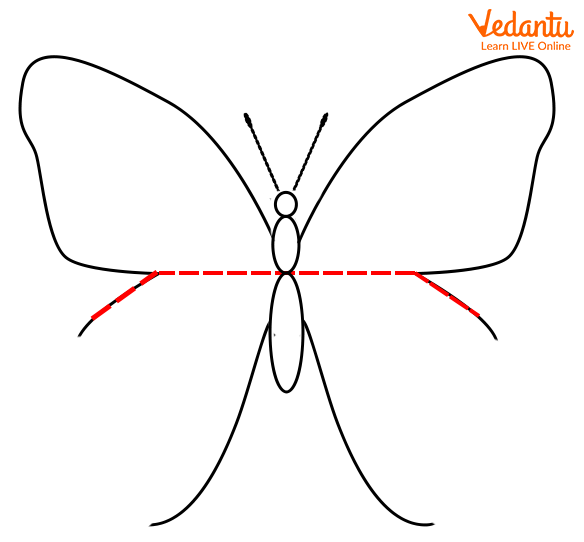
Drawing Wings of Butterfly
Step 4:
Draw two semi-circles connecting the last step's diagonal lines and the bottom arch lines. The general form of your butterfly is now complete. Take a step back to ensure that both sides appear to be fairly equal. Take advantage of this opportunity to address any issues that have arisen. Inside each wing, draw four teardrop shapes. Then you are done with the basic structure of a butterfly. You may add more designs to the wings as you wish.

Completely Drawn Butterfly
Ideas for Drawing a Butterfly
Here are some simple and entertaining ways to decorate your butterfly.
Coloring pencils, crayons, markers, acrylic paint, and water-colors can be used to fill in the body and patterns drawn on the wings of the butterfly.
Make a butterfly out of paper in your art notebook.
Paint a butterfly on a small canvas.
You can use any color you want: orange, blue, pink, purple, and so on to decorate your butterfly.
Conclusion
Your child may learn how to draw a basic butterfly with the help of this simple set of instructions. Encourage your children to draw more butterflies in different sizes and shapes, and to color them as brightly or subtly as they wish once they have mastered this drawing. Remember to appreciate their little effort, as by doing so, you will give them wings to explore the art form!
FAQs on How to Draw Butterflies for Kids Step by Step Guide
1. How do you draw a butterfly step by step for kids?
To draw a butterfly step by step for kids, start with simple shapes and build the wings evenly on both sides. Follow these easy steps:
- Draw a small vertical oval for the body.
- Add a small circle on top for the head.
- Draw two large curved shapes on each side for the top wings.
- Add two smaller curved shapes below for the bottom wings.
- Draw thin antennae on the head.
- Decorate the wings with simple patterns like dots, hearts, or circles.
This easy butterfly drawing method is perfect for beginners and young children.
2. What is the easiest way to draw a butterfly for beginners?
The easiest way to draw a butterfly is by folding the wings into matching simple shapes on both sides of the body. Try this beginner-friendly method:
- Draw a straight vertical line as a guide.
- Create a large rounded wing shape on one side.
- Copy the same shape on the other side to keep it symmetrical.
- Add a small body in the center.
- Color the wings with bright crayons or markers.
Using symmetry makes butterfly drawing simple and fun for kids.
3. How do you draw butterfly wings for kids?
To draw butterfly wings for kids, use large curved shapes that mirror each other on both sides of the body. You can draw:
- Two big upper wings shaped like half circles.
- Two smaller lower wings shaped like rounded triangles.
- Add simple patterns such as lines, dots, stars, or swirls.
Keeping the wings balanced and symmetrical helps make the butterfly look realistic yet easy to draw.
4. How can kids make a colorful butterfly drawing?
Kids can make a colorful butterfly drawing by using bright colors and repeating patterns on both wings. Here are simple ideas:
- Use bold colors like red, yellow, blue, and purple.
- Repeat the same color pattern on each side.
- Add glitter or shading for extra detail.
- Outline the wings with a dark crayon or marker.
Colorful butterfly drawings look more attractive when both wings match.
5. What materials do kids need to draw a butterfly?
Kids need basic art supplies like paper, pencils, and colors to draw a butterfly. Common materials include:
- Drawing paper
- Pencil and eraser
- Crayons, colored pencils, or markers
- Black marker for outlining (optional)
These simple materials are enough for an easy butterfly drawing activity at home or school.
6. How do you draw a realistic butterfly for kids?
To draw a realistic butterfly for kids, focus on symmetry, detailed wing patterns, and neat outlines. Follow these tips:
- Draw equal-sized wings on both sides.
- Add small vein lines inside the wings.
- Use blended colors for shading.
- Keep the body thin and slightly fuzzy.
Adding simple details makes the butterfly look more lifelike while keeping it kid-friendly.
7. How do you draw a cute cartoon butterfly?
To draw a cute cartoon butterfly, use round shapes, big eyes, and smiling expressions. Here’s how:
- Draw a small oval body.
- Add large, rounded wings.
- Draw big cartoon eyes and a smiling mouth.
- Add simple heart or star patterns on the wings.
Cartoon butterfly drawings are perfect for preschool and kindergarten kids.
8. Why is symmetry important when drawing a butterfly?
Symmetry is important when drawing a butterfly because both wings are almost identical on each side of the body. Butterflies have mirror-image wings, which means:
- The left and right wings should match in size.
- Patterns should be repeated on both sides.
- Colors should be balanced evenly.
Practicing symmetry helps kids improve drawing accuracy and artistic skills.
9. How do you draw a butterfly for kindergarten students?
To draw a butterfly for kindergarten students, use very simple shapes and minimal details. Try this method:
- Draw a straight line for the body.
- Add two big oval wings on each side.
- Draw two short antennae.
- Let kids color freely with crayons.
This easy butterfly drawing activity builds confidence and fine motor skills in young children.
10. How can kids decorate a butterfly drawing?
Kids can decorate a butterfly drawing by adding creative patterns, textures, and backgrounds. Fun decoration ideas include:
- Adding polka dots, stripes, and swirls on the wings.
- Using glitter glue or stickers.
- Drawing flowers and grass around the butterfly.
- Blending two colors inside each wing section.
Decorating makes butterfly art projects more engaging and encourages creativity.
