







Benefits and printable activities for colouring basic shapes for kids
We can introduce basic shapes of geometry to our kids by playing some colouring activities with them. We can draw any shape and can give our kids colourful shades of colours to fill that shape with colours. This is how we can tell them the name of shapes and their features. You can also discuss with your kids some examples of daily uses that resemble the geometry shapes. In this article, you will do some colouring activities which will help you to teach your children basic shapes of geometry. Some basic shapes are given below.

Basic Shapes of Geometry
Colour the Shapes
Some shapes are given below. You can draw them on your copy and paint them.
1. Colour the following shapes of Polygons with your favourite colours.

Different shapes of Polygons
For your reference, some coloured shapes of the above polygons are given below.
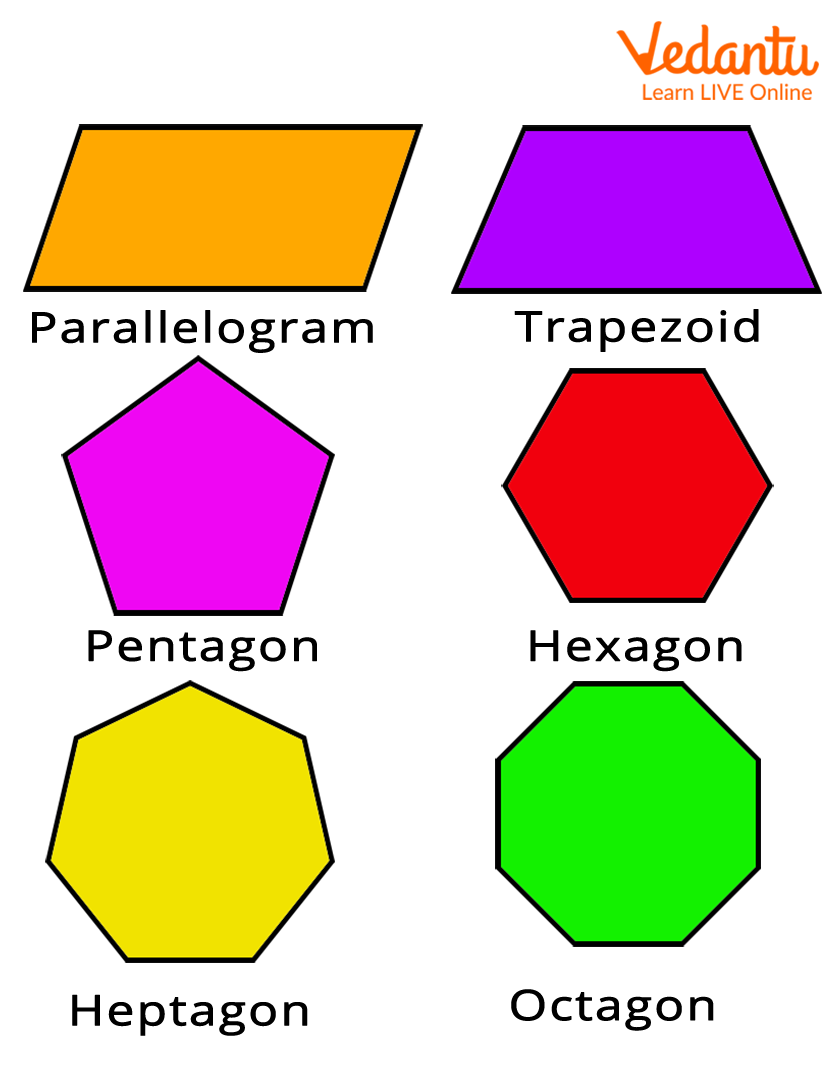
Coloured Polygon
2. Colour the following shapes which you see in your daily life. You can see the shape of a butterfly, a fish, a flower, a leaf, an apple, and a cat. You can fill them with the colours that these shapes usually have. You know that the leaf has the colour of green and the apple has the colour of red.
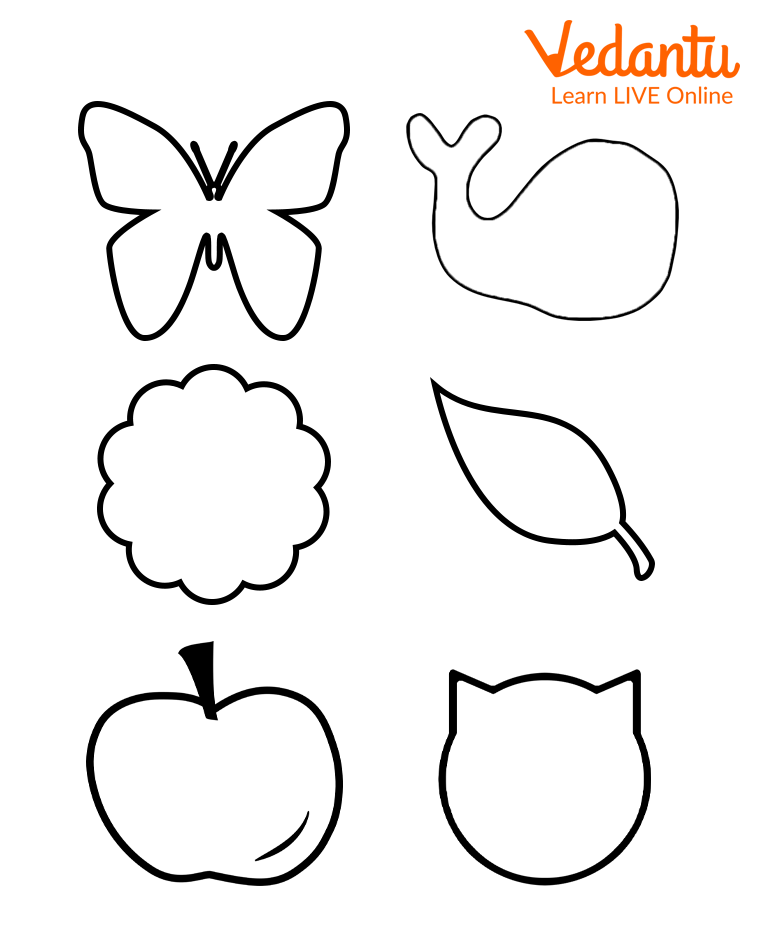
Shapes of Daily Life
3. Now some more interesting shapes such as star, heart, cross, arrow, etc. are given below. You can also colour them and have fun.

Fun Shapes
Conclusion
The above article provides some shapes colouring pages which kids can draw in their copy and colour. It will help them to learn about shapes. The article is also helpful for parents and teachers.
FAQs on Fun Colouring Of Basic Shapes for Early Learning
1. What is fun colouring of basic shapes?
Fun colouring of basic shapes is an engaging activity where learners colour simple geometric figures like circles, squares, triangles, and rectangles using creative colours and patterns. It helps children recognise shapes while expressing creativity. This activity often includes:
- Identifying the name of each basic shape
- Choosing bright or contrasting colours
- Adding simple patterns like stripes or dots
2. Why is colouring basic shapes important for early learners?
Colouring basic shapes is important because it improves shape recognition, fine motor skills, and hand-eye coordination. When children colour within outlines, they learn control and focus. Key benefits include:
- Understanding geometric shape names
- Developing pencil grip and control
- Enhancing creativity and imagination
3. What are the basic shapes children usually colour?
The most common basic shapes children colour are circle, square, triangle, rectangle, and oval. These shapes form the foundation of early geometry learning. For example:
- A circle has no corners.
- A square has four equal sides.
- A triangle has three sides.
4. How do you teach colours and shapes together?
You can teach colours and shapes together by asking children to match a specific colour to a specific shape. For example:
- Colour the circle red.
- Colour the square blue.
- Colour the triangle yellow.
5. What skills do children develop through shape colouring activities?
Shape colouring activities develop fine motor skills, concentration, and visual recognition. As children colour inside the lines, they practise control and patience. Additional skills include:
- Understanding spatial boundaries
- Learning geometric vocabulary
- Building creative confidence
6. How can you make colouring basic shapes more fun?
You can make colouring basic shapes more fun by adding patterns, themes, or creative challenges. Simple ideas include:
- Decorating shapes with stripes, dots, or zigzags
- Turning shapes into objects (e.g., a circle as a sun)
- Using glitter, crayons, or watercolours
7. What is the difference between 2D shapes and 3D shapes in colouring activities?
The main difference is that 2D shapes are flat figures, while 3D shapes have depth and volume. In colouring activities:
- 2D shapes include circle, square, and triangle.
- 3D shapes include cube, sphere, and cone.
8. At what age should children start colouring basic shapes?
Children can start colouring basic shapes around the age of 2 to 3 years with supervision. At this stage, they begin recognising simple shapes and experimenting with colours. Early practice helps with:
- Developing grip strength
- Improving focus
- Learning shape and colour names
9. How does colouring shapes help with early math skills?
Colouring shapes helps with early math skills by introducing basic geometry concepts and spatial awareness. When children identify and colour shapes, they learn to:
- Recognise sides and corners
- Compare sizes and forms
- Group similar shapes together
10. Can colouring basic shapes improve creativity?
Yes, colouring basic shapes improves creativity by encouraging children to experiment with colour combinations and design patterns. Even simple shapes can become imaginative artwork when children:
- Mix bright and pastel colours
- Create repeating patterns
- Transform shapes into pictures
