







List of Common Dry Fruit Names with Pictures and Types
Dry fruits, also known as dried fruits, are a popular and nutritious snack enjoyed around the world. They are made by removing the water content from fresh fruits, concentrating their flavours, and extending their shelf life. This process not only enhances their taste but also preserves essential nutrients. In this guide, we will explore a variety of popular dry fruit names list, including almonds, cashews, and raisins, and discuss their benefits. Understanding these dry fruits and their unique properties can help you make healthier choices and enrich your diet.
 Table of Content
Different Dry Fruit Names
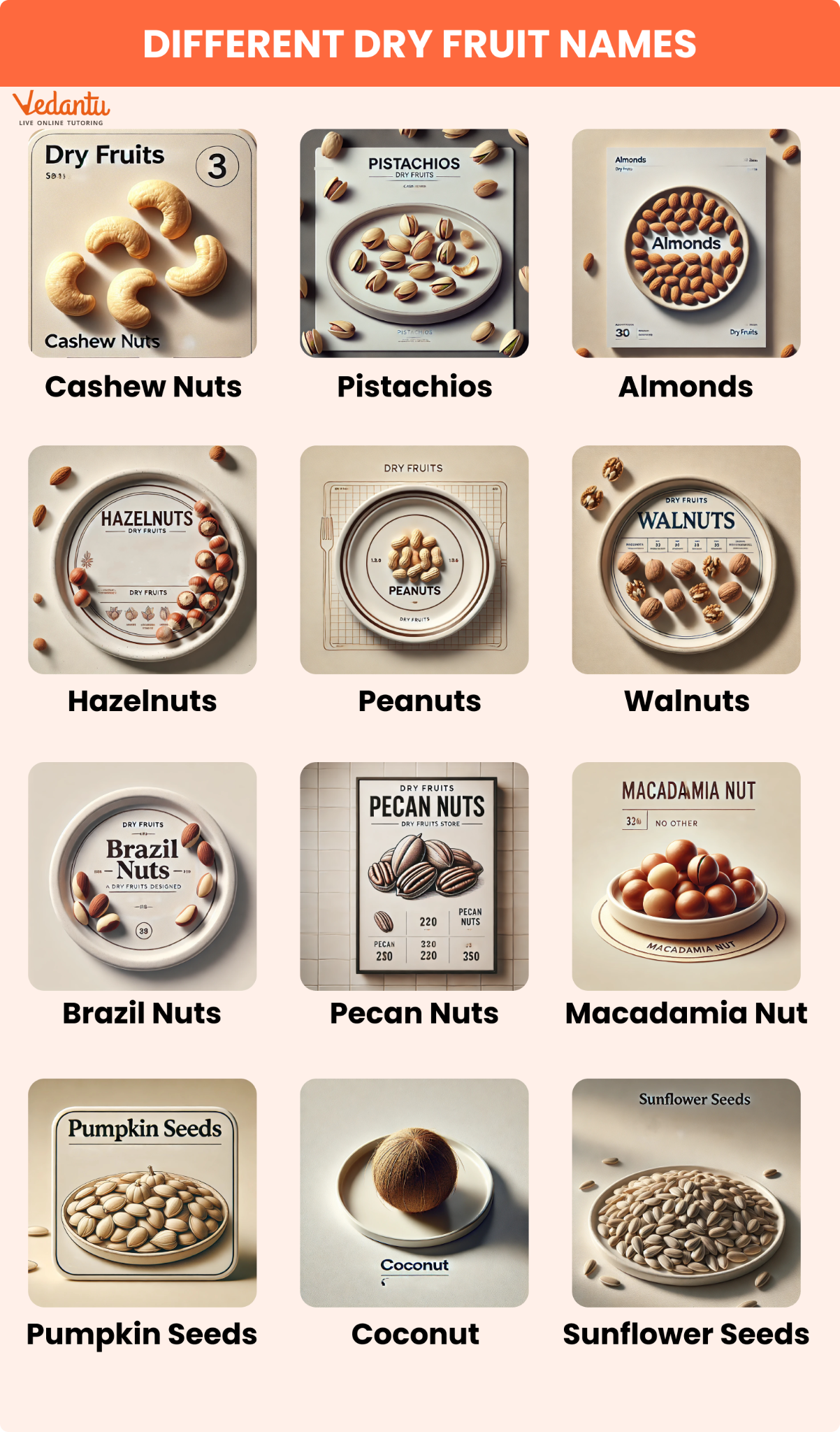
All Dry Fruit Names
Details About Some Common Dry Fruits
Common Allergies Related to Dry Fruits
Nut Allergies
Almonds, Cashews, Walnuts, Hazelnuts, Pistachios, Brazil Nuts, Macadamia Nuts: Individuals with nut allergies can experience symptoms such as itching, swelling, hives, or more severe reactions like anaphylaxis.
Tree Nut Allergies
Pine Nuts, Chestnuts, Pecans, Sacha Inchi, Marcona Almonds: People with tree nut allergies may react to these nuts, leading to symptoms like digestive issues, skin reactions, or respiratory problems.
Date Allergies
Dates: Rare but possible, date allergies can cause symptoms such as stomach cramps, diarrhoea, or skin reactions in sensitive individuals.
Fig Allergies
Figs: Allergic reactions to figs can include itching, swelling, or more severe symptoms in individuals sensitive to them.
Sulphite Sensitivity
Dried Apricots, Raisins, Dried Mango: Some dried fruits are treated with sulphites to preserve them. Individuals sensitive to sulphites may experience asthma symptoms, headaches, or digestive issues.
Test Your Knowledge on the Topic of Dry Fruits
This dry fruit is often used in baking and has a sweet, chewy texture. It is high in fibre and potassium. What is it?
Which dry fruit is known for being particularly high in omega-3 fatty acids and antioxidants?
This dry fruit is known to help with bone health and energy levels due to its high content of calcium and magnesium. Which dry fruit is it?
If someone is allergic to tree nuts, which of the following should they avoid: peanuts, cashews, or sunflower seeds?
Which dry fruit is known for being a good source of iron and is commonly used to prevent anaemia?
Which dry fruit should be stored in an airtight container to maintain freshness and prevent mould growth?
This dry fruit is often used in trail mixes and is known for its crunchy texture and slightly sweet flavour. What is it?
Which dry fruit is known for having a high-calorie content, making it a good source of energy for athletes?
Which dry fruit can be used as a natural sweetener in recipes and is also high in fibre?
This dry fruit is often added to salads and is rich in vitamin E, which helps in maintaining skin health. What is it?
Find Out if You Got them All Right from the Answers Below.
Date
Walnuts
Almonds
Cashews
Raisins
Dried apricots
Pistachios
Dates
Figs
Almonds
Takeaways from This Page
Dry fruits are rich in essential nutrients, including vitamins, minerals, and antioxidants, which contribute to overall health. For example, almonds provide healthy fats and vitamin E, while raisins are a good source of iron.
Many dry fruits, such as dates and nuts, are high in natural sugars and healthy fats, making them excellent energy-boosting snacks.
Consuming dry fruits can support various aspects of health. Walnuts are known for their omega-3 fatty acids, which promote brain health, while figs offer dietary fibre that aids in digestion.
Some individuals may have allergies to specific dry fruits, like tree nuts. It's important to be aware of potential allergic reactions and check ingredient labels carefully.
While dry fruits are beneficial, they can also be high in calories. Moderation is key, especially for those managing weight or calorie intake.
FAQs on Dry Fruit Names in English with Examples and Benefits
1. What are dry fruits in English?
Dry fruits are fruits that have had most of their water content removed naturally or through drying methods. In English vocabulary, dry fruits commonly refer to nuts and dried fruits eaten as snacks or used in cooking.
- Examples: almonds, cashews, raisins, dates, pistachios
- They are rich in nutrients and often used in desserts and traditional dishes
- The term is commonly used in Indian English
2. What are the names of common dry fruits in English?
Common dry fruit names in English include almonds, cashews, raisins, walnuts, and dates. Here is a list of widely used dry fruit names:
- Almond
- Cashew
- Raisin
- Walnut
- Pistachio
- Date
- Fig
- Apricot
3. What is the difference between dry fruits and nuts?
The main difference is that dry fruits are dried natural fruits, while nuts are hard-shelled seeds.
- Dry fruits: raisins (dried grapes), dates, dried figs
- Nuts: almonds, cashews, walnuts, pistachios
- All nuts are dry, but not all dry fruits are nuts
4. Is raisin a dry fruit?
Yes, a raisin is a dry fruit because it is a dried grape. The word raisin refers specifically to grapes that have been dried naturally or artificially.
- Singular: raisin
- Plural: raisins
- Example sentence: I added raisins to the cake.
5. What is the English name of Anjeer?
The English name of Anjeer is fig. Fig refers to the fruit that is often dried and eaten as a dry fruit.
- Fresh form: fig
- Dried form: dried fig
- Example: She eats dried figs for breakfast.
6. What is the English name of Kaju?
The English name of Kaju is cashew. A cashew is a kidney-shaped nut commonly used in sweets and savory dishes.
- Singular: cashew
- Plural: cashews
- Example: He bought a packet of cashews.
7. What is the English name of Badam?
The English name of Badam is almond. An almond is an edible seed widely consumed as a healthy dry fruit.
- Singular: almond
- Plural: almonds
- Example sentence: She drinks almond milk every day.
8. How do you use dry fruit names in English sentences?
You use dry fruit names as common nouns in sentences, just like other food items.
- Example 1: I eat almonds every morning.
- Example 2: The cake contains raisins and cashews.
- Example 3: Dates are very sweet.
9. What are some dry fruit names for kids to learn?
Easy dry fruit names for kids include almond, cashew, raisin, and walnut. These basic dry fruit vocabulary words are simple to spell and pronounce.
- Almond
- Cashew
- Raisin
- Walnut
- Date
10. What are the health benefits of dry fruits?
Dry fruits are healthy because they are rich in vitamins, minerals, fiber, and healthy fats. Regular consumption of dry fruits can support overall health.
- Almonds support brain health
- Walnuts contain omega-3 fatty acids
- Dates provide natural energy
- Raisins aid digestion
