







What Are the Main Types of Trees With Names and Examples
Get to know about the different types of trees around us. Our guide for Tree Names provides all the important trees names list. In this article, we’ve gathered a list of over 25 tree names, and tree images with names chart, making it easy to identify and remember them. Whether you’re a nature enthusiast or just starting to know about the trees, this guide will introduce you to a variety of common and interesting trees. With clear and simple explanations, you'll gain a new appreciation for the greenery around you.
 Table of Content
Trees are an essential part of our planet, offering shade, oxygen, habitats, and beauty. Knowing a 50 Trees name in English enriches our vocabulary, helps in environmental studies, and encourages a deeper appreciation for nature’s biodiversity. This topic covers an alphabetical list of trees, their scientific names, types, and unique features, supporting children and learners in understanding trees from around the world.
Alphabetical List of 50 Trees Name in English
Below is an alphabetical list of 50 Trees name in English, including different types of trees found in various climates. Learning these names improves nature-related vocabulary, helps with reading comprehension, and supports creative activities like drawing. Many schools encourage students to identify different types of trees with names and pictures as part of their science and language development.
Table of 50 Trees Name A-Z, Common and Scientific Names
| A-Z | Tree Name (Common) | Scientific Name |
|---|---|---|
| A | Apple | Malus domestica |
| B | Banyan | Ficus benghalensis |
| C | Cedar | Cedrus deodara |
| D | Date Palm | Phoenix dactylifera |
| E | Elm | Ulmus americana |
| F | Fig | Ficus carica |
| G | Guava | Psidium guajava |
| H | Holly | Ilex aquifolium |
| I | Indian Mahogany | Swietenia mahagoni |
| J | Jacaranda | Jacaranda mimosifolia |
| K | Kadamba | Neolamarckia cadamba |
| L | Lemon | Citrus limon |
| M | Mango | Magnifera indica |
| N | Neem | Azadirachta indica |
| O | Oak | Quercus robur |
| P | Pine | Pinus roxburghii |
| Q | Quince | Cydonia oblonga |
| R | Rubber | Hevea brasiliensis |
| S | Sal | Shorea robusta |
| T | Teak | Tectona grandis |
| U | Umbrella Thorn | Acacia tortilis |
| V | Vachellia | Vachellia nilotica |
| W | Willow | Salix babylonica |
| X | Xylia | Xylia xylocarpa |
| Y | Yew | Taxus baccata |
| Z | Zizyphus | Ziziphus mauritiana |
| - | Papaya | Carica papaya |
| - | Eucalyptus | Eucalyptus globulus |
| - | Palm | Arecaceae |
| - | Maple | Acer saccharum |
| - | Peepal | Ficus religiosa |
| - | Sandalwood | Santalum album |
| - | Olive | Olea europaea |
| - | Kapur | Dryobalanops aromatica |
| - | Chestnut | Castanea sativa |
| - | Coconut | Cocos nucifera |
| - | Baobab | Adansonia digitata |
| - | Ashoka | Saraca asoca |
| - | Sycamore | Platanus occidentalis |
| - | Plum | Prunus domestica |
| - | Pomegranate | Punica granatum |
| - | Mulberry | Morus alba |
| - | Spruce | Picea abies |
| - | Rosewood | Dalbergia latifolia |
| - | Gulmohar | Delonix regia |
| - | Hazel | Corylus avellana |
| - | Kurrajong | Brachychiton populneus |
| - | Catalpa | Catalpa bignonioides |
This tree names a-z list includes native, exotic, fruit, shade, and ornamental trees suitable for different types of drawings and activities. For more on nature, see the Paragraph on Forest and Paragraph on Environment resources.
Different Types of Trees with Names and Unique Features
Different types of trees with names and pictures help us identify a variety of species, such as deciduous trees (like Oak and Maple), evergreens (like Pine and Eucalyptus), fruit-bearing (like Mango and Guava), and flowering trees (like Gulmohar and Jacaranda). These categories are helpful for educational activities and environmental learning.
Deciduous Trees: Shed leaves in specific seasons, e.g., Oak, Maple, Chestnut.
Evergreen Trees: Remain green year-round, e.g., Pine, Neem, Eucalyptus.
Fruit Trees: Grow edible fruits, e.g., Mango, Apple, Pomegranate.
Flowering Trees: Famous for colorful blossoms, e.g., Gulmohar, Jacaranda.
Palm Trees: Adapted to tropical climates, e.g., Coconut, Date Palm.
Children often enjoy different types of trees drawing with names easy. Explore more about creative writing with Essay on Gardening and How to Write a Short Story Step by Step.
Tree Names A-Z with Pictures and Scientific Names
Identifying tree names a-z with pictures and their scientific names supports both academic knowledge and real-world observation. For example, the Mango tree (Magnifera indica) is widely recognized in India, while the Oak tree (Quercus robur) is famous in Europe. Adding images or drawings enhances memorization and appeals to young learners.
Oak Tree – Sturdy and widespread, known for its acorns.
Neem Tree – Well-known for medicinal uses.
Coconut Tree – Found in coastal regions, source of coconuts.
Peepal Tree – Sacred in many cultures, easy to draw.
Gulmohar Tree – Attractive red or orange blossoms.
If you are interested in 20 Scientific names of trees, review the table above for several real examples and explore related vocabulary activities for kids on Vocabulary Words for Kids.
Examples of Different Types of Trees in Nature & Usage
Trees vary greatly in appearance, usefulness, and habitat. Some, such as Mahogany and Teak, are valued for their wood, while others, like Banyan and Peepal, are admired for their canopy or traditional significance. Different kinds of trees with names and pictures in the Philippines might include Narra and Acacia, reflecting the region’s diversity.
Teak: Used for high-quality furniture because of its strength.
Banyan: Provides widespread shade; often featured in stories and artwork.
Ashoka: Known for its beautiful flowers, also easy to illustrate in school drawings.
Neem: Used for medicinal and environmental benefits.
Cedar: Used in building and for aromatic wood.
For creative inspiration, try drawing different types of Christmas trees with names or explore tree leaves in science lessons. Check out Paragraph on Plants and Vegetable Names for Kids to connect with more nature vocabulary.
Learning Activities: Drawing, Identifying, and Writing About Trees
For children, learning different types of trees drawing with names in Hindi and English supports bilingual skills. Activities like tree identification, making leaf rubbings, or writing simple descriptions encourage observational abilities. Vedantu offers helpful resources on Learning Activities and Kids Topics to further enhance knowledge of trees and the environment.
Draw leaves from different types of trees with names and pictures, such as Maple, Mango, and Pine.
Write five lines about your favorite tree, for example, the Mango or Neem.
Identify tree species while walking in a park or garden.
For related writing and speaking guidance, see Speech on the Importance of Trees in Our Lives, Tree Essay, and Speech on Save Trees and Save Planet Earth.
Page Summary
Understanding a 50 Trees name in English deepens our awareness of ecological diversity and enriches language skills. The alphabetical list, scientific names, and types of trees empower learners to recognize, draw, and discuss a wide variety of species. Using supportive resources from Vedantu makes tree-related learning engaging, practical, and memorable for all age groups.
Tree Names in English

Trees Names List
More About Some Trees
Classification of Different Types of Trees With Names

Additional Tree Examples
Fruit Trees Names

Desert Trees Names

Benefits of Planting Trees
1. Environmental Benefits
Air Purification: Trees absorb pollutants and produce oxygen, improving air quality.
Climate Regulation: They help regulate temperatures and mitigate climate change by absorbing carbon dioxide.
Water Management: Trees reduce soil erosion and help manage water cycles by absorbing rainwater.
2. Health Benefits
Mental Well-being: Green spaces and trees have been shown to reduce stress and improve mental health.
Physical Health: Proximity to trees and green spaces encourages physical activity and provides cleaner air.
3. Economic Benefits
Property Value: Properties with trees often have higher values and more attractive landscapes.
Resource Production: Trees provide materials like timber, paper, and fruit, supporting various industries.
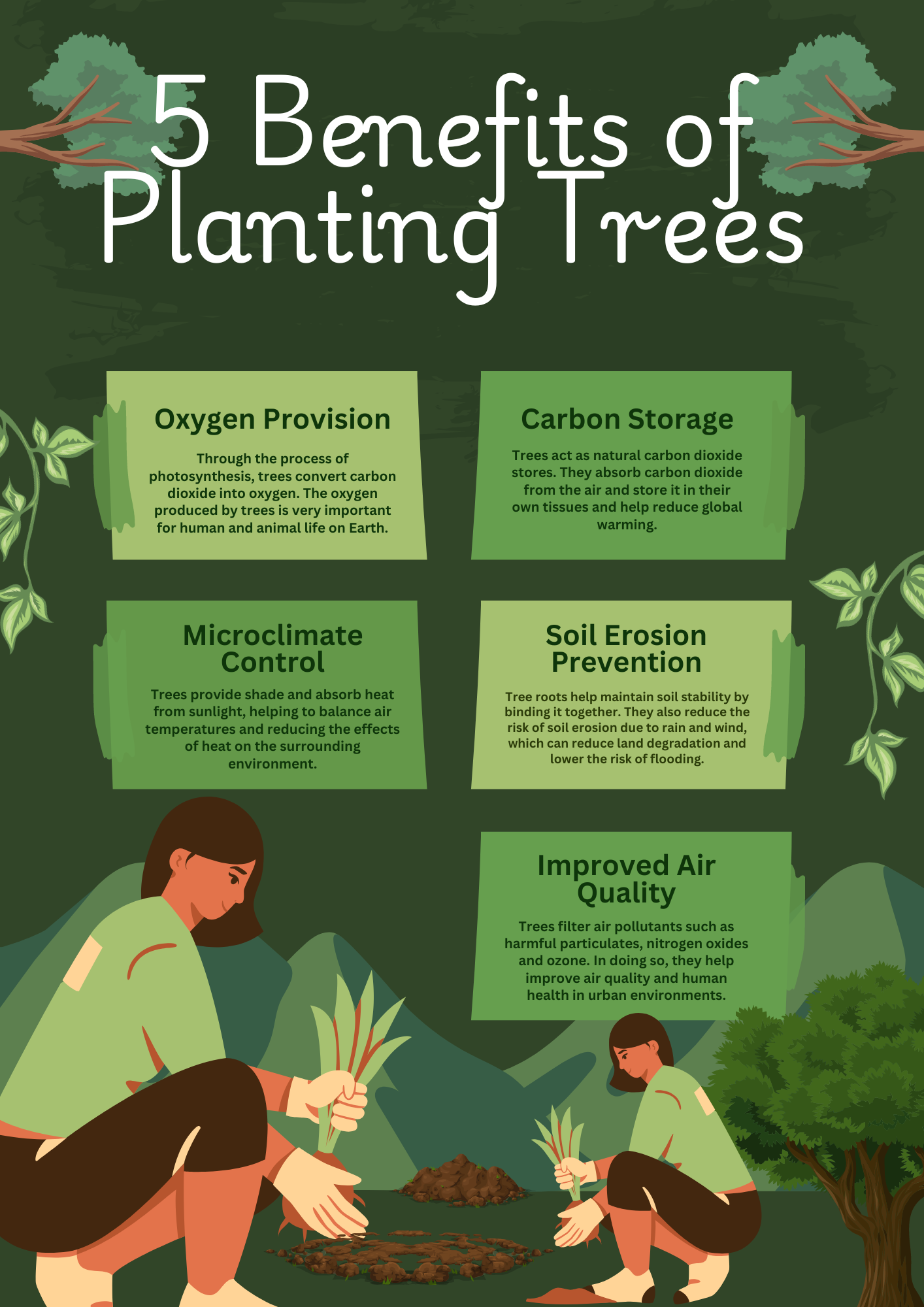
Tree Planting and Conservation
1. Importance of Planting Trees
Reforestation: Planting trees helps restore deforested areas and rehabilitate damaged ecosystems.
Urban Green Spaces: Trees in cities improve liveability and provide recreational areas.
2. Conservation Efforts
Protected Areas: National parks and reserves help conserve native tree species and their habitats.
Sustainable Practices: Promoting sustainable forestry practices helps balance economic needs with environmental preservation.
Uses of Trees
A wide range of Uses of Trees impact our environment, economy, and daily lives. Here’s a comprehensive overview:
Environmental Benefits: Trees improve air quality, regulate climate, manage water cycles, and support biodiversity by providing habitats for wildlife.
Economic Uses: Trees supply timber, fruit, nuts, and medicinal products, contributing to industries and economic growth.
Cultural and Aesthetic Value: Trees enhance landscapes, hold cultural significance, and contribute to historical and spiritual heritage.
Health and Recreation: Trees promote mental and physical well-being, provide spaces for recreation, and support environmental education.
Practical Applications: Trees offer firewood, materials for crafts and furniture, and serve as windbreaks and erosion control.
Tree Names Quiz
1. Which tree is known for its sweet, edible fruit and is often associated with autumn in temperate climates?
A) Pine Tree
B) Apple Tree
C) Olive Tree
D) Eucalyptus Tree
2. Which tree is famous for its large, glossy leaves and is also the national tree of India?
A) Oak Tree
B) Banyan Tree
C) Cherry Blossom Tree
D) Maple Tree
3. Which tree produces a fruit that is often used to make tropical beverages and is also known for its tall, slender trunk?
A) Coconut Tree
B) Fig Tree
C) Papaya Tree
D) Guava Tree
4. Which tree is well-known for its medicinal properties and is often used in traditional medicine, especially in tropical regions?
A) Neem Tree
B) Cherry Tree
C) Willow Tree
D) Hickory Tree
5. Which tree is known for its large, colourful springtime flowers and is often celebrated in Japanese culture?
A) Olive Tree
B) Cherry Blossom Tree
C) Pine Tree
D) Date Tree
6. Which tree is notable for its ability to grow in very dry, desert-like conditions and produce sweet, edible fruits known as dates?
A) Baobab Tree
B) Date Tree
C) Fig Tree
D) Eucalyptus Tree
7. Which tree is recognised for its durable wood, often used in high-quality furniture and flooring?
A) Maple Tree
B) Mahogany Tree
C) Pine Tree
D) Willow Tree
8. Which tree has a unique fruit with a spiky outer skin and is often called the “King of Fruits”?
A) Mango Tree
B) Durian Tree
C) Pomegranate Tree
D) Apricot Tree
9. Which tree is known for its needle-like leaves and is commonly used as a Christmas tree?
A) Spruce Tree
B) Oak Tree
C) Cherry Tree
D) Fig Tree
10. Which tree, native to Australia, is known for its distinctive bark and oil-rich leaves used in medicinal and aromatic products?
A) Eucalyptus Tree
B) Baobab Tree
C) Cedar Tree
D) Olive Tree
Tree Names Quiz Answers:
B) Apple Tree
B) Banyan Tree
A) Coconut Tree
A) Neem Tree
B) Cherry Blossom Tree
B) Date Tree
B) Mahogany Tree
B) Durian Tree
A) Spruce Tree
A) Eucalyptus Tree
Takeaways from This Page
Variety of Species: Trees come in many types, from fruit trees to ornamental trees, each suited to different environments.
Identification Tools: Tree images with name charts help in recognising and learning about different species.
Environmental and Economic Benefits: Trees improve air quality, support ecosystems, and provide resources like timber and fruit.
Cultural and Aesthetic Value: Trees have symbolic meanings and enhance landscapes, adding beauty and cultural significance.
Practical Knowledge: Understanding different trees, including desert trees and garden trees, aids in proper planting, care, and education.
FAQs on Different Types of Trees With Names Explained
1. What are the main types of trees?
The main types of trees are deciduous trees, evergreen trees, and coniferous trees.
- Deciduous trees shed their leaves annually (e.g., oak, maple).
- Evergreen trees keep their leaves throughout the year (e.g., mango, eucalyptus).
- Coniferous trees produce cones and usually have needle-like leaves (e.g., pine, fir).
2. What are deciduous trees with examples?
Deciduous trees are trees that lose their leaves during a specific season each year.
- They usually shed leaves in autumn to conserve water.
- They grow new leaves in spring.
- Examples include oak, maple, birch, and elm.
3. What are evergreen trees with examples?
Evergreen trees are trees that retain their leaves throughout the year.
- They do not shed all their leaves at once.
- They remain green in all seasons.
- Examples include mango, neem, eucalyptus, and pine.
4. What are coniferous trees?
Coniferous trees are cone-bearing trees that usually have needle-like or scale-like leaves.
- They produce seeds inside cones.
- Most are evergreen.
- Examples include pine, cedar, spruce, and fir.
5. What are some common types of fruit trees?
Common types of fruit trees are trees that produce edible fruits for humans and animals.
- Mango tree
- Apple tree
- Orange tree
- Guava tree
- Cherry tree
6. What are flowering trees called?
Flowering trees are called ornamental trees or angiosperms because they produce flowers and seeds enclosed in fruits.
- They are valued for their beauty and fragrance.
- Examples include cherry blossom, gulmohar, jacaranda, and magnolia.
7. What is the difference between deciduous and evergreen trees?
The main difference between deciduous and evergreen trees is that deciduous trees shed their leaves seasonally, while evergreen trees keep their leaves year-round.
- Deciduous trees: Lose leaves in autumn (e.g., maple).
- Evergreen trees: Stay green throughout the year (e.g., pine).
8. What are some types of shade trees?
Shade trees are large trees planted to provide shelter and protection from sunlight.
- Banyan tree
- Neem tree
- Oak tree
- Maple tree
9. What are medicinal trees with names?
Medicinal trees are trees known for their healing and therapeutic properties.
- Neem tree – used for skin and dental care.
- Eucalyptus tree – used for respiratory relief.
- Amla tree – rich in vitamin C.
- Cinchona tree – source of quinine.
10. What are some examples of hardwood and softwood trees?
Hardwood and softwood trees are classified based on the type of wood they produce.
- Hardwood trees are usually deciduous and have dense wood (e.g., oak, teak, mahogany).
- Softwood trees are usually coniferous and have lighter wood (e.g., pine, fir, spruce).
