









How to insert and customize bullet and numbered lists in MS Word
Inserting bullets and numbers is an important formatting feature in word processing software such as Microsoft Word. It helps users organise information in a clear, structured, and readable way. Whether creating notes, reports, assignments, or presentations, lists make content easier to understand and follow. Inserting Bullets And Numbers in computer science is considered a basic yet essential skill in document formatting. It improves the visual appearance of text and allows users to present steps, points, and ideas systematically. Understanding this feature is important for students, professionals, and anyone working with digital documents.
Definition and Meaning
Inserting Bullets And Numbers refers to the process of creating ordered or unordered lists in a document using built in formatting tools. It is widely used in word processing applications like MS Word.
- Bullets are symbols such as dots or squares used to list items without a specific order.
- Numbers are used to create ordered lists where sequence matters.
- It is a formatting feature available under the Home tab in MS Word.
- It improves readability and document structure.
How It Works - Working Principle
The Inserting Bullets And Numbers working process is simple and user friendly. MS Word automatically formats selected text into a list when the user selects the bullets or numbers option.
- Select the text that needs to be converted into a list.
- Go to the Home tab on the Ribbon.
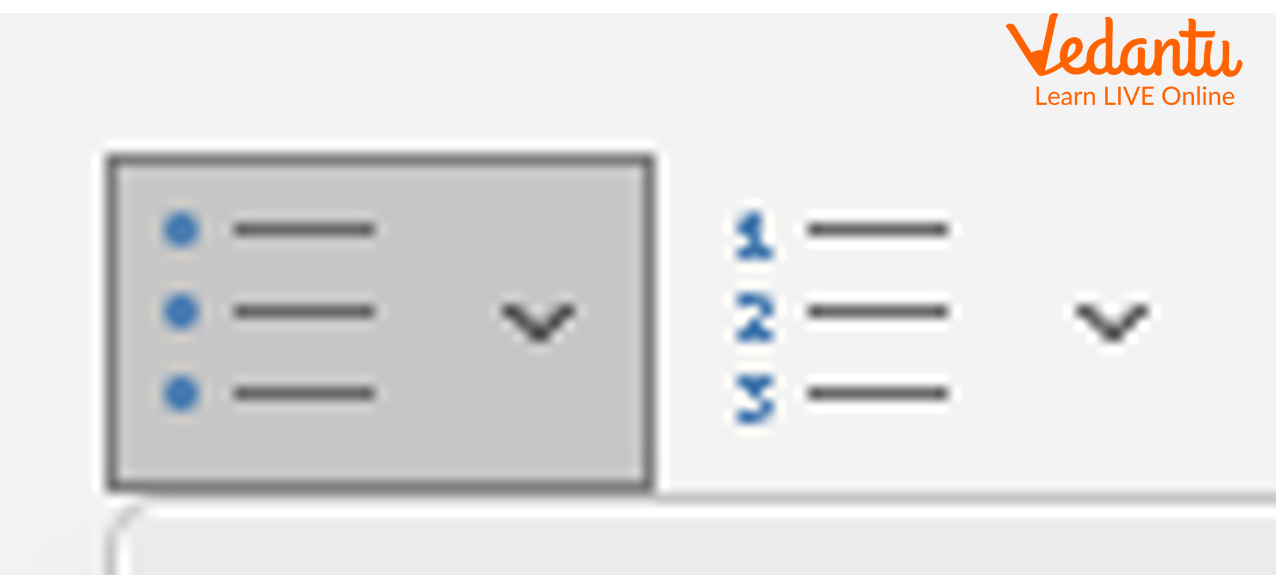
- Click on the Bullets or Numbering button in the Paragraph group.
- Choose a style from the displayed library.
- The selected text is automatically formatted into a list.
Users can also remove bullets or change styles using the same menu options.
Bullet Library in MS Word
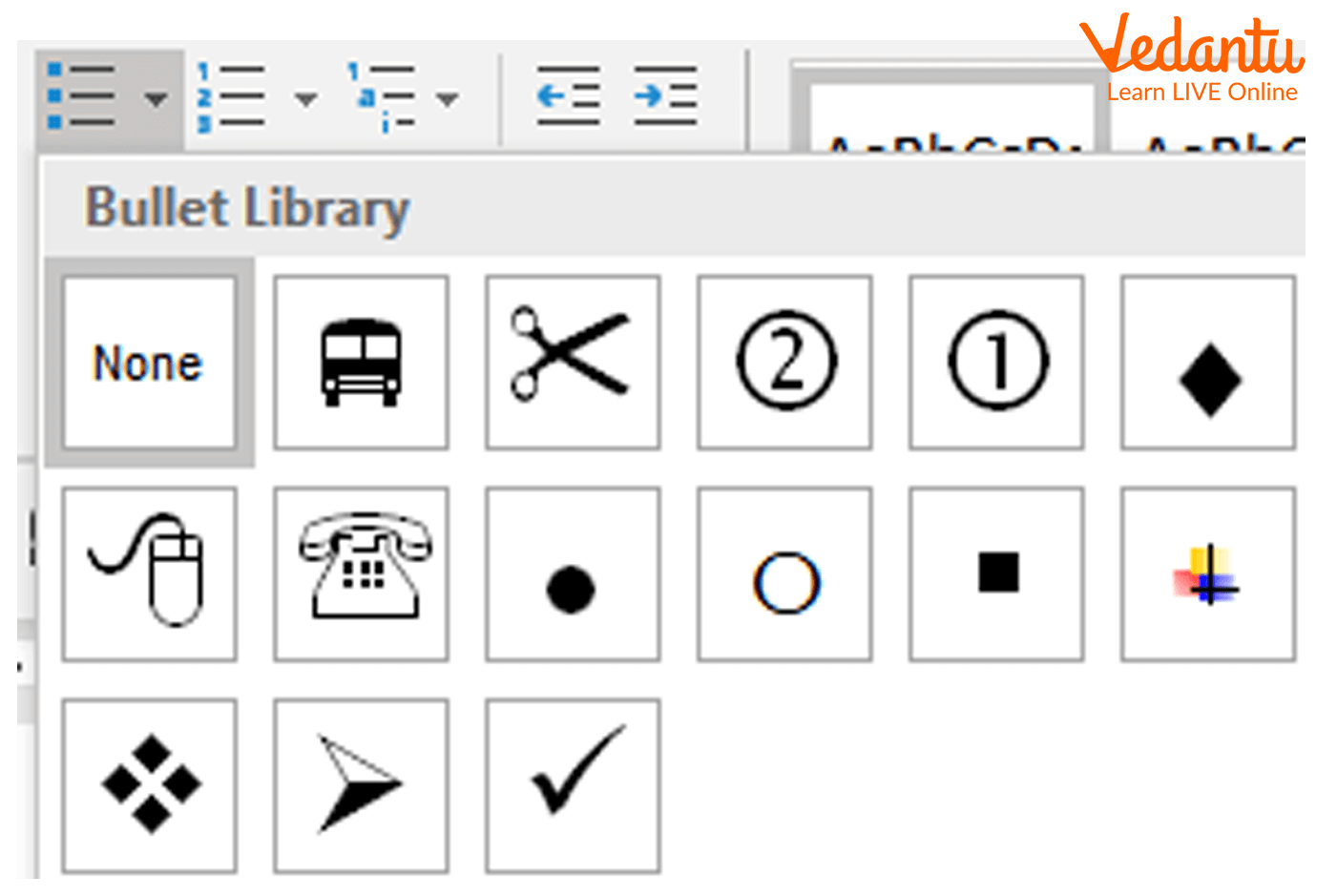
The bullet library provides various symbol options that users can apply to their lists.
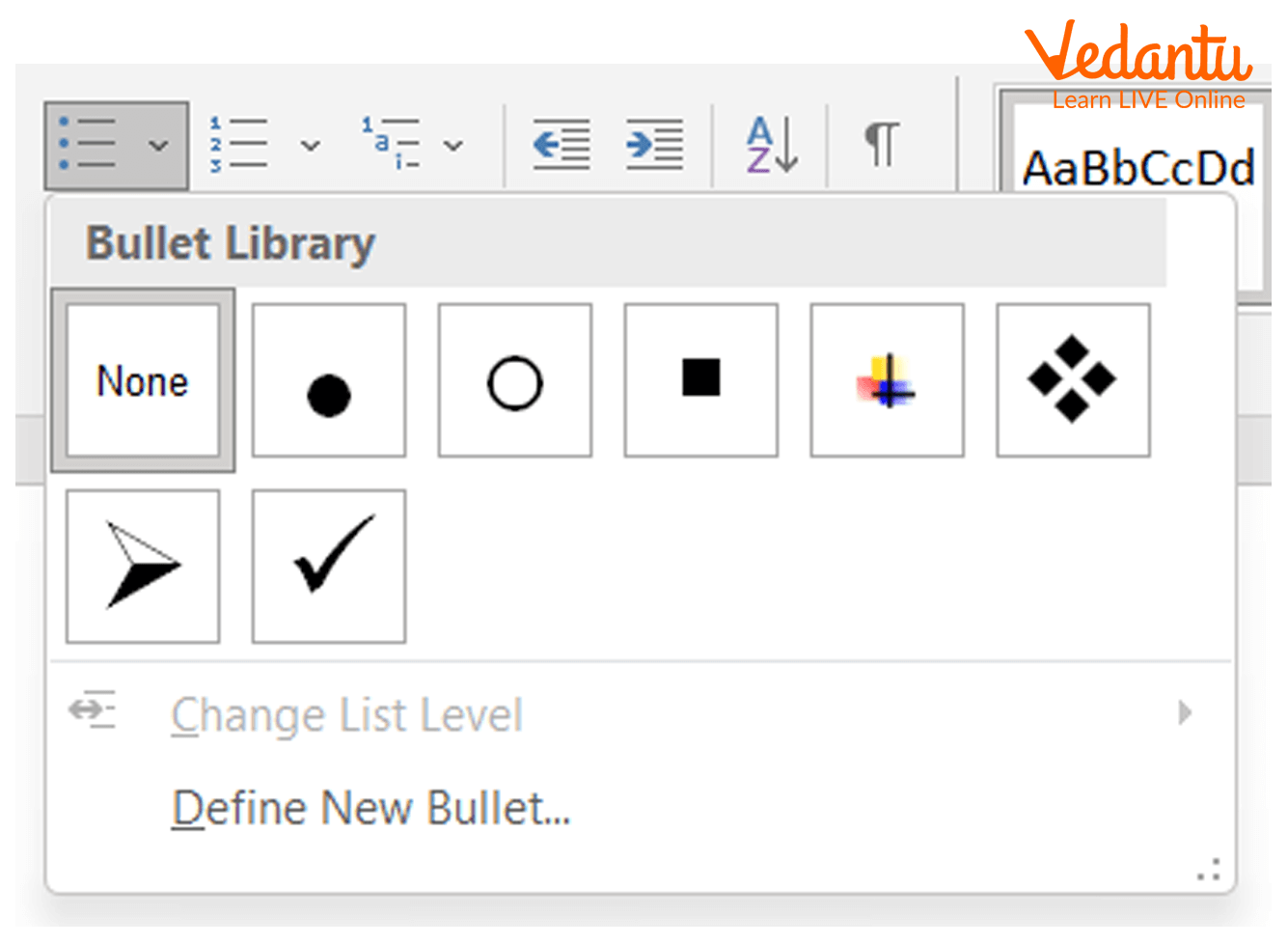
Inserting Bullets
To insert bullets, select the text and click on the Bullets icon in the Home tab.
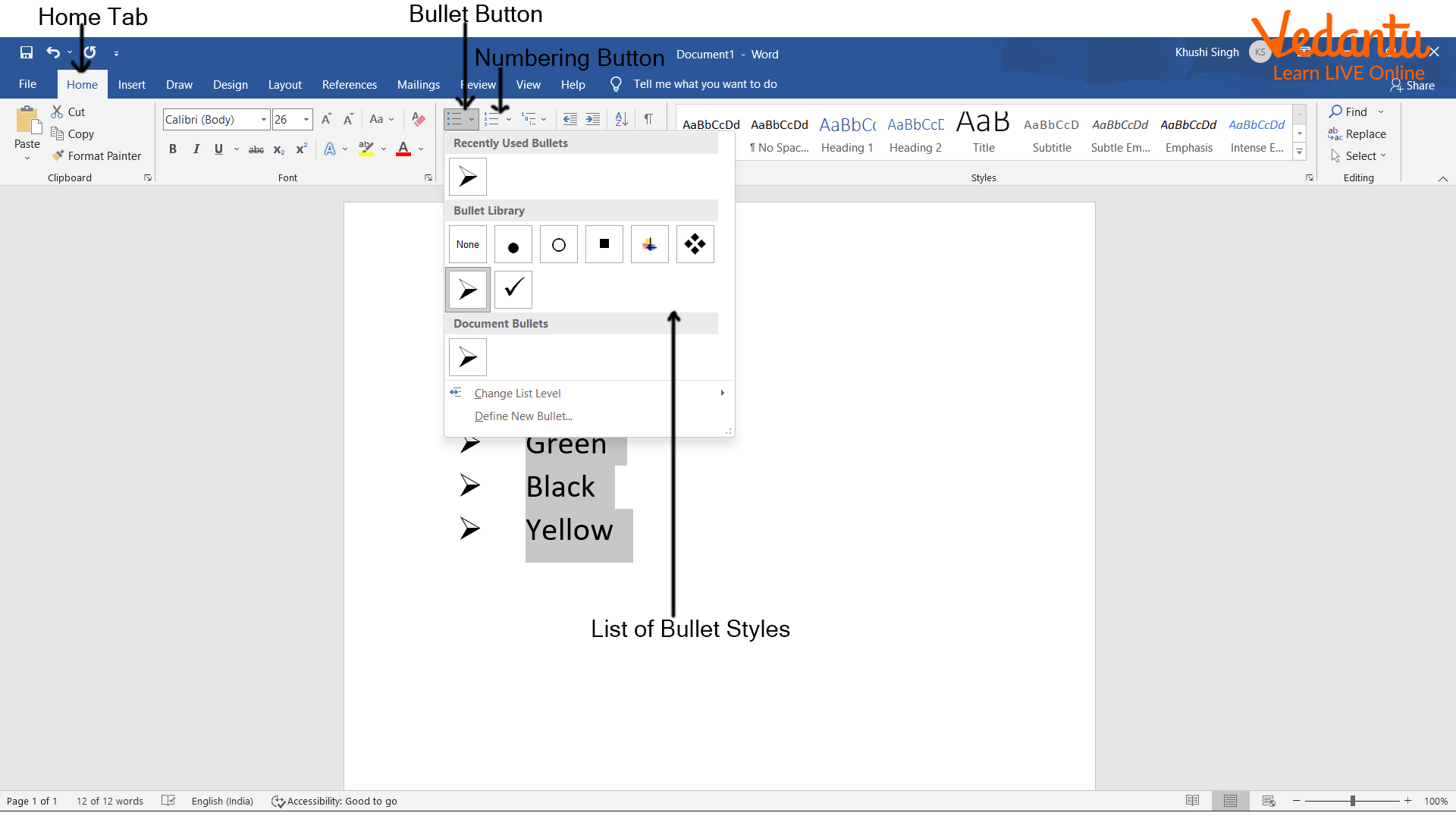
Changing Bullet Style
Users can modify the appearance of bullets by selecting a new style from the bullet menu.
Removing Bullets
To remove bullets, select the list and click the Bullets button again.
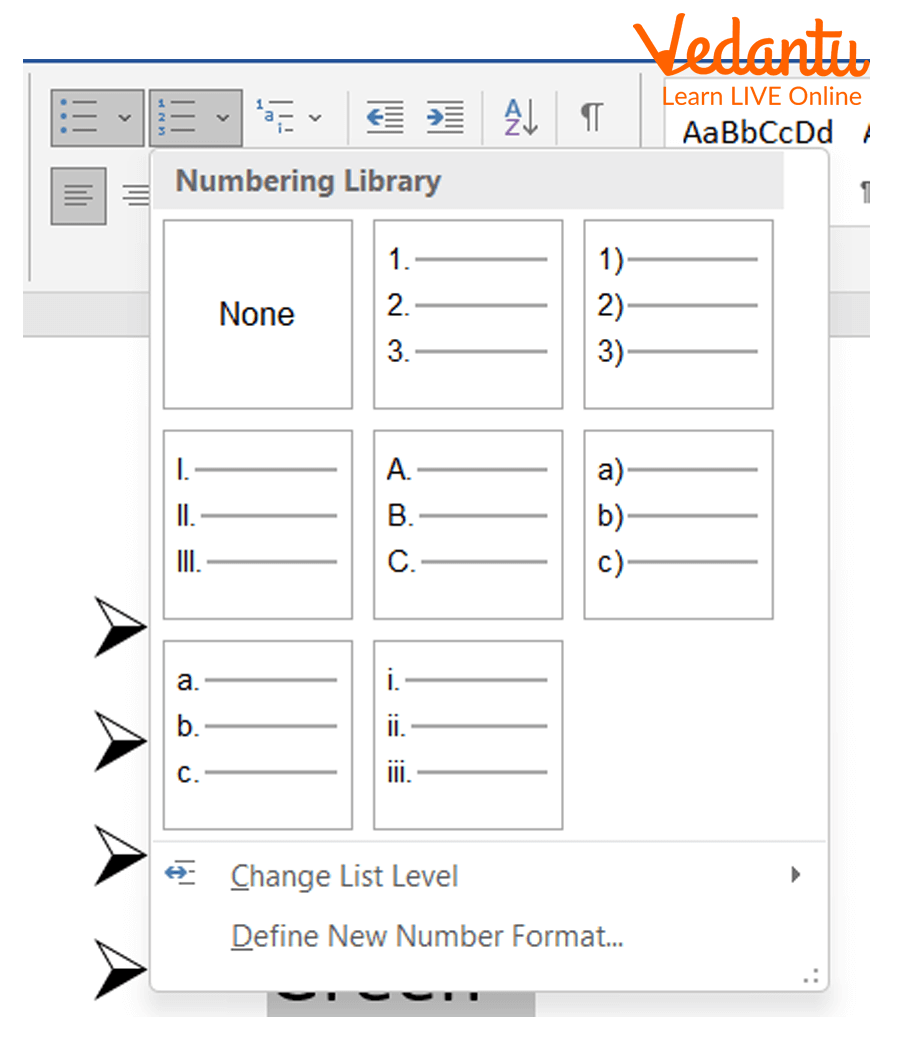
Numbers Button
The Numbers button creates ordered lists where sequence is important.
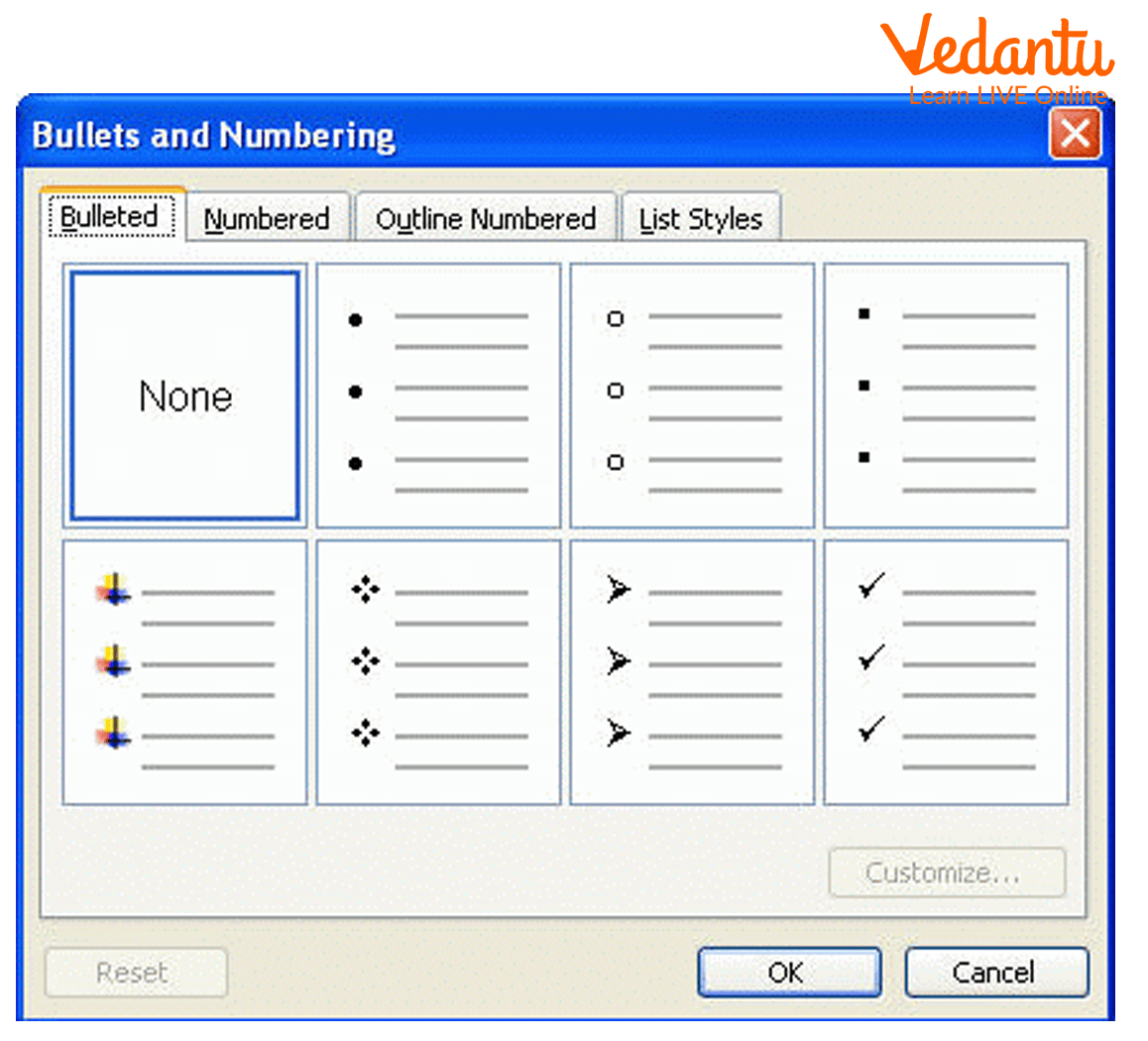
Changing Bullets
Users can customize bullet symbols, size, and color from the Define New Bullet option.
Types and Classification
Types of Lists in MS Word
| Type | Description | Example Use |
|---|---|---|
| Bulleted List | Uses symbols like dots or squares | Listing features |
| Numbered List | Uses numbers in sequence | Step by step instructions |
| Multilevel List | Uses hierarchical numbering | Outline format documents |
Each list type serves a different purpose depending on whether order and hierarchy are required.
Features and Characteristics
- Easy to apply and remove.
- Supports customization of symbols and numbering styles.
- Allows multilevel hierarchy.
- Automatically aligns and formats text.
- Improves document readability.
Advantages
- Organizes content clearly.
- Saves formatting time.
- Makes documents professional.
- Improves comprehension.
Disadvantages / Limitations
- Overuse can clutter the document.
- Improper indentation may affect formatting.
- Complex multilevel lists can be difficult to manage.
Applications and Use Cases
- Preparing school assignments and projects.
- Creating reports and official documents.
- Writing step by step procedures.
- Making notes and presentations.
Quick Facts About Inserting Bullets And Numbers
| Category | Details |
|---|---|
| Type | Text Formatting Feature |
| Software | MS Word and other word processors |
| Used For | Creating ordered and unordered lists |
| Location | Home tab - Paragraph group |
This feature is part of basic document formatting tools available in most word processing software.
Interesting Facts About Inserting Bullets And Numbers
- Bullets can be customized with symbols, pictures, or fonts.
- Numbered lists automatically update when items are added or removed.
- Multilevel lists are commonly used in legal and academic documents.
- Keyboard shortcuts can quickly create lists.
- Most modern word processors support similar list formatting features.
Conclusion
Inserting Bullets And Numbers is a fundamental formatting skill in computer science and document preparation. It helps organize information in a structured and visually clear manner. By understanding its types, features, and applications, users can create professional and readable documents. Mastering this feature improves productivity and enhances the overall presentation of digital content.
FAQs on Inserting Bullets and Numbers in MS Word for Structured Documents
1. What does inserting bullets and numbers mean in a document?
Inserting bullets and numbers means creating structured lists in a document to organize information clearly and logically.
- Bullets are used for unordered lists where order does not matter
- Numbers are used for ordered lists where sequence is important
- Commonly used in word processors, web development (HTML), and documentation
2. How do you insert bullets and numbers in Microsoft Word?
In Microsoft Word, bullets and numbering can be inserted using built-in formatting tools from the toolbar.
- Go to the Home tab
- Select Bullets or Numbering in the Paragraph group
- Choose a style and start typing the list items
3. What is the difference between bulleted lists and numbered lists?
The main difference is that bulleted lists show items without order, while numbered lists indicate sequence or ranking.
- Bullets are used for features, points, or options
- Numbers are used for steps, instructions, or algorithms
- Numbered lists are common in programming logic and exam answers
4. How are bullets and numbers implemented in HTML?
In HTML, bullets and numbers are created using list tags to structure web content.
- <ul> is used for unordered (bulleted) lists
- <ol> is used for ordered (numbered) lists
- <li> defines each list item
5. Why are bullets and numbering important in technical documentation?
Bullets and numbering improve readability, structure, and clarity in technical and academic documents.
- Organize algorithms and step-by-step procedures
- Highlight key features and components
- Improve presentation in project reports and exam answers
6. How can you create a multilevel numbered list?
A multilevel list contains sub-levels within a numbered or bulleted list to represent hierarchy.
- Use the Multilevel List option in word processors
- Press Tab to create sub-level items
- Commonly used for data structures and system components
7. Can bullets and numbers be customized in documents?
Yes, most word processors and web technologies allow customization of bullet styles and numbering formats.
- Change bullet symbols, size, and color
- Modify numbering format such as Roman numerals or alphabets
- Use CSS styling in web development for advanced formatting
8. What are the advantages of using bullets and numbers?
Using bullets and numbers enhances document structure and makes information easier to understand.
- Improves readability and visual clarity
- Helps in organizing complex computer science concepts
- Saves time during revision and exam preparation
9. What are common mistakes when inserting bullets and numbers?
Common mistakes include inconsistent formatting and incorrect use of ordered or unordered lists.
- Mixing bullet styles within the same list
- Using numbers when order is not required
- Improper indentation in multilevel lists
10. How are bullets and numbering relevant for coding and interview preparation?
Bullets and numbering help present structured answers in coding documentation, technical interviews, and competitive exams.
- Used to explain algorithms and steps clearly
- Organize features, advantages, and comparisons
- Improve clarity in project documentation and technical reports
