






How to Solve Multiplication and Division Problems in Grade 6 Maths
Multiple Choice Questions (MCQs)
1. What is the product of 4,000 and 80?
a) 32,000
b) 320,000
c) 3,200,000
d) 3200
2. If a box contains 144 pencils, how many pencils are there in 25 such boxes? a) 3,000
b) 3,500
c) 3,600
d) 4,000
3. Calculate 15.5 ÷ 100.
a) 1.55
b) 0.155
c) 1550
d) 15.05
4. Which expression is equivalent to 7 ÷ (2/5)?
a) 7 × (5/2)
b) 7 × (2/5)
c) (1/7) × (2/5)
d) (1/7) × (5/2)
Fill in the Blanks
5. 8,200 ÷ ________ = 82.
6. The product of 9.5 and 0.4 is ________.
7. When 7,430 is divided by 15, the quotient is ________ and the remainder is ________.
8. (5/6) × (12/25) = ________. (Provide the answer in simplest form)
True or False
9. The product of a number and its reciprocal is always 1. ________
10. Dividing a whole number by 1/4 is the same as multiplying it by 4. ________
11. The product of 2.5 and 3.0 is a whole number. ________
12. Division is commutative, meaning a ÷ b = b ÷ a. ________
Calculate the Following
13. Find the product of the following numbers:
a) 5,824 × 47 =
b) 309 × 612 =
c) 23.8 × 5.3 =
d) (4/7) × (21/24) =
14. Find the quotient and remainder (if any):
a) 8,965 ÷ 22 =
b) 54,321 ÷ 11 =
c) 98.4 ÷ 0.8 =
d) (8/9) ÷ (2/3) =
Word Problems
15. A farmer harvested 12,432 kilograms of wheat. He wants to pack them into sacks, with each sack holding 48 kilograms. How many sacks will he need?
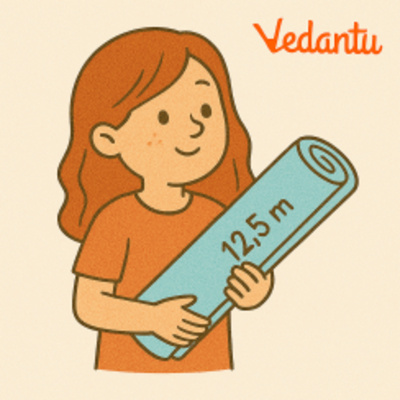
16. Sarah bought a fabric that is 12.5 meters long. If the cost of the fabric is $8.50 per meter, what is the total cost of the fabric she bought?
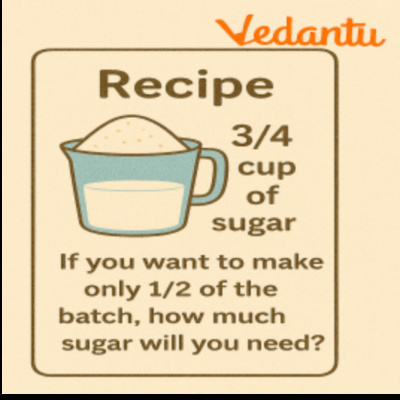
17. A recipe for a batch of cookies requires 3/4 cup of sugar. If you want to make only 1/2 of the batch, how much sugar will you need?
Match the Columns
18. Match the expression in Column A with its correct value in Column B.
Answer Key
1. b) 320,000
2. c) 3,600
3. b) 0.155
4. a) 7 × (5/2)
5. 100
6. 3.8
7. Quotient: 495, Remainder: 5
8. 2/5
9. True
10. True
11. False (The product is 7.5)
12. False
13.
● a) 273,728
● b) 189,108
● c) 126.14
● d) 1/2
14.
● a) Quotient: 407, Remainder: 11
● b) Quotient: 4938, Remainder: 3
● c) 123
● d) 4/3 or 1 (1/3)
15. 259 sacks
16. $106.25
17. 3/8 cup of sugar
18.
● 1. -> c. 6,000
● 2. -> d. 150
● 3. -> b. 250
● 4. -> a. 1.5
Class 6 Maths Multiplication and Division Worksheet for Easy Learning
This worksheet gives Class 6 students a fun way to practice multiplication and division in Maths. Learners answer real-life word problems and quick sums, helping them build speed and accuracy.
Parents see how their child applies Maths facts to daily life. The activities support understanding of multiplication and division rules, making basic Maths homework smoother and more enjoyable.
Explore Practical Methods for Solving Maths Problems
Students use this Class 6 Mathematics worksheet on Multiplication And Division to discover practical ways of solving problems. They tackle factors, remainders, and step-by-step division techniques. These important concepts help them solve long division and multiplication more easily, building a strong maths foundation for later classes. This worksheet reinforces skills needed for exams and everyday tasks.
FAQs on Multiplication and Division Practice Worksheet for Class 6 Maths
1. What are multiplication and division in Class 6 Maths?
Multiplication means combining equal groups, while division means splitting a total into equal parts in Class 6 Maths. Both operations are key for solving problems involving factors, products, divisors, quotients, and remainders. Mastering them helps build computation and problem-solving skills.
2. How do you solve long division for Grade 6?
Solving long division for Grade 6 involves step-by-step working out:
- Divide: Find how many times the divisor fits into the first digits.
- Multiply: Multiply the divisor by the quotient.
- Subtract: Take the result away.
- Bring down the next digit.
- Continue these steps until all digits are used, and find any remainder. This is important for division worksheets and exam problems.
3. What are multiplication and division word problems?
Multiplication and division word problems are real-life situations where you must use multiplication or division to find an answer. For example, 'If one box has 8 apples, how many apples in 6 boxes?' or '84 pencils shared among 7 students—how many each?' These test your understanding and application of Class 6 maths operations.
4. How do you check division answers?
You check division answers by multiplying the quotient by the divisor and adding the remainder. The total should match the original dividend:
Dividend = (Quotient × Divisor) + Remainder. This helps avoid mistakes on maths worksheets and exams.
5. Why is multiplication important in daily life?
Multiplication is important in daily life because it is used for quick calculations, sharing items equally, budgeting, and solving many real-world problems. Knowing how to multiply makes tasks like shopping, grouping, and planning easier, matching the focus of Class 6 Maths multiplication worksheets.
6. What is the difference between multiplication and division?
Multiplication combines equal groups to find a total (for example, 5 groups of 6 apples gives 30 apples), while division splits a total into equal parts (for example, 30 apples divided equally among 6 people gives 5 apples each). Both are core operations in Grade 6 maths learning.
7. What types of questions are included in a multiplication and division worksheet for Class 6?
A multiplication and division worksheet for Class 6 usually has direct computation questions, fill-in-the-blank exercises, and word problems. It may also include matching activities, solving problems with remainders, and sometimes visual aids like fraction bars or arrays to reinforce concepts.
8. Is there an answer key provided with these worksheets?
Yes, each multiplication and division worksheet for Class 6 comes with a detailed answer key. This allows you to check your work, understand step-by-step solutions, and correct any mistakes for better revision and exam preparation.
9. Can these worksheets be downloaded and printed for home use?
Yes, these Class 6 maths multiplication and division worksheets are available in printable PDF format. You can easily download and print them for homework practice, revision, or extra exercises during holidays.
10. What skills do Class 6 students develop by practicing multiplication and division worksheets?
By working on multiplication and division worksheets for Class 6, students build skills in computation, procedural fluency, problem solving, and error checking. These worksheets reinforce concept understanding and help students gain confidence for school exams.
11. How does practicing with visual aids help in understanding multiplication and division?
Using visual aids like arrays, fraction bars, and group illustrations helps students ‘see’ how multiplication and division work. This visual learning supports deeper understanding of maths concepts and is commonly included in effective Class 6 worksheets.
12. Can these worksheets be used on a tablet or mobile device?
Yes, the Class 6 multiplication and division worksheets are designed for easy preview and use on both tablet and mobile devices. You can view, practice, or share answers digitally before printing as needed.
