




Which of the following carbohydrates is monosaccharide?
Answer
 Verified
529.8k+ views
Hint: Carbohydrates as we know are very essential parts of our balanced diet. Carbohydrates are the major biomolecules that are composed of carbon, hydrogen and oxygen. In the ratio of \[{C_n}{H_{2n}}{O_n}\]. They are the primary energy providing biomolecules and certain organisms. They also act as building materials for making cell wall and cell membrane.
Complete answer:
Carbohydrates are classified based upon the number of sugar molecules present in them. They can be categorized as Monosaccharides, disaccharides and polysaccharides.
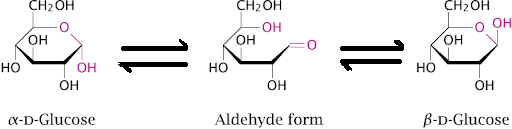
The monosaccharides are often called simple sugars which possess a free aldehyde. Only one sugar molecule is present in monosaccharides. It is divided into trioses, tetroses, pentoses etc. Examples of carbohydrates are- Glucose, glycose, ribose, glucoheptose.
Glucose is the most common form of monosaccharide. General characteristics of carbohydrates are- carbohydrates are generally sweet in taste. They are mostly soluble in water mostly. They have a fruity odor and are generally white in color.
There are two major functional group presents in carbohydrate one is ketose group and another is aldehyde group. Apart from glucose, fructose and galactose are also monosaccharides.
Glucose used as an energy source and for the synthesis of starch, glycogen and cellulose is hexose. Ribose and deoxyribose are pentose sugars used in buildings of RNA and DNA respectively. In aqueous solutions monosaccharides exist as rings. Monosaccharides with eight or more carbons are observed as they are quite unstable.
Note:
Monosaccharides are used to produce and store energy. Most organisms create energy by breaking down the monosaccharide glucose, and harvesting the energy released from the bonds. Other monosaccharides are used to form long fibers, which can be used as a form of cellular structure. The monosaccharide glucose plays a pivotal role in metabolism where the chemical energy is extracted through glycolysis and the citric acid cycle to provide energy to living organisms.
Some other monosaccharides can be converted in the living organism to glucose.
Complete answer:
Carbohydrates are classified based upon the number of sugar molecules present in them. They can be categorized as Monosaccharides, disaccharides and polysaccharides.
The monosaccharides are often called simple sugars which possess a free aldehyde. Only one sugar molecule is present in monosaccharides. It is divided into trioses, tetroses, pentoses etc. Examples of carbohydrates are- Glucose, glycose, ribose, glucoheptose.
Glucose is the most common form of monosaccharide. General characteristics of carbohydrates are- carbohydrates are generally sweet in taste. They are mostly soluble in water mostly. They have a fruity odor and are generally white in color.
There are two major functional group presents in carbohydrate one is ketose group and another is aldehyde group. Apart from glucose, fructose and galactose are also monosaccharides.
Glucose used as an energy source and for the synthesis of starch, glycogen and cellulose is hexose. Ribose and deoxyribose are pentose sugars used in buildings of RNA and DNA respectively. In aqueous solutions monosaccharides exist as rings. Monosaccharides with eight or more carbons are observed as they are quite unstable.
Note:
Monosaccharides are used to produce and store energy. Most organisms create energy by breaking down the monosaccharide glucose, and harvesting the energy released from the bonds. Other monosaccharides are used to form long fibers, which can be used as a form of cellular structure. The monosaccharide glucose plays a pivotal role in metabolism where the chemical energy is extracted through glycolysis and the citric acid cycle to provide energy to living organisms.
Some other monosaccharides can be converted in the living organism to glucose.
Recently Updated Pages
Basicity of sulphurous acid and sulphuric acid are

Master Class 11 Business Studies: Engaging Questions & Answers for Success
Master Class 11 Computer Science: Engaging Questions & Answers for Success
Master Class 11 Economics: Engaging Questions & Answers for Success
Master Class 11 Social Science: Engaging Questions & Answers for Success
Master Class 11 English: Engaging Questions & Answers for Success
Trending doubts
One Metric ton is equal to kg A 10000 B 1000 C 100 class 11 physics CBSE
The largest wind power cluster is located in the state class 11 social science CBSE
Explain zero factorial class 11 maths CBSE
State and prove Bernoullis theorem class 11 physics CBSE
Which among the following are examples of coming together class 11 social science CBSE
Can anyone list 10 advantages and disadvantages of friction