



Statement 1: Normal butyl alcohol and 2-butanol are isomers.
Statement 2: Isomers vary in the number of neutrons in the nucleus of the atom.
A) Both statement 1 and statement 2 are correct and statement 2 is the correct explanation of Statement 1
B) Both statement 1 and statement 2 are correct but statement 2 is not the correct explanation of Statement 1
C) Statement 1 is correct but statement 2 is not correct
D) Statement 1 is not correct but statement 2 is correct
E) Both statement 1 and statement 2 are not correct
Answer
 Verified
616.5k+ views
Hint:
To answer this question you must know the concept of isomerism and the different types of isomerism, that is structural and stereoisomerism. Isomers are molecules with identical formulas, but a distinct arrangement of the atoms in space.
Complete step by step solution:
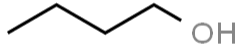
The structure of n-butanol can be drawn as:
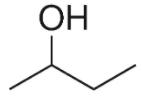
The structure of 2-butanol can be drawn as:
We know that isomers are defined as the molecules with the same molecular formula but possess a different arrangement of the atoms in space or different connectivity of atoms. Broadly isomers can be structural or stereoisomers. The phenomenon in which the molecules that form the isomers are connected differently is known as structural isomerism. The phenomenon in which the connectivity of atoms is the same in isomers but a different spatial arrangement is a stereoisomerism.
As in normal butyl alcohol and 2-butanol, the functional groups and the atoms in the molecules of these isomers are linked in different ways, they display the phenomenon of structural isomerism.
The atoms in which the number of neutrons are different are known as isotopes.
Thus, statement 2 is incorrect.
Hence, Statement 1 is correct but statement 2 is not the correct statement.
Therefore, the correct answer is option C.
Note:
Geometric isomerism is one of the forms of stereoisomerism. The key point in geometrical isomers is the restricted rotation of a bond present somewhere in a molecule. At the most basic level of organic chemistry, carbon-carbon double bond is one of the examples leading to a restricted rotation. For example, 2-Butene can exist as cis and trans isomers because of the double bond that leads to the restricted rotation. This results in two isomers where the cis-isomer formed have the two methyl groups on the same side and the trans-isomer formed has the two methyl groups on opposite sides. 2-methyl propene and 2-methyl-2-butene contain a double bond but the groups attached to one of the C of the double bond are the same.
To answer this question you must know the concept of isomerism and the different types of isomerism, that is structural and stereoisomerism. Isomers are molecules with identical formulas, but a distinct arrangement of the atoms in space.
Complete step by step solution:
The structure of n-butanol can be drawn as:
The structure of 2-butanol can be drawn as:
We know that isomers are defined as the molecules with the same molecular formula but possess a different arrangement of the atoms in space or different connectivity of atoms. Broadly isomers can be structural or stereoisomers. The phenomenon in which the molecules that form the isomers are connected differently is known as structural isomerism. The phenomenon in which the connectivity of atoms is the same in isomers but a different spatial arrangement is a stereoisomerism.
As in normal butyl alcohol and 2-butanol, the functional groups and the atoms in the molecules of these isomers are linked in different ways, they display the phenomenon of structural isomerism.
The atoms in which the number of neutrons are different are known as isotopes.
Thus, statement 2 is incorrect.
Hence, Statement 1 is correct but statement 2 is not the correct statement.
Therefore, the correct answer is option C.
Note:
Geometric isomerism is one of the forms of stereoisomerism. The key point in geometrical isomers is the restricted rotation of a bond present somewhere in a molecule. At the most basic level of organic chemistry, carbon-carbon double bond is one of the examples leading to a restricted rotation. For example, 2-Butene can exist as cis and trans isomers because of the double bond that leads to the restricted rotation. This results in two isomers where the cis-isomer formed have the two methyl groups on the same side and the trans-isomer formed has the two methyl groups on opposite sides. 2-methyl propene and 2-methyl-2-butene contain a double bond but the groups attached to one of the C of the double bond are the same.
Recently Updated Pages
Which of the following graphs shows the variation of class 12 physics CBSE

Draw a labelled diagram of the human male reproductive class 12 biology CBSE
Describe the experiment to compare the emf of two cells class 12 physics CBSE
What is standard hydrogen electrode
What is conventional current and electric current class 12 physics CBSE
2Bromopentane is treated with an alcoholic KOH solution class 12 chemistry CBSE
Trending doubts
Draw a labelled sketch of the human eye class 12 physics CBSE
Which are the Top 10 Largest Countries of the World?
Differentiate between homogeneous and heterogeneous class 12 chemistry CBSE
Draw ray diagrams each showing i myopic eye and ii class 12 physics CBSE
Which is the correct genotypic ratio of mendel dihybrid class 12 biology CBSE
What is the Full Form of PVC, PET, HDPE, LDPE, PP and PS ?