




Pepsinogen is secreted by
(a)Gastric Glands
(b)Intestinal Glands
(c)Chief cells
(d)Parietal cells
Answer
 Verified
622.2k+ views
Hint: These cells are also known as zymogenic cells or peptic cells and found in the stomach and also release prorenin. These are present in the mucosa of the gastric glands of the stomach.
Complete answer:
The pepsinogen is secreted by the chief cells of the stomach. The gastric gland is divided into three other glands called the cardiac glands, pyloric glands, and the fundic glands. It is the fundic glands where these cells are found. Pepsinogen is activated by pepsin into the digestive enzyme when it comes in contact with acid produced by gastric parietal cells. Pepsin is an endopeptidase (that breaks peptide bonds) enzyme, it hydrolyses the proteins into peptones and proteases.
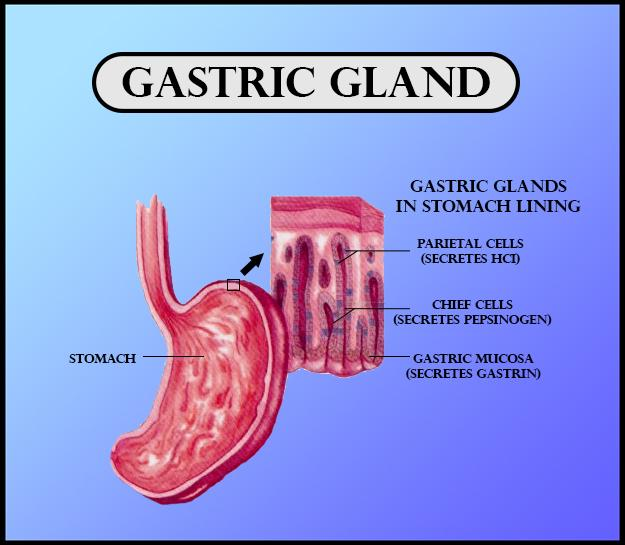
Additional Information: -The gastric juices contain mucus, HCL (Hydrochloric Acid), two proenzymes-pepsinogen and prorenin, and a weak gastric lipase enzyme.
-Prorenin is activated by HCL in the acidic medium to rennin (also called as chymosin).
-Rennin hydrolyses milk soluble protein, which is casein to paracasein.
-The Gastric juices of the gastric glands of the stomach have no fat emulsifying enzyme but have a weak gastric lipase enzyme which hydrolyses a small amount of fat s. It is so that the gastric lipase has an optimum pH of 4.0-5.0 and is inactivated by strong acidic conditions provided by the HCL.
So, the correct answer is, ‘Chief cells.’
Note: -Pepsinogen is a proenzyme (inactivated enzyme) and is most active in the acidic medium. It is capable of digesting all dietary proteins, including collagen.
-The gastric juices contain no carbohydrates digesting enzymes, so there is no digestion of carbohydrates in the stomach.
Complete answer:
The pepsinogen is secreted by the chief cells of the stomach. The gastric gland is divided into three other glands called the cardiac glands, pyloric glands, and the fundic glands. It is the fundic glands where these cells are found. Pepsinogen is activated by pepsin into the digestive enzyme when it comes in contact with acid produced by gastric parietal cells. Pepsin is an endopeptidase (that breaks peptide bonds) enzyme, it hydrolyses the proteins into peptones and proteases.
Additional Information: -The gastric juices contain mucus, HCL (Hydrochloric Acid), two proenzymes-pepsinogen and prorenin, and a weak gastric lipase enzyme.
-Prorenin is activated by HCL in the acidic medium to rennin (also called as chymosin).
-Rennin hydrolyses milk soluble protein, which is casein to paracasein.
-The Gastric juices of the gastric glands of the stomach have no fat emulsifying enzyme but have a weak gastric lipase enzyme which hydrolyses a small amount of fat s. It is so that the gastric lipase has an optimum pH of 4.0-5.0 and is inactivated by strong acidic conditions provided by the HCL.
So, the correct answer is, ‘Chief cells.’
Note: -Pepsinogen is a proenzyme (inactivated enzyme) and is most active in the acidic medium. It is capable of digesting all dietary proteins, including collagen.
-The gastric juices contain no carbohydrates digesting enzymes, so there is no digestion of carbohydrates in the stomach.
Recently Updated Pages
Master Class 11 Social Science: Engaging Questions & Answers for Success

Master Class 11 Chemistry: Engaging Questions & Answers for Success
Master Class 9 General Knowledge: Engaging Questions & Answers for Success
Master Class 9 Maths: Engaging Questions & Answers for Success
Master Class 9 Science: Engaging Questions & Answers for Success
Master Class 9 English: Engaging Questions & Answers for Success
Trending doubts
One Metric ton is equal to kg A 10000 B 1000 C 100 class 11 physics CBSE
Difference Between Prokaryotic Cells and Eukaryotic Cells
Two of the body parts which do not appear in MRI are class 11 biology CBSE
1 ton equals to A 100 kg B 1000 kg C 10 kg D 10000 class 11 physics CBSE
10 examples of friction in our daily life
Name the Largest and the Smallest Cell in the Human Body ?