




What is natural manure? How to prepare it? Give two examples.
Answer
 Verified
662.7k+ views
Hint: Artificial manure is the manure produced by manmade processes. The opposite of artificial manure is the natural manure. Manure used to enhance the soil’s quality.
Complete answer:
Natural manure is a solid animal waste organic matter that improves the quality of the soil and the yield of healthy plants. It is a decomposed layer of dead plants and animals used in soil to increase development. It is a natural and cost-effective form of fertilizer.
Methods to prepare natural manure are as follows:
> Panchagavya: It is a natural manure. The components such as cow urine, dung, ghee, childhood, cocoa powder, and curd are used for preparation. Take dung, ghee and combine it somehow first. The mixture must be left undisturbed for five days. Followed by mixing of curd then leave it for a day. On the sixth day, add cow urine, toddy, and coconut water. Mix this once a day and panchagavya is ready to be used within fifteen days. For a better cultivation, this blend should be sprayed in the field.
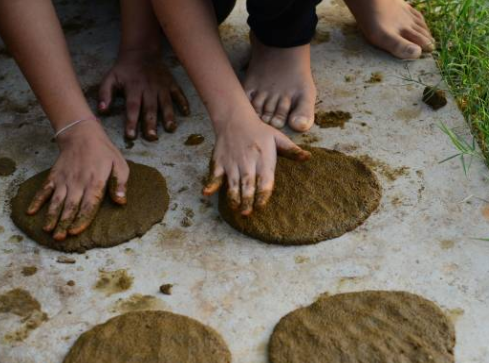
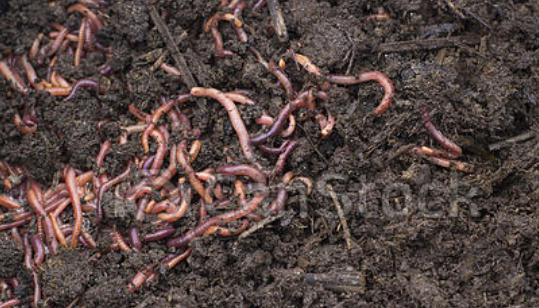
> Vermicompost: It is a kind of natural manure. The garbage, vegetable waste, red fruits and terrestrial worms are used for preparation. A rectangular box is built with specific measurements. Fill the half of the box with the topsoil. Dispose vegetables, fruit waste and litter and eggs etc., add 1000 earthworms per square meter and leave it for a month followed by thorough sprinkling of water every day. A moist place is suitable for doing this so that the earthworms can grow well and quickly break down the materials. This manure can be applied in the growing field.
Examples include:
Human and animal waste can serve as natural manures. The animal manure is nitrogen, phosphate and potassium-rich. It is highly rich in organic matter and humus and increases the fertility of the soil. In the long run, these are safer and do not cause emissions. The resource is important and sustainable.
Note:
Natural manure is the form of manure that is produced from biological or organic waste and decomposable materials. Natural manure does not affect the quality of the soil.
Complete answer:
Natural manure is a solid animal waste organic matter that improves the quality of the soil and the yield of healthy plants. It is a decomposed layer of dead plants and animals used in soil to increase development. It is a natural and cost-effective form of fertilizer.
Methods to prepare natural manure are as follows:
> Panchagavya: It is a natural manure. The components such as cow urine, dung, ghee, childhood, cocoa powder, and curd are used for preparation. Take dung, ghee and combine it somehow first. The mixture must be left undisturbed for five days. Followed by mixing of curd then leave it for a day. On the sixth day, add cow urine, toddy, and coconut water. Mix this once a day and panchagavya is ready to be used within fifteen days. For a better cultivation, this blend should be sprayed in the field.
> Vermicompost: It is a kind of natural manure. The garbage, vegetable waste, red fruits and terrestrial worms are used for preparation. A rectangular box is built with specific measurements. Fill the half of the box with the topsoil. Dispose vegetables, fruit waste and litter and eggs etc., add 1000 earthworms per square meter and leave it for a month followed by thorough sprinkling of water every day. A moist place is suitable for doing this so that the earthworms can grow well and quickly break down the materials. This manure can be applied in the growing field.
Examples include:
Human and animal waste can serve as natural manures. The animal manure is nitrogen, phosphate and potassium-rich. It is highly rich in organic matter and humus and increases the fertility of the soil. In the long run, these are safer and do not cause emissions. The resource is important and sustainable.
Note:
Natural manure is the form of manure that is produced from biological or organic waste and decomposable materials. Natural manure does not affect the quality of the soil.
Recently Updated Pages
Write any three differences between metals and nonmetals class 10 social science CBSE

Amit standing on a horizontal plane finds a bird flying class 10 maths CBSE
Two circles of radii 5 cm and 3 cm intersect at two class 10 maths CBSE
Solve the following i John and Jivanti together have class 10 maths CBSE
What is the relation between orthocenter circumcentre class 10 maths CBSE
Two plane mirrors are inclined at 70circ A ray incident class 10 physics CBSE
Trending doubts
Explain the Treaty of Vienna of 1815 class 10 social science CBSE
1 GB equals how many MB?
10 examples of evaporation in daily life with explanations
What is the full form of POSCO class 10 social science CBSE
Which is the hottest planet in the Solar system A Earth class 10 social science CBSE
Name any four life processes in living things class 10 biology CBSE