




What will happen to the life of the cell if there was no Golgi apparatus?
Answer
 Verified
662.1k+ views
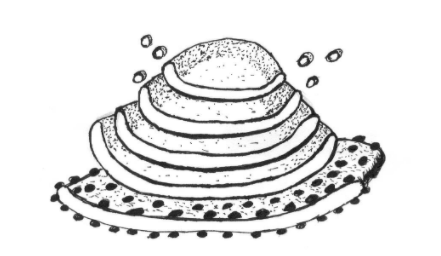
Hint: Golgi apparatus is present within the cytoplasm of a cell and is placed in both plant and animal cells. It is a membrane-bound organelle, which is primarily composed of a series of flattened, stacked pockets called cisternae.
Complete answer:
The Golgi body comprises a chain of five to eight cup-shaped, membrane-covered sacs called cisternae. Cisternae are a compacted membrane disk-shaped, stacked pouches that constitute the Golgi apparatus.
A Golgi stack may enclose anywhere from three to twenty cisternae but generally contains about six. In several unicellular flagellates, as many as 60 cisternae have been heard to combine to make up the Golgi apparatus
If there were no Golgi apparatus, different substances would not be in a condition to be transformed in proper forms for future use. Certain substances, like protein and lipid, are significant for the formation of the plasma membrane.
Hence the nonappearance of the Golgi apparatus will obstruct the formation of new cells during cell division.
Additional information:
Golgi apparatus works as a factory in which proteins sent from the Endoplasmic Reticulum are further processed and arranged for transport to their ultimate destinations, which happens to be the lysosomes, the plasma membrane, or secretion.
Note: Golgi apparatus plays a vital role in packaging various substances for further use or storage.
- In-plant cells, the Golgi apparatus is the site at which the compound polysaccharides of the cell wall are synthesized.
- The Golgi apparatus is indulged in processing the wide range of cellular constituents that travel along the secretory way in a plant cell.
Complete answer:
The Golgi body comprises a chain of five to eight cup-shaped, membrane-covered sacs called cisternae. Cisternae are a compacted membrane disk-shaped, stacked pouches that constitute the Golgi apparatus.
A Golgi stack may enclose anywhere from three to twenty cisternae but generally contains about six. In several unicellular flagellates, as many as 60 cisternae have been heard to combine to make up the Golgi apparatus
If there were no Golgi apparatus, different substances would not be in a condition to be transformed in proper forms for future use. Certain substances, like protein and lipid, are significant for the formation of the plasma membrane.
Hence the nonappearance of the Golgi apparatus will obstruct the formation of new cells during cell division.
Additional information:
Golgi apparatus works as a factory in which proteins sent from the Endoplasmic Reticulum are further processed and arranged for transport to their ultimate destinations, which happens to be the lysosomes, the plasma membrane, or secretion.
Note: Golgi apparatus plays a vital role in packaging various substances for further use or storage.
- In-plant cells, the Golgi apparatus is the site at which the compound polysaccharides of the cell wall are synthesized.
- The Golgi apparatus is indulged in processing the wide range of cellular constituents that travel along the secretory way in a plant cell.
Recently Updated Pages
If x a + bt + ct2 where x is in meters and t is in class 11 physics CBSE

A car covers the first half distance between two places class 11 physics CBSE
The resultant of two vectors overrightarrow P and overrightarrow class 11 physics CBSE
Find the value of cos 135 class 11 maths CBSE
A mass M is held in place by an applied force F and class 11 physics CBSE
A solution of glucose in water is labelled as 10 dfracwv class 11 chemistry CBSE
Trending doubts
One Metric ton is equal to kg A 10000 B 1000 C 100 class 11 physics CBSE
Find the value of the expression given below sin 30circ class 11 maths CBSE
Draw a diagram of nephron and explain its structur class 11 biology CBSE
10 examples of friction in our daily life
Proton was discovered by A Thomson B Rutherford C Chadwick class 11 chemistry CBSE
Bond order ofO2 O2+ O2 and O22 is in order A O2 langle class 11 chemistry CBSE