




Glycolysis is associated with
A. Plasmalemma
B. Nucleus
C. Nucleolus
D. Nucleosome
Answer
 Verified
608.1k+ views
Hint: The process of glycolysis happens in the cytoplasm of the cell. The cytoplasm is surrounded by a lipid-protein layer called Plasma-membrane.
Step by step answer:Glycolysis is a ten enzymes-catalyzed metabolic process which forms pyruvate and a hydrogen ion from glucose. This pathway takes place in the cytoplasm of the cells.
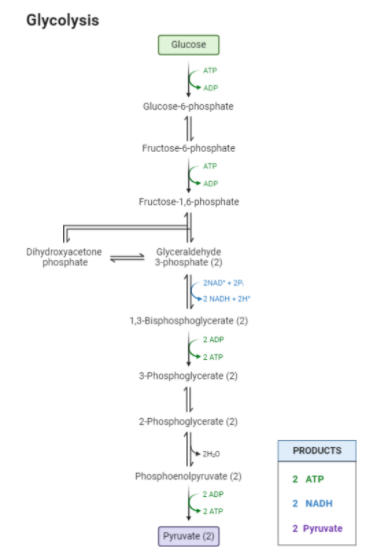
-Option A is Plasmalemma. It is the old term used to refer to plasma-membrane. The plasma-membrane holds the liquid of the cell in shape and allows the material to pass. This liquid is called the cytoplasm, where glycolysis happens. Now, plasmalemma is the term that relates to plasma-membrane or cytoplasm.
-Option B is the Nucleus. The nucleus of the cell is the center sac containing the nuclear material of the cell, that is, chromatin. This is not associated with the glycolysis process.
-Option C is Nucleolus. It is the dense chromatin sage during the cell division which resides in the nucleus of the cell. Thus, this cannot be associated with glycolysis.
-Option D is Nucleosome. It is the DNA packaging unit in eukaryotes. A Nucleosome is just like a thread wound around the spool. It consists of DNA that is wound around eight histone molecules. The Nucleosome has no role to play in glycolysis.
So, option A, plasmalemma is the correct answer.
Note: The glycolysis is a complex pathway involving ten enzymes. It occurs in an oxygen-deficient environment. It is considered as one of the ancient metabolic pathways. The most common type of glycolysis which occurs in cells is called the ‘Embden-Meyerhof-Parnas pathway’ or ‘EMP pathway’.
Step by step answer:Glycolysis is a ten enzymes-catalyzed metabolic process which forms pyruvate and a hydrogen ion from glucose. This pathway takes place in the cytoplasm of the cells.
-Option A is Plasmalemma. It is the old term used to refer to plasma-membrane. The plasma-membrane holds the liquid of the cell in shape and allows the material to pass. This liquid is called the cytoplasm, where glycolysis happens. Now, plasmalemma is the term that relates to plasma-membrane or cytoplasm.
-Option B is the Nucleus. The nucleus of the cell is the center sac containing the nuclear material of the cell, that is, chromatin. This is not associated with the glycolysis process.
-Option C is Nucleolus. It is the dense chromatin sage during the cell division which resides in the nucleus of the cell. Thus, this cannot be associated with glycolysis.
-Option D is Nucleosome. It is the DNA packaging unit in eukaryotes. A Nucleosome is just like a thread wound around the spool. It consists of DNA that is wound around eight histone molecules. The Nucleosome has no role to play in glycolysis.
So, option A, plasmalemma is the correct answer.
Note: The glycolysis is a complex pathway involving ten enzymes. It occurs in an oxygen-deficient environment. It is considered as one of the ancient metabolic pathways. The most common type of glycolysis which occurs in cells is called the ‘Embden-Meyerhof-Parnas pathway’ or ‘EMP pathway’.
Recently Updated Pages
Master Class 11 Social Science: Engaging Questions & Answers for Success

Master Class 11 English: Engaging Questions & Answers for Success
Master Class 11 Maths: Engaging Questions & Answers for Success
Master Class 11 Chemistry: Engaging Questions & Answers for Success
Master Class 11 Biology: Engaging Questions & Answers for Success
Master Class 11 Physics: Engaging Questions & Answers for Success
Trending doubts
Differentiate between an exothermic and an endothermic class 11 chemistry CBSE
One Metric ton is equal to kg A 10000 B 1000 C 100 class 11 physics CBSE
Difference Between Prokaryotic Cells and Eukaryotic Cells
There are 720 permutations of the digits 1 2 3 4 5 class 11 maths CBSE
Draw a diagram of a plant cell and label at least eight class 11 biology CBSE
Two of the body parts which do not appear in MRI are class 11 biology CBSE