




Explain how the air we breathe in gets cleaned while passing through the nasal passage?
Answer
 Verified
605.1k+ views
Hint: Nasal passage is the channel for passage of air and particles through the nose. Nasal cavity is the interior of the nose which is a large and air filled space behind the nose in the middle of the face.
Complete answer:
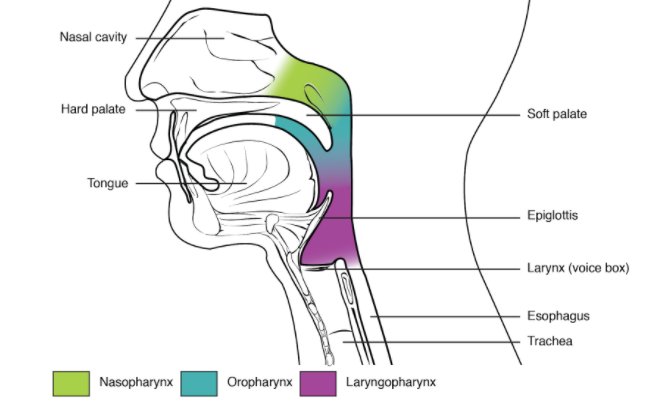
To answer this question, we must know about the structure and function of nasal passage. The nasal cavity is the first part of the respiratory system through which the air inhaled from the nostrils pass to the nasopharynx and rest of the respiratory tract. The nasal cavity consists of maxilla, bones, paranasal sinuses, vestibule, hard palate of palatine bone.
The structure of the nasal cavity is so designed that it helps in maximizing the gaseous exchange and also purifies the air we breathe in. The vestibule of the nose is lined by epithelium cells. Inside the nostrils, the nasal hairs or cilia and mucous are present which filter the dust and other impurities that we breathe in. The nasal cavity makes the air inhaled moist and further blocks the dust and other impurities. Due to the cilia and mucous membrane, the dust particles do not enter into our lungs.
Note: Cellular respiration is important for all aerobic creatures. It uses oxygen to break food which produces energy and carbon dioxide is produced as waste. External respiration brings in air into the lungs and gaseous exchange takes place in the alveoli by the process of diffusion.
Complete answer:
To answer this question, we must know about the structure and function of nasal passage. The nasal cavity is the first part of the respiratory system through which the air inhaled from the nostrils pass to the nasopharynx and rest of the respiratory tract. The nasal cavity consists of maxilla, bones, paranasal sinuses, vestibule, hard palate of palatine bone.
The structure of the nasal cavity is so designed that it helps in maximizing the gaseous exchange and also purifies the air we breathe in. The vestibule of the nose is lined by epithelium cells. Inside the nostrils, the nasal hairs or cilia and mucous are present which filter the dust and other impurities that we breathe in. The nasal cavity makes the air inhaled moist and further blocks the dust and other impurities. Due to the cilia and mucous membrane, the dust particles do not enter into our lungs.
Note: Cellular respiration is important for all aerobic creatures. It uses oxygen to break food which produces energy and carbon dioxide is produced as waste. External respiration brings in air into the lungs and gaseous exchange takes place in the alveoli by the process of diffusion.
Recently Updated Pages
Master Class 11 English: Engaging Questions & Answers for Success

Master Class 11 Social Science: Engaging Questions & Answers for Success
Master Class 11 Maths: Engaging Questions & Answers for Success
Master Class 11 Biology: Engaging Questions & Answers for Success
Master Class 11 Physics: Engaging Questions & Answers for Success
Master Class 11 Chemistry: Engaging Questions & Answers for Success
Trending doubts
One Metric ton is equal to kg A 10000 B 1000 C 100 class 11 physics CBSE
Difference Between Prokaryotic Cells and Eukaryotic Cells
Find the value of the expression given below sin 30circ class 11 maths CBSE
Difference between physical and chemical change class 11 chemistry CBSE
Two of the body parts which do not appear in MRI are class 11 biology CBSE
Draw a diagram of a plant cell and label at least eight class 11 biology CBSE