




Carotid artery carries
(a) Deoxygenated blood to the brain
(b) Oxygenated blood to the brain
(c) Oxygenated blood to the heart
(d) None of the above
Answer
 Verified
632.4k+ views
Hint: The left and right common carotid arteries (carotids) in anatomy are arteries that provide oxygenated blood to the head and neck; they break in the neck to form the external and internal carotid arteries.
Complete answer:
The arteries which supply oxygenated blood to the head and neck are called carotid arteries. From the brachiocephalic trunk, the right common carotid originates in the neck. The left artery in the thoracic region emerges from the aortic arch.
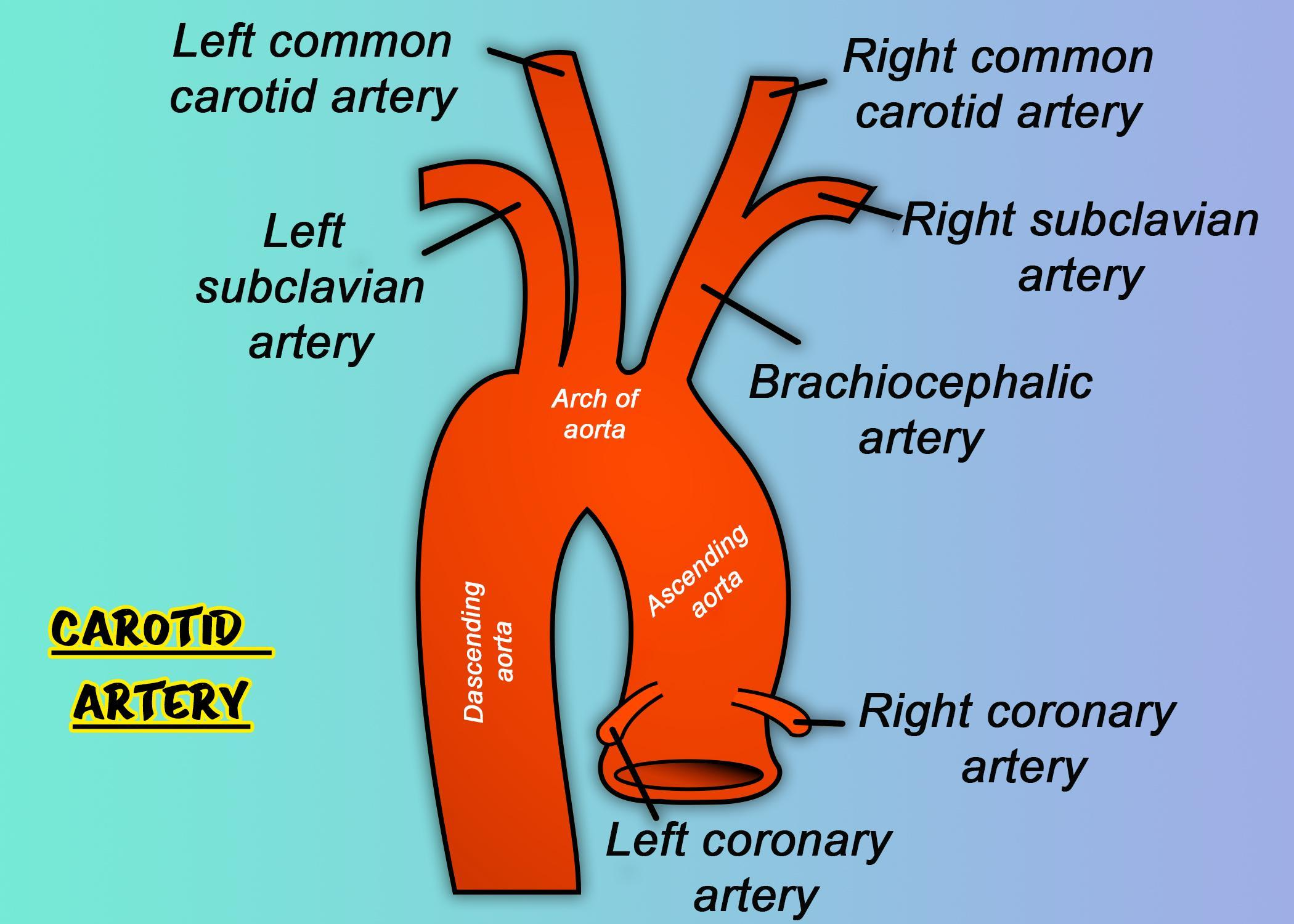
You may think of the left common carotid artery as having two parts: a part of the thoracic (chest) and a part of the cervical (neck). In or around the throat, the right common carotid originates and comprises only a small thoracic part. In the bioengineering literature, there are studies that have explored both qualitative and mathematical (quantitative) viewpoints to describe the geometric structure of the common carotid artery.
Additional information: Carotid artery disease happens when the blood vessels that carry blood to the brain and head (carotid arteries) are clogged by fatty deposits (plaques). The blockage raises your risk of stroke, a medical emergency that happens when the blood flow to the brain is significantly limited or disrupted.
The most prevalent treatment for serious carotid artery disease is carotid endarterectomy. The surgeon opens the infected carotid artery and removes the plaques by making an incision along the front of your spine. With either stitches or graft, the artery is healed.
So, the correct answer is ‘(b) Oxygenated blood to the brain’.
Note: Veins that return deoxygenated blood from circulation in the body and empty it to the right atrium are the superior vena cava and inferior vena cava. Deoxygenated blood from the right ventricle is carried into the lungs by the pulmonary artery for oxygenation.
Complete answer:
The arteries which supply oxygenated blood to the head and neck are called carotid arteries. From the brachiocephalic trunk, the right common carotid originates in the neck. The left artery in the thoracic region emerges from the aortic arch.
You may think of the left common carotid artery as having two parts: a part of the thoracic (chest) and a part of the cervical (neck). In or around the throat, the right common carotid originates and comprises only a small thoracic part. In the bioengineering literature, there are studies that have explored both qualitative and mathematical (quantitative) viewpoints to describe the geometric structure of the common carotid artery.
Additional information: Carotid artery disease happens when the blood vessels that carry blood to the brain and head (carotid arteries) are clogged by fatty deposits (plaques). The blockage raises your risk of stroke, a medical emergency that happens when the blood flow to the brain is significantly limited or disrupted.
The most prevalent treatment for serious carotid artery disease is carotid endarterectomy. The surgeon opens the infected carotid artery and removes the plaques by making an incision along the front of your spine. With either stitches or graft, the artery is healed.
So, the correct answer is ‘(b) Oxygenated blood to the brain’.
Note: Veins that return deoxygenated blood from circulation in the body and empty it to the right atrium are the superior vena cava and inferior vena cava. Deoxygenated blood from the right ventricle is carried into the lungs by the pulmonary artery for oxygenation.
Recently Updated Pages
Master Class 11 Social Science: Engaging Questions & Answers for Success

Master Class 11 English: Engaging Questions & Answers for Success
Master Class 11 Accountancy: Engaging Questions & Answers for Success
Master Class 11 Physics: Engaging Questions & Answers for Success
Master Class 11 Computer Science: Engaging Questions & Answers for Success
Master Class 11 Business Studies: Engaging Questions & Answers for Success
Trending doubts
Find the value of the expression given below sin 30circ class 11 maths CBSE
One Metric ton is equal to kg A 10000 B 1000 C 100 class 11 physics CBSE
Draw a diagram of nephron and explain its structur class 11 biology CBSE
10 examples of friction in our daily life
Proton was discovered by A Thomson B Rutherford C Chadwick class 11 chemistry CBSE
The teeth used for biting and cutting food are called class 11 biology CBSE