




A carbon cycle is a biochemical event. Explain.
Answer
 Verified
588.9k+ views
Hint: Carbon is an important element of living matter. The biosphere contains a complex mixture of carbon compounds that are in a continuous state of synthesis, transformation, and break down. The carbon cycle is a perfect gaseous cycle.
Complete answer:
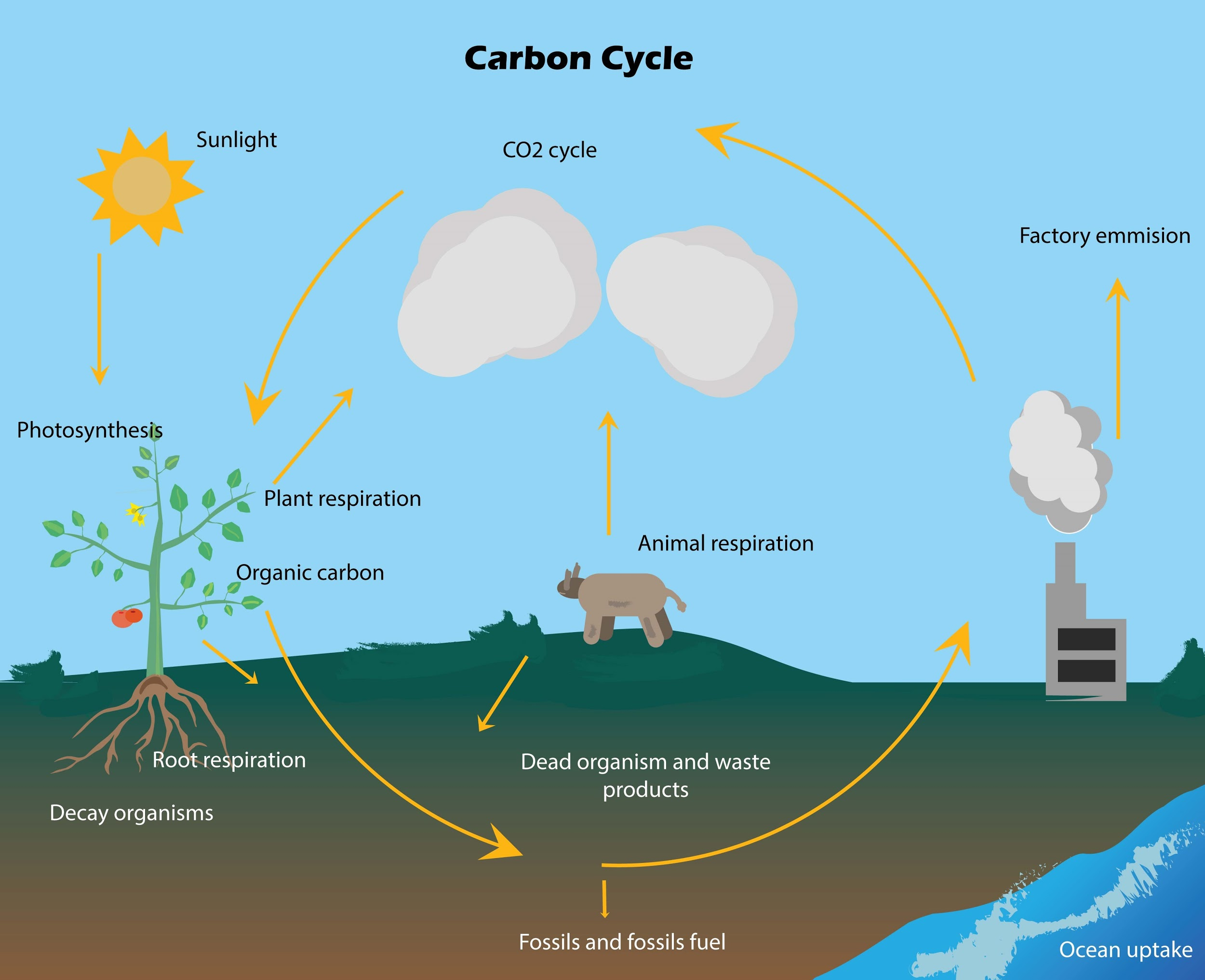
A carbon cycle is a biochemical event because it involves the cyclic back and forth movement of carbon between the atmosphere and organisms. Carbon moves from the atmospheric reservoir to producers, then from producers to consumers, then from these groups to Decomposers, and finally from all these groups to the atmosphere. The removal of carbon from the atmosphere occurs through photosynthesis and chemosynthesis. Its return to the atmosphere occurs through respiration, decomposition, combustion, weathering and dissolution of carbonate rocks, volcanic actions, etc. Thus, the terrestrial carbon cycle begins with the fixation of atmospheric carbon dioxide by photosynthesis and chemosynthesis. During this, carbon from Carbon dioxide is incorporated in glucose, with the simultaneous release of free oxygen to the atmosphere. Glucose is subsequently transformed into other organic compounds such as polysaccharides, proteins, and lipids. In plants, these are stored as nutrients.
Additional Information: -From plants carbon enters the grazing and browsing food chains and reaches Decomposers through successive levels of consumers.
-In the death and decomposition of all these organisms, carbon enters the detritus food chain and again reaches the Decomposers through different trophic levels.
-After the death of plants and animals, some amount of carbon undergoes deep sedimentation and gets deposited in the soil as fossil fuels.
Note: -The respiratory activity of producers and consumers releases a considerable amount of carbon dioxide into the atmosphere.
-Some amount of carbon dioxide is released into the atmosphere through non-biological processes such as combustion.
-The most substantial return of carbon to the atmosphere is accomplished by the processing of the dead remaining and wastes of plants and animals by Decomposers.
Complete answer:
A carbon cycle is a biochemical event because it involves the cyclic back and forth movement of carbon between the atmosphere and organisms. Carbon moves from the atmospheric reservoir to producers, then from producers to consumers, then from these groups to Decomposers, and finally from all these groups to the atmosphere. The removal of carbon from the atmosphere occurs through photosynthesis and chemosynthesis. Its return to the atmosphere occurs through respiration, decomposition, combustion, weathering and dissolution of carbonate rocks, volcanic actions, etc. Thus, the terrestrial carbon cycle begins with the fixation of atmospheric carbon dioxide by photosynthesis and chemosynthesis. During this, carbon from Carbon dioxide is incorporated in glucose, with the simultaneous release of free oxygen to the atmosphere. Glucose is subsequently transformed into other organic compounds such as polysaccharides, proteins, and lipids. In plants, these are stored as nutrients.
Additional Information: -From plants carbon enters the grazing and browsing food chains and reaches Decomposers through successive levels of consumers.
-In the death and decomposition of all these organisms, carbon enters the detritus food chain and again reaches the Decomposers through different trophic levels.
-After the death of plants and animals, some amount of carbon undergoes deep sedimentation and gets deposited in the soil as fossil fuels.
Note: -The respiratory activity of producers and consumers releases a considerable amount of carbon dioxide into the atmosphere.
-Some amount of carbon dioxide is released into the atmosphere through non-biological processes such as combustion.
-The most substantial return of carbon to the atmosphere is accomplished by the processing of the dead remaining and wastes of plants and animals by Decomposers.
Recently Updated Pages
Master Class 10 Social Science: Engaging Questions & Answers for Success

Master Class 10 Science: Engaging Questions & Answers for Success
Master Class 10 Maths: Engaging Questions & Answers for Success
Master Class 10 General Knowledge: Engaging Questions & Answers for Success
Master Class 10 Computer Science: Engaging Questions & Answers for Success
Class 10 Question and Answer - Your Ultimate Solutions Guide
Trending doubts
What is the full form of PNG A Petrol Natural Gas B class 10 chemistry CBSE
Explain the Treaty of Vienna of 1815 class 10 social science CBSE
In cricket, how many legal balls are there in a standard over?
Why is there a time difference of about 5 hours between class 10 social science CBSE
Who Won 36 Oscar Awards? Record Holder Revealed
What is the median of the first 10 natural numbers class 10 maths CBSE