







Why Is It Important to Know What Is in Our Food?
Food is necessary for every living being. We need food for our bodies. It is a quick source of energy. There is a variety of foods to eat in the world, so it is up to us what we want to eat and we have to decide which nutrients we have to consume, either junk or healthy. We know how important food is for the development of our muscles, growth, body, mental health and more. Read this article completely to know about what food is and its definition, importance, types, functions etc.
What is Food?
Food is any substance that is made up of carbohydrates, fats, minerals, vitamins and proteins and is absorbed by the living world. Food is all those essential substances which we consume for conducting and regulating our biological activities. It gives us the energy to perform our day-to-day activities. Without food, no living organisms can survive, thus it is very essential.
Food Sources
There are five major types of food we find for you which should be included in your daily diet to keep your body healthy and fit.
1. Vegetables: Vegetables are plants that are high in phytonutrients, vitamins and minerals and are important components of our diet.
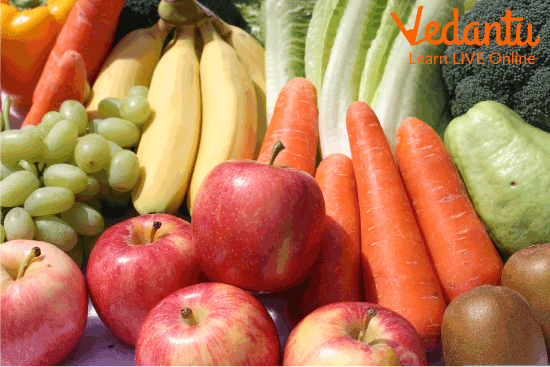
Healthy Food Items - Fruits and Vegetables
2. Fruits: The fruits are obtained directly from the plants. Phytonutrients, vitamins, minerals, etc. are found in it and are easily available.
3. Dairy: Dairy products are an excellent source of calcium for our bones and teeth, such as milk, etc.
4. Poultry and Meats: Poultry and meat are high in protein and vitamins which helps in building tissues and muscles and provides immunity. Such as eggs, chicken, meat and fish.
5. Grains and Legumes: Grains and legumes are derived from plants which are rich in high fibre.
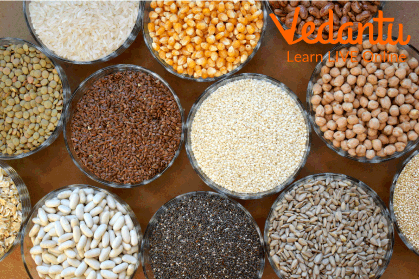
Grains and Legumes
What are the Functions of Food?
There are many physiological functions of food which are somehow connected with the body of the organism such as providing energy, helpful in the growth and development of the body, protecting against disease, etc.
The main functions are listed below:
By consuming food, we get energy.
Food repairs the body composition or wear and tear of the organism.
Food helps in the growth and development of the body.
Food develops fertility.
Food protects us from diseases by creating immunity against them.
Solved Questions
1. Why do all organisms need to eat food?
Ans: As we know, energy is required to keep any organism alive. All living beings get their energy through their food which is rich in carbohydrates, fats, minerals, vitamins and proteins. By consuming food items regularly, all living beings remain alive, otherwise, they die. Therefore, any organism must eat regularly to survive.
2. Why should we include varieties of foods in our diet?
Ans: When an organism eats a variety of foods, the body gets all kinds of elements and necessary nutrition, which helps in the growth and development of our body. For example, proteins are required for the repairing of cells.
3. What is closely related to food?
Ans: Food is closely related to our health.
Learning by Doing
Write True or False.
1. The absorption of food into the body is called "nutrition".
2. Food makes our bodies weak.
3. Food protects us from diseases by making our immune systems strong.
4. Food and health are interconnected.
Summary
Food is that food item which gives energy to the living being by consuming it. Keeps the body healthy and protects it from diseases. It helps in the creation, development, reproduction, operation and regulation of biological functions etc. As you have known in this chapter, we have studied many things related to food. Now, you must have understood what is called food and its definition as well as other things related to food.
FAQs on What Is in Food? Explained with Key Concepts and Examples
1. Why is food essential for all living beings?
Food is essential because it provides the energy needed for all life activities, from playing to studying. It also supplies the materials necessary for the growth and repair of body tissues and helps protect the body from various diseases, keeping us healthy and active.
2. What are nutrients, and what are the main types found in our food?
Nutrients are the substances in food that our body needs to live and grow. They provide energy, help build our body, and protect us from sickness. The main types of nutrients are:
Carbohydrates
Proteins
Fats
Vitamins
Minerals
3. What is the main function of carbohydrates and fats in our diet?
Carbohydrates and fats are known as energy-giving foods. Their primary function is to provide the fuel our body needs to perform daily tasks, work, and play. Examples of carbohydrate-rich foods include rice, chapati, bread, and potatoes, while oil, ghee, and butter are rich in fats.
4. Why are proteins often called 'body-building foods'?
Proteins are called body-building foods because they are crucial for the growth of the body and for repairing damaged tissues and cells. They are especially important for growing children. Foods like milk, pulses (dals), eggs, and fish are excellent sources of protein.
5. What is the importance of vitamins and minerals for our body?
Vitamins and minerals are called protective foods. They are required in small amounts but are vital for protecting our body against diseases, keeping our eyes, bones, and gums healthy, and ensuring all our body systems function correctly. Fresh fruits and vegetables are the best sources of vitamins and minerals.
6. What is a balanced diet, and why is it important to have one?
A balanced diet is a meal that contains all the essential nutrients—carbohydrates, proteins, fats, vitamins, and minerals—in the correct proportions, along with water and roughage. It is important because it ensures our body gets all the necessary fuel and materials for proper growth, energy, and protection against illness.
7. How are energy-giving foods like carbohydrates different from body-building foods like proteins?
The primary difference lies in their main function. Energy-giving foods (carbohydrates and fats) are the main source of fuel for our daily activities. In contrast, body-building foods (proteins) are primarily used for creating new cells, which leads to growth, and for repairing worn-out parts of the body.
8. If fats provide more energy than carbohydrates, why is it unhealthy to only eat fatty foods?
This is a common misconception. While it's true that fats are a more concentrated source of energy, our body needs a balance of all nutrients. Relying only on fatty foods can lead to health problems like obesity and heart disease. The body needs carbohydrates for quick energy and proteins, vitamins, and minerals for other vital functions that fats cannot perform.
9. Why is water considered a crucial component of our diet, even though it provides no energy?
Water is crucial because it performs several vital functions that no other nutrient can. It helps the body to absorb nutrients from food, it helps in transporting substances inside the body, and it is essential for throwing out waste materials from the body as urine and sweat. Without enough water, our body cannot function properly.
