







Real-World Examples of Air Resistance in Daily Life
Air resistance is a force caused by air. The air patches hit the front of an object, causing it to decelerate down. The lesser the face area, the lesser the number of air patches hitting the object, and the lesser the overall resistance.
Air resistance is a kind of division (a force that opposes move) that occurs between air and another object. These forces that the object exploits as it passes through the air. Air resistance and gravity are the two fixed forces of nature that shift on anything on Earth.
For example, when an aeroplane flies through the air, the air patches are pressing against the aeroplane, making it harder for the aircraft to move.
When you see a kind of fall, it's greatly affected by air resistance. It has lots of face areas for the air to make connections with and lacks the weight to overcome the air resistance.
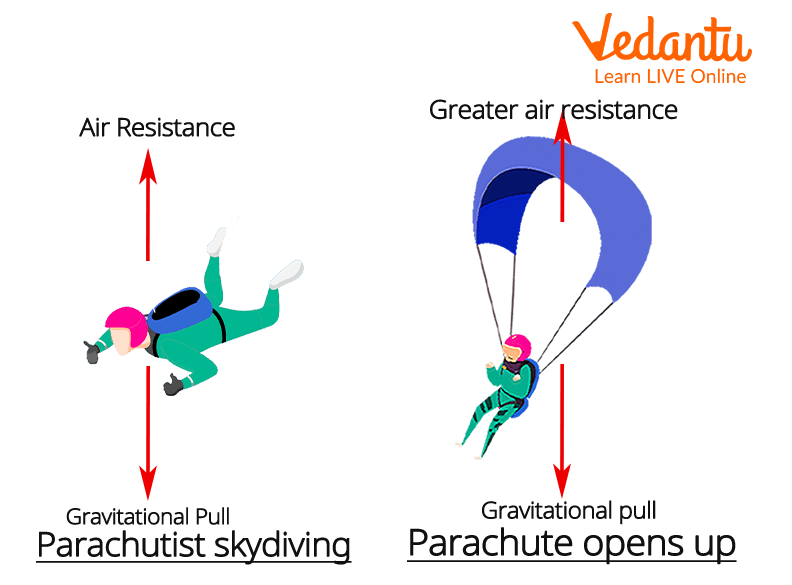
Air Resistance in The Sky
What is The Resistance to an Air Gap?
An air gap is fully separating, meaning it has actually high electrical resistance * 109 * m since it contains oxygen and nitrogen bits. There are no free electrons in an air gap. The operation of an actual high implicit ionises the air and it becomes channelling, the grade needed is 3x10⁶ V/m.
What is Air Resistance for Kids?
Air resistance is the frictional workforce air exerts against a shifting object. As an object shifts, air resistance slows it down. The faster the object stir, the lesser the air resistance applied against it. Air resistance affects all shifting objects, from aeroplanes, rockets, and trains to autos, bikes, and indeed living effects.
An object’s shape and face area can increase or drop the degree of air resistance it encounters. A feather will fall slower than a mattered ball because the feather has a lesser face area. Because it can spread its weight over a larger area, the feather encounters lesser air resistance and falls more slowly.
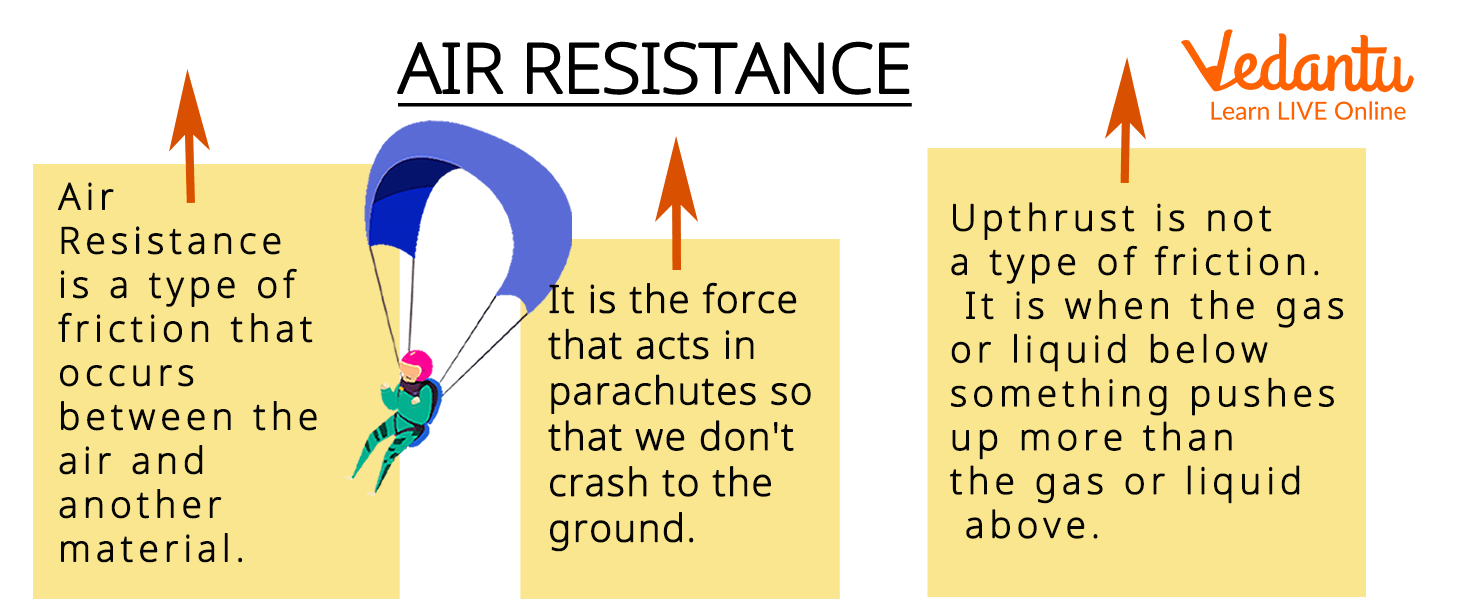
Air Resistance
Air Resistance Force
Air resistance force is a force that is applied by air. Air resistance force is similarly known as drag. The moment and the intensity of the air resistance force are directly proportionate to the speed of the shifting object. This is a natural force of personality. It's commensurable to the face zone of the object.
Air Resistance Force Examples
1. Riding a Cycle
When a cycle rider moves in the forward direction, a force of disunion wielded by the air tends to decelerate down its speed. This force of disunion is applied to the rider’s face and body from the direction reverse to the direction of motion of the cycle. When the rider increases his speediness, the air resistance workforce increases proportionally. huddling down on the cycle helps the rider to break the effect of air resistance force and shift with an advanced speed.

Riding a Cycle
2. Parachute
Air resistance force plays a genuinely major part in the deed of a parachute. When a person jumps down while skydiving and opens up his/ her parachute, the air resists the spring. Due to this resistance handed by the air, the speed with which the parachute approaches the ground slows down. The gravitational labour force pulls the parachute in a downcast order, whereas an air resistance force is related to the parachute in an upward order.
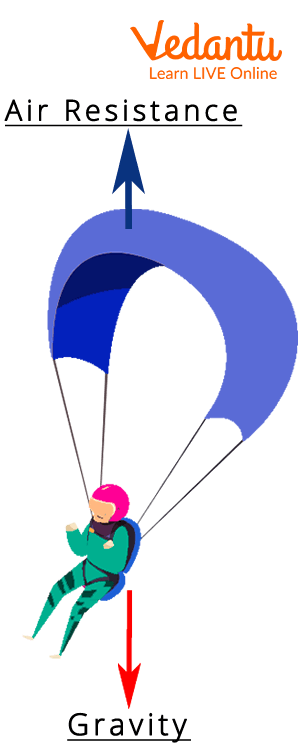
Parachute
3. Stepping in Storm
It's frequently delicate to step in cyclonic rainfall. While stepping against the order of the wind, a significant quantum of resistance is sensed by the person that causes hardness in stepping. The equal case makes it delicate to grip a marquee in hand in the presence of a strong wind.
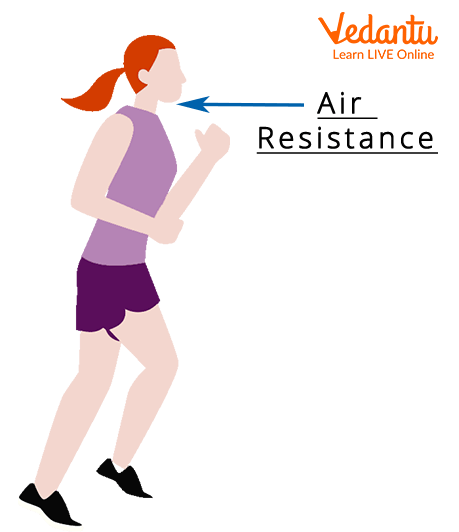
Stepping in a Storm
4. Feather Slipping on the Ground
A feather, when falling on the ground from a given height, tends to ride and shift sluggishly towards the ground. The labour force attracting the feather towards the ground is the gravitational labour force, while the labour force that resists the fall and stir of the feather is the air resistance force.
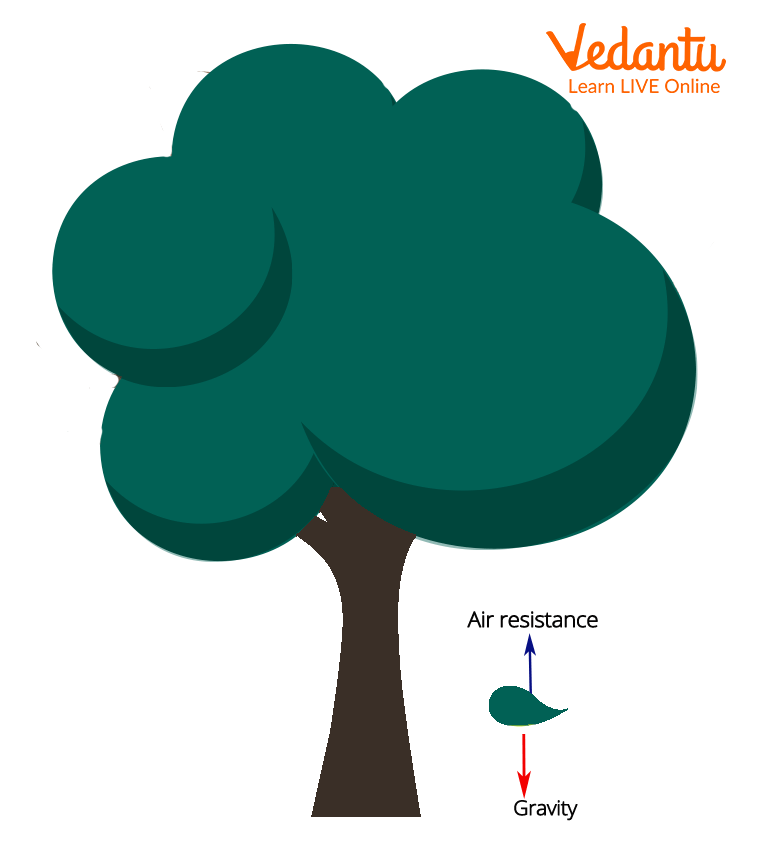
Feather Sleeping on Ground
5. Paper Plane
A paper aeroplane floats easily in the air if cooked duly and to attain this, the frontal side of the paper aeroplane is framed edgy. This sharpened edge helps the paper aeroplane to slice through the air and space the air resistance force. This helps the aeroplane to lend easily.
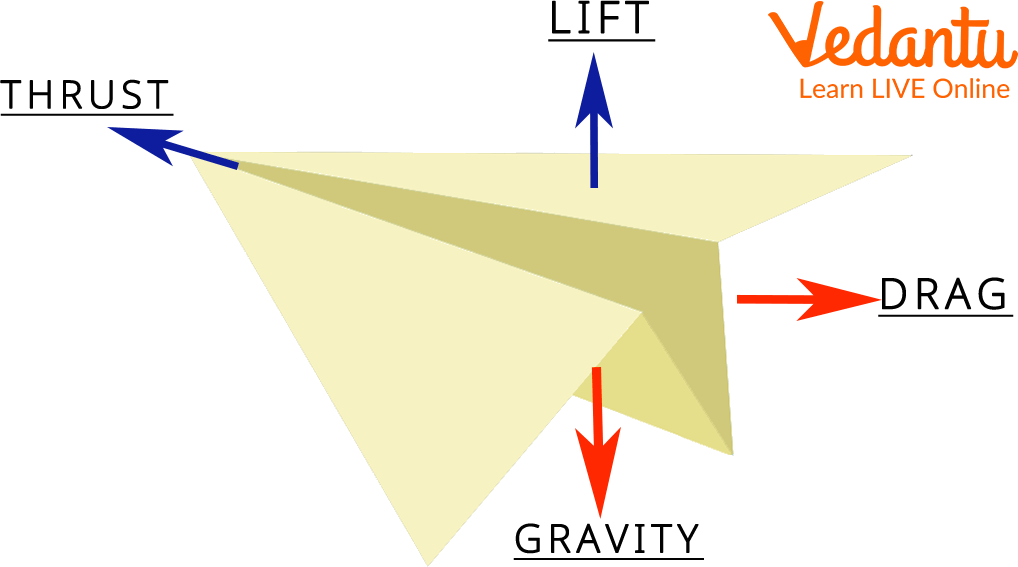
Paper Plane
Summary
Air resistance force is a drive or drag against a stir of a thing. Air resistance happens to numerous large things, similar to buses, planes, and gormandize shifting things. We generally don’t see air resistance, but on major things we do.
Air resistance is a force of disunion on effects as it moves through the air, it opposes the thing’s stir and slows it down.
FAQs on What Is Air Resistance? Understanding the Concept & Importance
1. What exactly is air resistance?
Air resistance is a type of frictional force that air pushes against a moving object. Also known as drag, this force acts in the opposite direction of the object's motion, causing it to slow down. Think of it as the air pushing back when you run or when a leaf falls from a tree.
2. What are the main factors that affect the amount of air resistance on an object?
The amount of air resistance depends on several key factors. The most important ones are:
Speed: The faster an object moves, the greater the air resistance it encounters.
Surface Area: Objects with a larger surface area that faces the direction of motion experience more air resistance.
Shape: Objects that are streamlined (like a rocket or a sports car) have less air resistance than objects with a blunt or flat shape (like a brick).
Air Density: Air resistance is higher in denser air (e.g., at sea level) and lower in thinner air (e.g., on a high mountain).
3. Can you give some real-life examples of air resistance in action?
Yes, air resistance is at play all around us. For example:
A parachute works by creating a large surface area to maximise air resistance and slow down a skydiver's descent.
Cyclists in a race bend low over their handlebars to make their bodies more streamlined and reduce drag.
A feather floats down slowly because its large surface area and low weight make it very susceptible to air resistance, while a small stone falls quickly.
4. Why does a crumpled piece of paper fall faster than a flat sheet, even though they have the same mass?
This is a classic example that shows how shape and surface area affect air resistance. The flat sheet of paper has a very large surface area, so it catches a lot of air as it falls, leading to high air resistance that slows it down. When you crumple the paper into a ball, you drastically reduce its surface area. It still has the same mass, but it now faces much less air resistance, allowing gravity to pull it down much faster.
5. How is the concept of air resistance used in designing cars and aeroplanes?
Engineers use the principle of air resistance to make vehicles more efficient. This is called aerodynamics. They design cars, trains, and aeroplanes with smooth, curved, and tapered shapes, a practice known as streamlining. This special shape allows air to flow smoothly over the surface, which minimises drag. By reducing air resistance, vehicles can travel faster and use less fuel to overcome the opposing force of the air.
6. What is 'terminal velocity' and how does air resistance cause it?
Terminal velocity is the constant, maximum speed that a freely falling object eventually reaches. As an object falls, its speed increases due to gravity. At the same time, the upward force of air resistance also increases with speed. Eventually, the object reaches a speed where the upward force of air resistance perfectly balances the downward force of gravity. At this point, the net force on the object is zero, it stops accelerating, and continues to fall at that constant maximum speed.
7. If there were no air resistance, would a feather and a bowling ball fall at the same speed?
Yes, absolutely. In a vacuum, where there is no air and therefore no air resistance, all objects fall at the same rate of acceleration regardless of their mass or shape. The only force acting on them is gravity. This was famously demonstrated by the Apollo 15 astronauts on the Moon, where they dropped a hammer and a feather, and both hit the lunar surface at the exact same time. The reason they fall differently on Earth is entirely due to air resistance.
