









What is MS Word and How It Works with Key Features and Uses
MS Word is one of the most widely used word processing applications in the world. It is a part of the Microsoft Office suite and is used to create, edit, format, and print documents such as letters, reports, resumes, and assignments. In computer science, MS Word plays an important role in understanding document processing, text formatting, and digital communication. Its user friendly interface and powerful tools make it suitable for students, professionals, and businesses. Learning MS Word helps users improve productivity, document presentation, and overall computer literacy.
Definition and Meaning
MS Word definition: MS Word is a word processing software developed by Microsoft that allows users to create, edit, format, store, and print text based documents electronically.
- Word Processor - A software application used to create and manage text documents.
- Document - A digital file containing text, images, tables, and other elements.
- Formatting - Changing the appearance of text such as font, size, color, and alignment.
- File Extension - MS Word files are usually saved with .doc or .docx extensions.
How MS Word Works
The MS Word working process involves creating a document, entering text, formatting content, and saving or printing the final file. It uses a graphical user interface where users interact through menus, toolbars, and ribbons.
- Open the MS Word application from the system.
- Select a blank document or choose a template.
- Type the required text using the keyboard.
- Use formatting tools such as font style, size, bold, italic, and alignment.
- Insert images, tables, charts, or hyperlinks if needed.
- Save the document in the desired format like .docx or .pdf.
- Print or share the document electronically.
Types and Classification
MS Word can be classified based on versions and usage platforms.
Types of MS Word
| Type | Description | Example |
|---|---|---|
| Desktop Version | Installed on Windows or macOS | MS Word 2019, MS Word 2021 |
| Web Version | Online browser based version | Word for Web |
| Mobile Version | App for smartphones and tablets | Word for Android, iOS |
Each type offers similar core features but may differ slightly in advanced tools and interface design.
Components and Structure
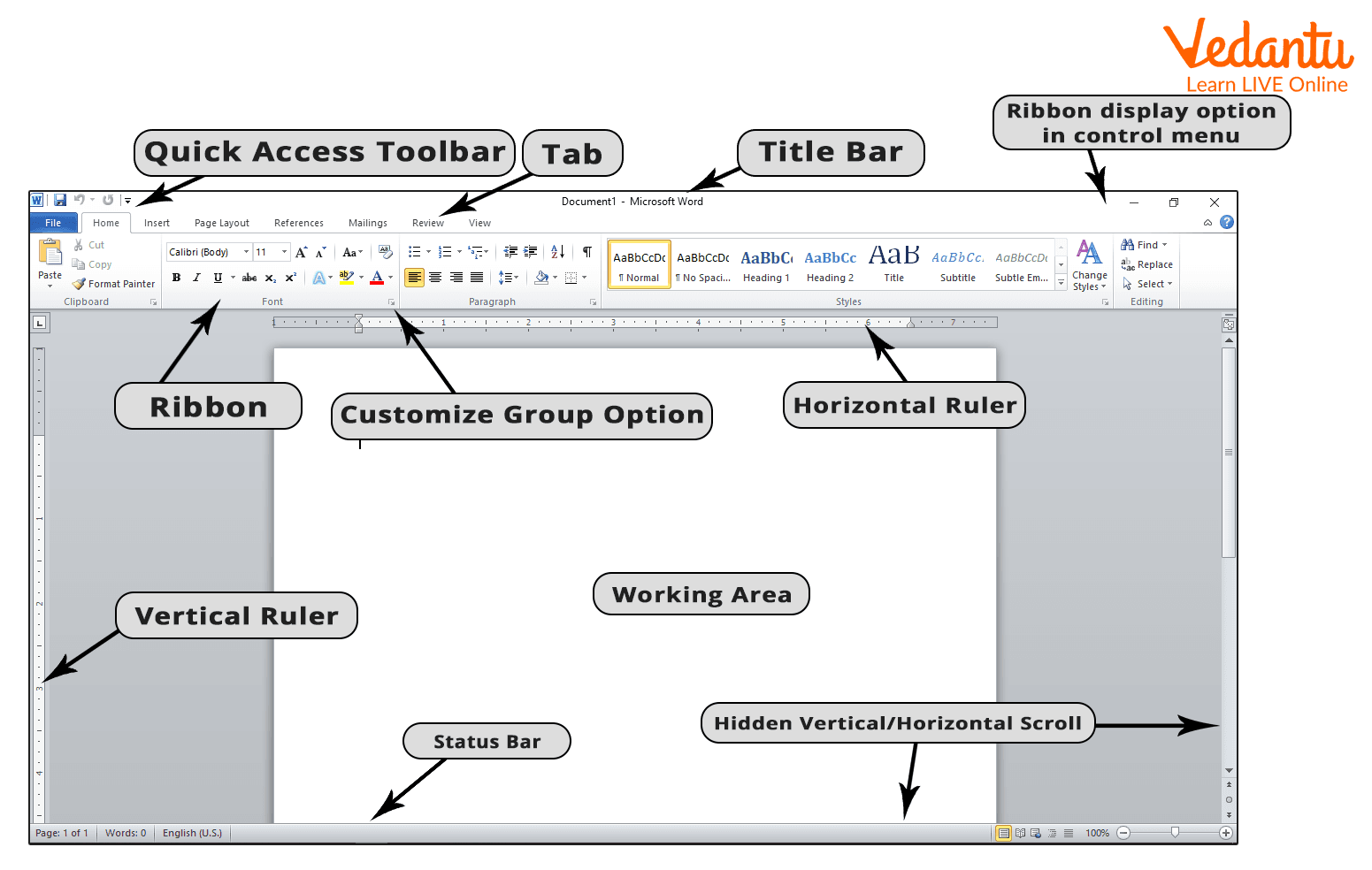
- Title Bar - Displays the document name and application name.
- Ribbon - Contains tabs like Home, Insert, Design, Layout with tools and commands.
- Quick Access Toolbar - Provides shortcuts to frequently used commands like Save and Undo.
- Document Area - Main workspace where text is typed and edited.
- Status Bar - Shows page number, word count, and language settings.
- Scroll Bars - Used to navigate through the document.
Features and Characteristics
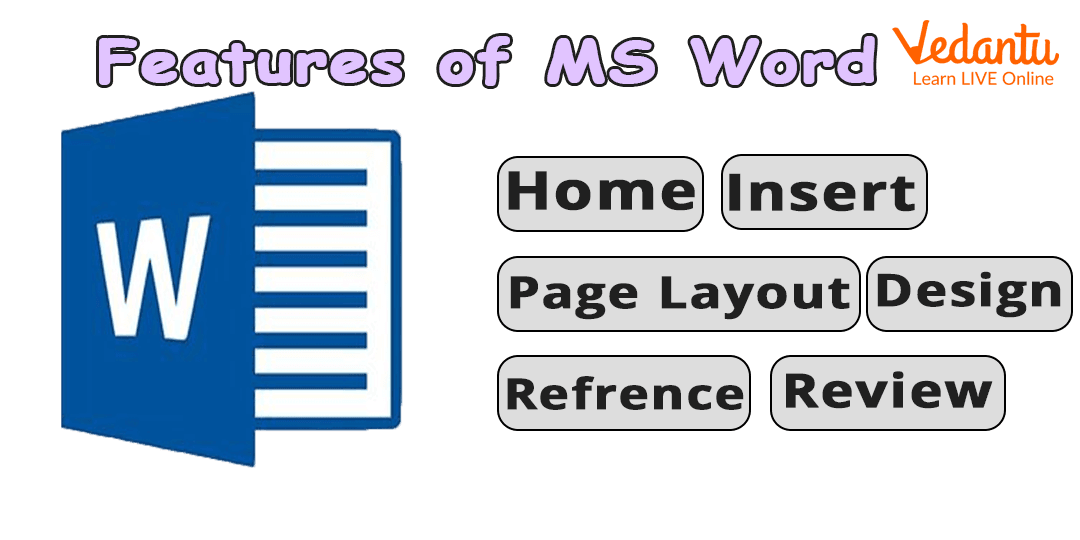
- Text Formatting - Change font, size, style, and color.
- Spell Check and Grammar Check - Automatically detects errors.
- Templates - Ready made document layouts.
- Insert Objects - Add tables, charts, images, and shapes.
- Mail Merge - Create bulk letters and labels.
- Collaboration Tools - Track changes and comments.
Opening an Existing Document
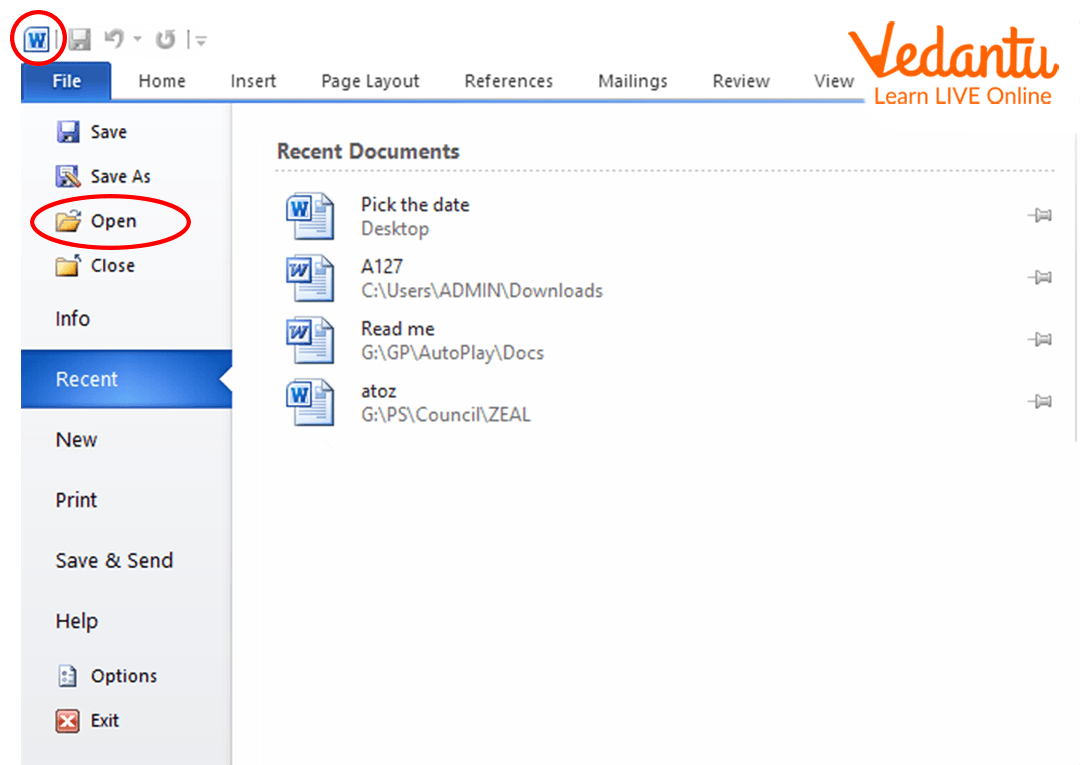
To open an existing document in MS Word, click on the File tab, select Open, browse the location of the saved file, and click on the document name. The file will appear in the document area for editing.
Advantages
- Easy to use interface.
- Professional document formatting.
- Supports multiple file formats including PDF.
- Strong editing and reviewing tools.
- Cloud integration for backup and sharing.
Disadvantages and Limitations
- Paid software for full desktop version.
- Large files may slow down performance.
- Formatting may change when opened in other word processors.
- Requires system compatibility and updates.
Applications and Use Cases
- Creating school assignments and project reports.
- Preparing business letters and official documents.
- Designing resumes and CVs.
- Writing books, articles, and research papers.
- Generating certificates and brochures.
Quick Facts About MS Word
| Property | Details |
|---|---|
| Type | Word Processing Software |
| Developed By | Microsoft |
| First Released | 1983 |
| File Extension | .doc, .docx |
| Platform Support | Windows, macOS, Web, Mobile |
| Used For | Document Creation and Editing |
These quick facts summarize important information about MS Word in computer science and its general usage.
Interesting Facts About MS Word
- MS Word was first introduced for Xenix systems before Windows.
- The .docx format is based on XML technology.
- Word includes built in translation tools.
- It supports real time collaboration through cloud services.
- Macros can automate repetitive tasks in MS Word.
- It allows exporting documents directly as PDF files.
Conclusion
MS Word is a powerful and essential word processing tool in computer science and everyday computing. It enables users to create professional documents with ease using its advanced formatting and editing features. Understanding MS Word definition, working, features, and applications helps students and professionals improve productivity and digital communication skills. Its widespread use in education, business, and personal tasks makes it an important software application to learn and master.
FAQs on MS Word Tutorial and Practical Guide for Beginners
1. What is MS Word in Computer Science?
MS Word is a word processing software developed by Microsoft used to create, edit, format, and manage text documents digitally.
- Part of Microsoft Office and Microsoft 365
- Used for document creation, reports, resumes, and letters
- Supports formatting, images, tables, and templates
2. What are the main features of MS Word?
MS Word features help users create professional and well-formatted documents efficiently.
- Text formatting such as font, size, color, and alignment
- Spell check and grammar correction
- Insert tables, images, charts, and shapes
- Mail Merge for bulk document generation
- Templates for resumes and reports
3. How does MS Word work?
MS Word works by allowing users to input text, apply formatting commands, and save documents in digital file formats.
- Accepts input through keyboard and mouse
- Processes formatting using built-in editing tools
- Saves files in formats like .docx and .pdf
- Supports cloud storage via OneDrive
4. What are the components of the MS Word interface?
The MS Word interface consists of several components that help users access commands and manage documents.
- Title Bar shows document name
- Ribbon contains tabs and command groups
- Quick Access Toolbar for common actions
- Document Area for typing content
- Status Bar shows page and word count
5. What file formats are supported by MS Word?
MS Word supports multiple file formats for document compatibility and sharing.
- .docx default Word format
- .doc older version format
- .pdf portable document format
- .txt plain text format
- .rtf rich text format
6. What is Mail Merge in MS Word?
Mail Merge in MS Word is a feature that automates the creation of multiple personalized documents using a data source.
- Combines a main document with a data source
- Used for letters, labels, and certificates
- Common in office automation and database integration
7. What are the advantages and disadvantages of MS Word?
MS Word offers powerful document processing tools but also has some limitations.
- Advantages include easy formatting, templates, collaboration, and cloud integration
- Disadvantages include paid licensing and large file sizes for complex documents
8. How is MS Word different from Google Docs?
MS Word and Google Docs are word processing tools but differ in platform and usage model.
- MS Word is desktop-based with advanced formatting features
- Google Docs is web-based with real-time collaboration
- Word supports more advanced layout and offline editing
9. What are the common uses of MS Word in education and business?
MS Word is widely used for academic, professional, and business documentation.
- Creating assignments, projects, and research papers
- Preparing resumes and cover letters
- Generating reports and official letters
- Designing newsletters and brochures
10. Why is MS Word important for exams and job interviews?
MS Word skills are important for computer literacy tests, competitive exams, and workplace productivity.
- Frequently asked in computer awareness sections
- Required skill in office and IT-related jobs
- Demonstrates knowledge of document processing software
