









Definition Types Structure and IUPAC Naming of Branched and Cyclic Carbon Chains
Hydrocarbons are compounds entirely made of carbon and hydrogen; the carbon in hydrocarbons forms long chains due to its catenating property. One carbon can, at most, form a bond with four other carbons, each of which can propagate the chain by linking to other carbon while satisfying its tetravalency.
The main classes of hydrocarbon chains are alkane, alkene, alkyne, cycloalkanes and arenes. Alkanes, alkenes, and alkynes are straight chains, while cycloalkanes and arenes are compounds with cyclic rings.
Carbon Chains
Straight chains of hydrocarbons can be branched or unbranched. The naming of hydrocarbon chains follows the IUPAC nomenclature, The name usually consists of a root, a prefix and a suffix. The nature of the skeleton- cyclic or acyclic- is indicated by the prefix, and the suffix indicates the type of bond or the functional group present in the chain. For branched compounds, the main carbon chain is identified and named; the location of the branching and the alkyl name is attached before the root (name of the main chain).
The carbon chain name rules for naming a branched hydrocarbon can be summed up as follows:
The longest continuous carbon chain is identified. This is called the main chain or the parent chain. It is named according to the number of carbon atoms in the chain.
Table: Roots of Basic Carbon Skeleton
Root | Number of Carbon atom |
Meth | One |
Eth | Two |
Prop | Three |
But | Four |
Pent | Five |
Hex | Six |
Hept | Seven |
Oct | Eight |
Non | Nine |
Dec | Ten |
In case of multiple chains with the same number of carbons, the chain with the maximum number of branching is selected as the parent chain.
The main chain is numbered in such a manner that the carbon atom to which the branches are attached gets the lowest possible number.
The name of the alkyl group attached to the carbon chain is placed before the name of the main chain. If the chain contains multiple similar branches, a prefix is added to indicate the number of branches. Some common prefixes are: di(2), tri(3), tetra(4), penta (5), hexa (6), hepta(7), and octa (8).
In case of different alkyl groups, the names are arranged in alphabetical order. The alkyl group derives their name from their base structure.
Table: Names of Alkyl Side Chains
Alkyl | Structure |
Methyl | —CH3 |
Ethyl | —CH2—CH3 |
Propyl | —CH2—CH2—CH3 |
Iso-propyl | 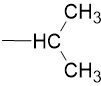
|
Butyl | —CH2—CH2—CH2—CH3 |
Iso-Butyl | 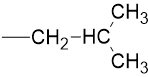
|
Tert-Butyl | 
|
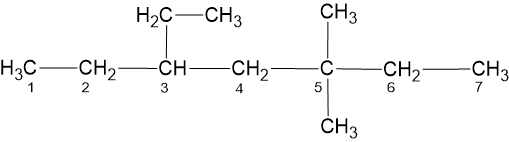
3 - Ethyl, 5, 5 - Dimethyl Heptane
If the branched chain contains multiple bonds, then the numbering is done according to the location of the multiple bond. The unsaturation receives the lowest number possible.
Table: Suffixes for Carbon Chain
Carbon Chain | Suffix |
Saturated | Ane |
Unsaturated: Double Bond | Ene |
Unsaturated: Triple Bond | Yne |
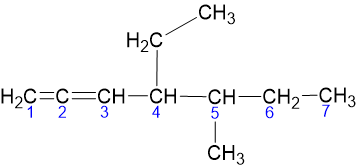
4 - Ethyl - 5 - Methyl - 1, 2 - Heptadiene
Hydrocarbons containing functional groups are named such that the carbon atom to which it is attached gets the lowest number possible. Halogen groups are prefixed before the root name of the main skeleton.
Table: Suffixes for Functional Groups
Organic Compound | Functional Group | Suffix |
Alcohol | -OH | -ol |
Aldehyde | -CHO | -al |
Ketones | >CO | -one |
-COOH | -oic acid | |
Acid Amides | -CONH2 | -amide |
Acid Chlorides | -COCl | -oyl chloride |
Esters | -COOR | -alkyl oate |
Cyanides | -CN | -nitrile |
Thioalcohols | -SH | -thiol |
-NH2 | -amine |
Table: Prefixes for Halogen Groups
Functional Group | Prefix |
Fluorine, F | Fluoro |
Chlorine, Cl | Chloro |
Bromine. Br | Bromo |
Iodine, I | Iodo |
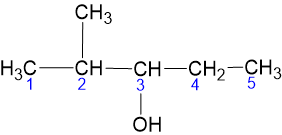
2 - Methyl - 3 - Pentanol
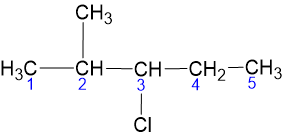
3 - Chloro - 2 - Methylpentane
Carbon Rings
Carbon atoms can bond with each other to form a variety of cyclic compounds- rings- which can be saturated or unsaturated. The cyclic alkane compounds are named with the word ‘cyclo’ set in the prefix, followed by the alkane name. For polycyclic hydrocarbons, the common name is accepted as IUPAC, owing to the compound's complexity. Aromatic rings have a high degree of unsaturation, and they form complicated architecture as a result their IUPAC nomenclature often becomes unreadable. The common name does not follow the IUPAC rules of naming. A few examples of aromatic compounds are mentioned below:

Benzene
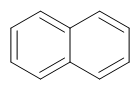
Naphthalene
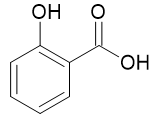
Salicylic Acid
Hydrocarbons containing multiple side chains attached to one cyclic system are considered derivatives of the cyclic compound. Rings with chains attached are named after the ring, and the substituted alkyl group names are attached as prefixes.
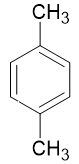
1, 4 - Dimethylbenzene
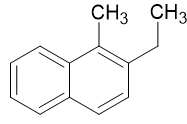
2 - Ethyl - 1 - Methylnaphthalene
Hydrocarbons with multiple chains and cyclic structure connected to one main chain is considered derivative of the acyclic compound.
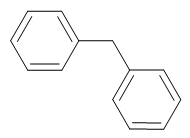
Diphenylmethane
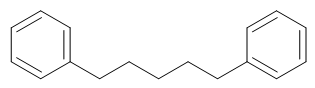
1, 5 - Diphenylpentane
Sometimes, two compounds with the same formula may have different structures, one of which is an open chain while the other is a ring chain. This type of isomerism is called Ring chain isomerism.
For example, Cyclopropane and propene both have the molecular formula C3H6.
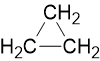
Cyclopropane
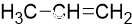
Propene
Interesting Facts
Biopolymers form the longest carbon chains.
Palytoxin and maitotoxin are marine compounds believed to have the longest carbon chain in nature.
Key Features
Alkane, alkene, alkyne, cycloalkanes and arenes are the main classes of hydrocarbons.
Carbon chains can be cyclic or acyclic.
Acyclic carbon chains can be branched or unbranched.
Carbon chains forming rings can be saturated: cycloalkanes or unsaturated arenes, also known as aromatic compounds.


FAQs on Carbon Chain Branches and Rings in Organic Chemistry
1. What are carbon chain branches and rings in organic chemistry?
Carbon chain branches and rings are structural features in organic compounds where carbon atoms form either side chains (branches) or closed loops (rings) instead of a single straight chain. In branched-chain hydrocarbons, one or more carbon atoms are attached as side groups to the main chain, such as in 2-methylpropane (C4H10). In cyclic compounds, carbon atoms join to form a closed ring, such as cyclohexane (C6H12). These structural variations significantly affect physical properties, reactivity, and isomerism.
2. What is a branched-chain hydrocarbon?
A branched-chain hydrocarbon is an organic compound in which one or more carbon atoms form side chains attached to the longest continuous carbon chain. In alkanes, branching occurs when a carbon is bonded to three or four other carbons. For example:
- n-Butane: CH3–CH2–CH2–CH3 (straight chain)
- 2-Methylpropane: (CH3)3CH (branched)
3. What is a cyclic hydrocarbon?
A cyclic hydrocarbon is a compound in which carbon atoms are connected in a closed ring structure. In cycloalkanes, the general formula is CnH2n, such as cyclopropane (C3H6) and cyclohexane (C6H12). These rings can be small (3–4 carbons) or larger, and they may be saturated (single bonds only) or unsaturated, as in benzene (C6H6), an aromatic ring.
4. How do you identify branching in a carbon chain?
Branching in a carbon chain is identified when a carbon atom is bonded to more than two other carbon atoms in the structure. To detect branching:
- Draw the full structural or skeletal formula.
- Locate the longest continuous carbon chain.
- Check for carbon atoms attached as side groups (alkyl groups).
5. What is the difference between straight-chain, branched-chain, and cyclic hydrocarbons?
The difference lies in how the carbon atoms are arranged in the molecule.
- Straight-chain hydrocarbons: Carbon atoms form one continuous chain (e.g., n-pentane, C5H12).
- Branched-chain hydrocarbons: One or more side chains are attached to the main chain (e.g., 2-methylbutane, C5H12).
- Cyclic hydrocarbons: Carbon atoms form a closed ring (e.g., cyclopentane, C5H10).
6. How does branching affect the boiling point of hydrocarbons?
Branching decreases the boiling point of hydrocarbons because it reduces surface area and weakens London dispersion forces. For example:
- n-Pentane: higher boiling point due to straight-chain structure.
- 2,2-Dimethylpropane: lower boiling point due to compact, highly branched structure.
7. What is the general formula for cycloalkanes?
The general formula for cycloalkanes is CnH2n, where n is the number of carbon atoms in the ring. This formula differs from alkanes (CnH2n+2) because two hydrogen atoms are lost when the chain forms a ring. Examples include:
- Cyclopropane: C3H6
- Cyclobutane: C4H8
8. Can branched and cyclic compounds show structural isomerism?
Yes, branched and cyclic compounds can exhibit structural (constitutional) isomerism because they have the same molecular formula but different structural arrangements. For example, C5H10 can represent:
- Pent-1-ene (open-chain alkene)
- Cyclopentane (cyclic alkane)
9. How do you name branched and cyclic hydrocarbons using IUPAC rules?
Branched and cyclic hydrocarbons are named using IUPAC nomenclature by identifying the parent chain or ring and numbering substituents correctly. Steps:
- Choose the longest carbon chain (or ring as parent if it has more carbons).
- Number the chain to give substituents the lowest possible numbers.
- Name and position alkyl substituents alphabetically.
- Use the prefix cyclo- for rings.
10. Why are carbon rings and branching important in organic chemistry?
Carbon rings and branching are important because they influence molecular shape, stability, physical properties, and biological activity. Key reasons include:
- They create structural diversity in organic compounds.
- They affect boiling point, melting point, and solubility.
- Many biological molecules, such as glucose (C6H12O6) and benzene (C6H6), contain ring structures.
