




Types of Questions in Grade 6 Reading Comprehension Worksheets
Reading Passage: The Secret Life of Coral Reefs
“Often called the "rainforests of the sea," coral reefs are some of the most diverse and valuable ecosystems on Earth. These underwater structures are built by tiny animals called coral polyps. A single polyp is no bigger than a grain of rice, but they live in vast colonies, building upon the calcium carbonate skeletons of their ancestors over thousands of years. The vibrant colours of a coral reef do not come from the polyps themselves, but from microscopic algae called zooxanthellae that live within their tissues. This is a symbiotic relationship; the coral provides the algae with a protected environment and compounds they need for photosynthesis, and in return, the algae produce oxygen and help the coral to remove wastes. Most importantly, they supply the coral with the glucose, glycerol, and amino acids, which are the products of photosynthesis.”
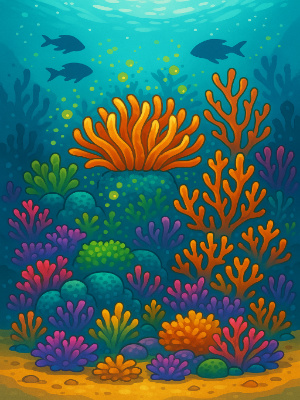
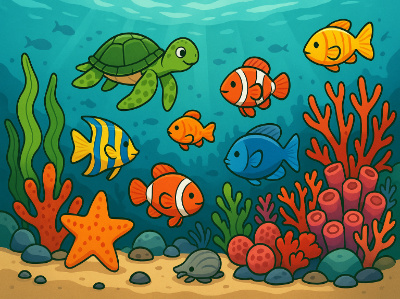
“Coral reefs are teeming with life. They support about 25% of all marine species, including fish, mollusks, crustaceans, and sea turtles, despite covering less than 1% of the ocean floor. They provide shelter, spawning grounds, and protection from predators for countless organisms. Beyond their biological importance, reefs also have immense value to humans. They protect coastlines from storms and erosion, provide jobs for local communities through tourism and fishing, and are a source of new medicines. The intricate structures of reefs are a natural barrier that dissipates the force of waves hitting the coast.”
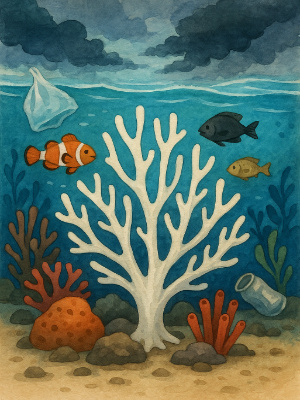
“Unfortunately, these magnificent ecosystems are under threat. Climate change is causing ocean temperatures to rise, leading to a phenomenon called coral bleaching. When the water gets too warm, corals expel the algae living in their tissues, causing them to turn completely white. While corals can survive a bleaching event, they are under more stress and are subject to mortality if conditions do not improve. Pollution from land, overfishing, and destructive fishing practices also damage these fragile habitats. Protecting coral reefs is a critical task that requires global cooperation to ensure they survive for future generations to marvel at.”
Questions
1. Multiple Choice: What is the main idea of the first paragraph?
a) Coral polyps are very small animals.
b) Coral reefs get their colours from a symbiotic relationship with algae.
c) Photosynthesis is important for all marine life.
d) Calcium carbonate is the main building block of the ocean.
2. True or False:
Coral reefs cover more than 10% of the ocean floor.
True / False
3. Fill in the Blanks:
The tiny animals that build coral reefs are called ______________.
____________________
4. Short Answer:
Explain in your own words what a "symbiotic relationship" is, based on the passage.
_________________________________________________________________________
_________________________________________________________________________
5. Rearrange the Sequence of Events for Coral Bleaching:
(Number the following from 1 to 4 to show the correct order)
___ The coral turns completely white.
___ The ocean temperature rises due to climate change.
___ The coral expels the algae from its tissues.
___ The coral is under more stress and may die.
6. Multiple Choice:
According to the passage, how do coral reefs protect coastlines?
a) By attracting tourists who watch over the coast.
b) By serving as a food source for large fish.
c) By acting as a natural barrier that reduces the force of waves.
d) By filtering pollution from the water.
7. Underline the Correct Word: When a coral expels its algae, the phenomenon is known as coral (whitening / bleaching).
8. Match the Columns:
Match the term with its correct description.
9. Short Answer:
Name two threats to coral reefs mentioned in the passage, besides climate change.
_________________________________________________________________________
_________________________________________________________________________
10. Complete the Sentence:
Coral reefs are often called the "____________________" because they are incredibly diverse ecosystems.
____________________
Answer Key
1. b) Coral reefs get their colours from a symbiotic relationship with algae.
2. False
3. coral polyps
4. A symbiotic relationship is a close interaction between two different species where both benefit. The coral gives the algae a safe place to live, and the algae provides the coral with food/energy.
5. 2, 1, 3, 4 (The correct order is: The ocean temperature rises -> The coral expels the algae -> The coral turns white -> The coral is under more stress.)
6. c) By acting as a natural barrier that reduces the force of waves.
7. When a coral expels its algae, the phenomenon is known as coral (whitening / bleaching).
8.
1 - D
2 - A
3 - B
4 - C
9. Any two of the following: Pollution from land, overfishing, destructive fishing practices.
10. rainforests of the sea
Class 6 Reading Comprehension Practice – Fun Passages and Questions
Class 6 Reading Comprehension Worksheets in English help students explore new worlds through interesting stories and passages. As you read, you learn how to find the main idea and answer important questions.
This topic builds strong thinking habits for the English subject, turning every student into a better reader. Parents love these worksheets for building vocabulary and confidence in reading.
Improve Accuracy in Answering Questions
Practicing with Class 6 Reading Comprehension Worksheets gives students the chance to answer comprehension passages carefully. In this English subject topic, you practice reading fast and choosing the best answers from the text.
These printable worksheets help you prepare for exams while making reading fun and less stressful for both students and parents.
FAQs on Class 6 Reading Comprehension Practice Worksheets
1. What are some good reading comprehension passages for grade 6?
Grade 6 reading comprehension passages are specifically chosen to match the syllabus and age group (11–12 years). Popular topics include short stories, informative texts, science or history extracts, and moral lessons. Each passage is followed by questions that encourage careful reading, inference, vocabulary improvement, and higher-order thinking, making them ideal for exam practice and homework.
2. How do I improve reading comprehension in class 6?
To improve reading comprehension in class 6, students should:
- Read varied passages regularly to build familiarity with different text types.
- Answer MCQs, short answers, and vocabulary questions found in worksheets.
- Practice inferential and critical thinking questions to deepen understanding.
- Use free, printable Class 6 reading comprehension worksheets for extra practice at home or during holidays.
3. Are grade 6 reading worksheets printable?
Yes, grade 6 reading comprehension worksheets are usually offered as printable PDFs with clear formatting and easy-to-read fonts. These sheets can be downloaded and used for homework, school practice, or exam revision by both parents and students.
4. Do these worksheets come with answer keys?
Most class 6 reading comprehension worksheets include a detailed answer key. This allows students to check their responses and helps parents or teachers provide quick feedback. Answer keys enhance self-study and reinforce key comprehension skills.
5. What skills do reading comprehension worksheets build?
Class 6 reading comprehension worksheets build several important skills, including:
- Text understanding and identifying main ideas
- Inference and critical thinking
- Vocabulary building
- Answering multiple-choice and short-answer questions
- Reading fluency and exam readiness
6. What age group is a Class 6 reading comprehension worksheet best for?
A class 6 reading comprehension worksheet is designed for students aged 11–12 years. The passages and questions are matched to grade 6 English curriculum standards, making them ideal for this age group as per CBSE and NCERT guidelines.
7. What types of questions are found in a grade 6 reading comprehension worksheet?
Common question types in a grade 6 reading comprehension worksheet include:
- Multiple-choice (MCQ)
- Short answer
- Fill in the blank
- Vocabulary meaning
- Reference to context
- True or False
8. Can I download the Class 6 reading comprehension worksheets in PDF format?
Yes, most class 6 reading comprehension worksheets are available as free printable PDF downloads. This allows parents and students to easily access, print, and use them for practice at home or in class.
9. How can parents use these reading comprehension worksheets at home?
Parents can use class 6 reading comprehension worksheets to:
- Assign regular practice for homework or exam revision
- Check answers using the provided answer key
- Encourage independent work and reading habits
- Identify areas where the child needs more support in reading or vocabulary
10. Can these reading comprehension worksheets be used on mobile devices or tablets?
Yes, most class 6 reading comprehension worksheets are mobile-responsive or compatible with tablets. This means students can preview, read, and sometimes even write answers digitally, making practice more flexible and accessible for modern learners.
