






How to Identify and Color Halves and Quarters in Shapes
Tick the Correct Statement
1. Which shape is divided into equal parts?
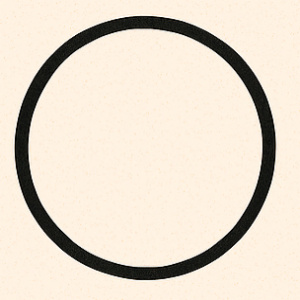
(A) A circle divided into two unequal pieces.
(B) A circle divided into two equal halves. [ ]
2. Which shape shows four equal parts?
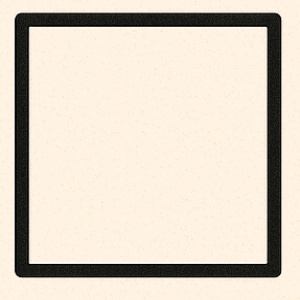
(A) A square divided into four equal smaller squares. [ ]
(B) A square divided into three unequal rectangles.
Fill in the Blanks
1.
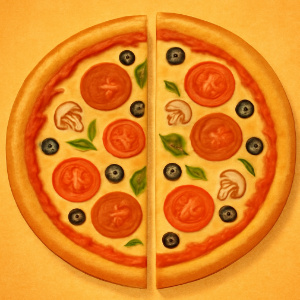
A whole pizza is cut into 2 equal slices. Each slice is called one ________.
2.
If a cake is cut into 4 equal parts, one part is called one ________.
3. The fraction 1/2 means 1 part out of equal parts.
4. The fraction 1/4 means 1 part out of equal parts.
Multiple Choice Questions (MCQs)
1. What is a half?
(A) 1 of 4 equal parts
(B) 1 of 2 equal parts
(C) A whole thing
2. Look at a square with 1 out of 4 parts coloured. What fraction is coloured?
(A) 1/2
(B) 1/3
(C) 1/4
3. Which shape is NOT divided into equal parts?
(A) A rectangle cut exactly in the middle.
(B) A circle cut into two identical semicircles.
(C) A triangle cut into a small top piece and a large bottom piece.
True or False
1. A shape divided into two halves has two equal parts.
2. 1/4 means one part out of five equal parts.
3. If I eat half of a chocolate bar, there is still another half left.
4. Two quarters make a whole.
Match the Columns
Match the shape to the fraction name.
Short Answer Questions
1. Imagine a round roti. If you fold it exactly in the middle to share with your friend, what fraction does each person get?
2. A sandwich is cut into 4 equal triangles. If you eat 1 triangle, what fraction of the sandwich did you eat?
Answer Key
Tick the Correct Statement
1. (B) A circle divided into two equal halves.
2. (A) A square divided into four equal smaller squares.
Fill in the Blanks
1. half
2. quarter (or fourth)
3. 2
4. 4
Multiple Choice Questions (MCQs)
1. (B) 1 of 2 equal parts
2. (C) 1/4
3. (C) A triangle cut into a small top piece and a large bottom piece.
True or False
1. True
2. False
3. True
4. False (Four quarters make a whole).
Match the Columns
1. -> (C) One-Half
2. -> (A) One-Fourth
3. -> (B) Whole
Short Answer Questions
1. Each person gets one-half (or 1/2).
2. I ate one-fourth (or 1/4) of the sandwich.
How This Worksheet Helps You Learn?
Class 1 Maths Fractions worksheets offer young learners a supportive way to understand basic fractions like halves (1/2) and quarters (1/4). This printable worksheet helps build fraction concepts through activities such as coloring, matching, and drawing equal parts. Designed for Grade 1 maths, these visual practice sheets encourage hands-on learning and strengthen foundational math skills.
By using a variety of fraction activities in an easy-to-download PDF practice sheet, children become more confident in recognizing and representing equal parts. This free worksheet for class 1 maths fractions ensures effective concept reinforcement both at home and in the classroom.
Usage Tips for Parents and Teachers
- Guide your child to color or shade half or quarter of each shape for better visual understanding.
- Review the instructions together before starting for clearer concept retention.
- Encourage kids to say the fraction aloud, like “one-half” when they color.
- Use the answer key to check work and celebrate small successes after each page.
Related Links for Class 1 Maths Fractions Worksheets
Click on any topic to download printable worksheets with different practice sets and answer keys. These worksheets help your child practice the lessons the right way.
What You Learned
On this page, you explored a Class 1 Maths Fractions printable worksheet designed to reinforce the understanding of halves and quarters. Children practiced coloring, matching, and identifying simple fractions, making learning interactive and visual. By downloading this PDF practice sheet, students and parents gain a reliable resource for class 1 maths fractions concepts and early math confidence.
FAQs on Fractions Worksheets for Class 1 – Halves and Quarters
1. What is a fraction in maths for Class 1?
For a Class 1 student, a fraction is a simple way to represent equal parts of a whole object or a group. It is a foundational concept that introduces how a whole can be divided into smaller, fair shares.
- It helps children understand basic concepts like half (1/2) and quarter (1/4).
- Learning begins with activities like dividing simple shapes into equal parts.
- For example, when a pizza is cut into two equal slices, each slice is one-half of the whole pizza.
2. How can I teach fractions to a Class 1 child?
The best way to teach fractions to a Class 1 student is by using visual and hands-on methods, such as our printable practice worksheets. The focus should be on making the concept tangible and fun.
- Start by explaining the concept of equal and unequal parts using real objects.
- Use simple fraction activity worksheets where children can colour half (1/2) or a quarter (1/4) of a shape.
- Engage them in matching activities that connect a shaded picture to its written fraction.
- Relate fractions to daily life, like sharing a chocolate bar or cutting a fruit into equal pieces.
3. What are the main fractions taught in Grade 1?
In Grade 1, the maths syllabus focuses on introducing the most basic and common fractions, which are halves (1/2) and quarters (1/4). The goal is to build a strong visual and conceptual foundation.
- Half (1/2): This represents one of two equal parts of a whole.
- Quarter (1/4): This represents one of four equal parts of a whole.
- Students learn to identify, draw, and colour these simple fractions using shapes like circles, squares, and rectangles.
4. How can I use this worksheet at home?
You can easily use this worksheet at home for extra practice by downloading and printing the free Class 1 Maths Fractions PDF. It is designed for parents to support their child's learning.
- First, download and print the worksheet.
- Read the simple, clear instructions for each exercise with your child.
- Guide them as they complete the activities, such as colouring fractions or matching shapes.
- Use the included answer key to check their work and reinforce correct concepts.
5. Does this fractions worksheet for Grade 1 include an answer key?
Yes, this Class 1 maths fractions worksheet with answers is provided to help parents and teachers easily check the solutions. The answer key helps build trust and allows for independent checking.
- The answer key is available within the downloadable PDF.
- It clearly shows the correctly shaded shapes and matched answers for each question.
- This feature is great for homework checking and helps provide immediate feedback to the student.
6. Is this worksheet printable?
Yes, this worksheet is designed as a free, printable PDF, making it ideal for use at home or in the classroom. The format is optimised for easy printing and use.
- The worksheet is formatted for standard A4 size paper.
- It features an age-appropriate layout with large fonts and clear images to keep young learners engaged.
- This allows for hands-on fraction practice, which is highly effective for Grade 1 students.
7. What activities are included in this Grade 1 fractions worksheet?
This fraction activity worksheet includes a variety of engaging exercises designed to reinforce the concept of fractions for young learners. The activities are visual and interactive.
- Colouring Fractions: Students are asked to colour parts of a shape to represent a fraction like 1/2 or 1/4.
- Identifying Equal Parts: Exercises to identify and circle shapes that are divided into fair, equal parts.
- Matching Shapes to Fractions: Activities where students draw a line to match a shaded shape to its correct written fraction.
- Drawing Equal Parts: Simple tasks that ask students to draw lines to divide a shape into halves or quarters.
8. Why is learning about equal parts important for understanding fractions?
Understanding equal parts is the most critical foundation for learning fractions because a fraction itself represents a fair share of a whole. Without this concept, the meaning of a fraction is lost.
- It teaches children that for a fraction like 1/2 to be accurate, the whole must be divided into two pieces of the exact same size.
- Worksheets that include identifying equal and unequal parts build this essential visual discrimination skill.
- This core idea prevents future confusion when students learn more complex fraction operations.
9. What skills are built by this fraction activity?
This fraction activity worksheet for Grade 1 helps develop several key foundational maths and cognitive skills beyond just learning fractions. It supports a well-rounded mathematical development.
- Mathematical Vocabulary: Introduces terms like fraction, half, quarter, whole, and equal parts.
- Visual Discrimination: Improves the ability to analyse and compare shapes and their divisions.
- Foundational Number Sense: Builds a basic understanding of how parts relate to a whole.
- Fine Motor Skills: Enhances coordination through hands-on tasks like colouring and drawing lines.
10. Can I use this worksheet on a tablet instead of printing it?
Yes, while designed as a printable PDF, this worksheet can also be used digitally on a tablet. This offers a modern, paper-free way to complete the exercises.
- You can open the PDF file in any application that supports markup or drawing tools.
- Children can use a stylus or their finger to complete the colouring and matching activities directly on the screen.
- This makes it a versatile resource for both digital and traditional learning environments.
