






How to Break Numbers into Tens and Ones Easily for Grade 1
Section 1: Fill in the Blanks
1. Look at the blocks and write how many tens and ones there are.
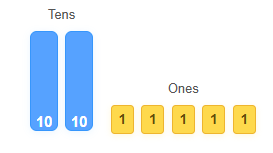
______ tens and ______ ones = ______
2. Look at the blocks and write how many tens and ones there are.
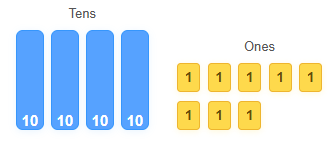
______ tens and ______ ones = ______
3. Look at the blocks and write how many tens and ones there are.
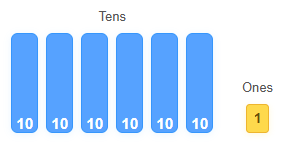
______ tens and ______ ones = ______
3. Look at the blocks and write how many tens and ones there are.
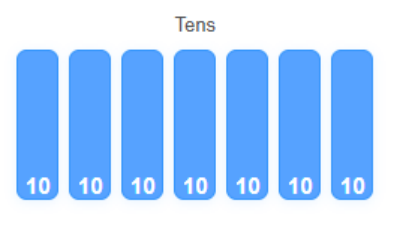
______ tens and ______ ones = ______
5. Look at the blocks and write how many tens and ones there are.
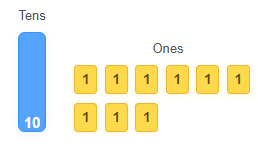
______ ten and ______ ones = ______
Section 2: Write the Number
1. 3 tens and 6 ones = ______
2. 8 tens and 2 ones = ______
3. 5 tens and 0 ones = ______
4. 9 tens and 9 ones = ______
5. 1 ten and 4 ones = ______
Section 3: Match the Columns
Match the number in Column A with its correct breakdown in Column B.
Section 4: Tick the Correct Option
1. How do we break down the number 72?
[ ] a) 2 tens and 7 ones
[ ] b) 7 tens and 2 ones
[ ] c) 70 tens and 2 ones
2. What number is made of 3 tens and 8 ones?
[ ] a) 83
[ ] b) 30
[ ] c) 38
3. The number 15 has:
[ ] a) 1 ten and 5 ones
[ ] b) 5 tens and 1 one
[ ] c) 1 ten and 0 ones
Section 5: True or False
1. The number 58 is made of 8 tens and 5 ones.
(True / False)
2. 4 tens and 6 ones make the number 46.
(True / False)
3. The number 90 has 9 tens and 0 ones.
(True / False)
4. The number 33 has 3 tens and 0 ones.
(True / False)
Answer Key
Section 1: Fill in the Blanks
1. 2 tens and 5 ones = 25
2. 4 tens and 8 ones = 48
3. 6 tens and 1 one = 61
4. 7 tens and 0 ones = 70
5. 1 ten and 9 ones = 19
Section 2: Write the Number
1. 36
2. 82
3. 50
4. 99
5. 14
Section 3: Match the Columns
1. c) 4 tens + 7 ones
2. e) 8 tens + 1 one
3. a) 2 tens + 3 ones
4. b) 6 tens + 0 ones
5. d) 5 tens + 5 ones
Section 4: Tick the Correct Option
1. b) 7 tens and 2 ones
2. c) 38
3. a) 1 ten and 5 ones
Section 5: True or False
1. False
2. True
3. True
4. False
How This Worksheet Helps You Learn?
The Class 1 Maths Breaking Numbers Into 10s And 1s printable worksheet gives young learners essential practice in the concept of place value. Students learn how to decompose numbers into tens and ones using clear number representations and visual cues. This worksheet is perfect for reinforcing place value for Grade 1 maths, supporting both NCERT guidelines and general primary maths skills.
Children benefit from drawing, matching, and filling activities that help them break down numbers using 10s and 1s. Using this place value PDF practice sheet regularly can strengthen foundational number sense in a fun, hands-on way. It is designed for independent or guided learning, making it ideal for school or home revision.
Usage Tips for Parents/Teachers
- Use the worksheet as a morning warm-up or quick maths revision at home.
- Guide your child to draw and colour base 10 blocks for a visual approach.
- Combine with hands-on objects (like straws or counters) for extra practice on breaking numbers into tens and ones.
- Encourage children to check their answers with the key for self-confidence.
Explore Related Worksheets
- Class 1 Maths Worksheets Chapter 9 (Numbers and Place Value)
- Ones Tens Hundreds Worksheet
- Place Value Worksheets
- Class 1 Maths Worksheets Chapter 3 (Numbers Up to 20)
- 1st Grade Addition and Subtraction Worksheets
What You Learned
This page provides a downloadable Class 1 Maths Breaking Numbers Into 10s And 1s worksheet focused on place value and number decomposition for young students. With simple activities, base 10 blocks, and clear instructions, children practice breaking numbers into their tens and ones, boosting number sense and confidence. The worksheet blends fun tasks and visual learning to help Grade 1 kids master key maths concepts in line with their curriculum. It is a valuable resource for teachers, parents, and students seeking effective printable worksheet practice on place value.
FAQs on Class 1 Maths Worksheet: Breaking Numbers into 10s and 1s
1. How to break numbers into tens and ones?
Breaking a number into tens and ones means separating a two-digit number based on its place value. This method, also known as decomposing numbers, helps children understand the structure of numbers.
For example, to break down the number 36:
- The digit 3 is in the tens place, so it represents 3 tens (or 30).
- The digit 6 is in the ones place, so it represents 6 ones (or 6).
- Therefore, 36 = 3 tens and 6 ones.
2. What is tens and ones in maths for Class 1?
In Class 1 maths, 'tens and ones' is the basic introduction to the concept of place value. It teaches that every two-digit number is made up of groups of ten (tens) and individual units (ones). This foundational skill is crucial for understanding larger numbers and performing operations like addition and subtraction.
3. How do you explain 10s and 1s to a child?
The easiest way to explain 10s and 1s is by using visual aids like base 10 blocks or simple objects. You can explain that a 'ten' is a bundle of 10 things (like a rod made of 10 small cubes) and an 'one' is a single item (one small cube). For the number 23, you would show them 2 bundles of ten and 3 single items to represent 2 tens and 3 ones.
4. Why is learning to break numbers into tens and ones important for Grade 1 students?
Learning to break numbers into tens and ones is a critical skill for Grade 1 students because it builds a strong foundation in place value. This understanding is essential for:
- Developing number sense.
- Mastering addition and subtraction with carrying and borrowing.
- Understanding the structure of the number system.
- Preparing for more complex topics like hundreds and thousands.
5. How can I use this worksheet at home?
This tens and ones worksheet for Class 1 is perfect for practice at home. You can simply download the free printable PDF, print it out, and have your child complete the exercises. It includes activities like filling in the blanks and matching numbers to their tens and ones, making it an engaging way to reinforce classroom learning.
6. Does this worksheet include an answer key?
Yes, this place value worksheet for grade 1 comes with a complete answer key. The answers are provided to help parents and teachers quickly and accurately check the child's work, making the revision process easier and more effective.
7. Can you give some examples of breaking numbers into tens and ones?
Certainly! Decomposing two-digit numbers into tens and ones is straightforward. Here are a few examples:
- 14 = 1 ten and 4 ones
- 29 = 2 tens and 9 ones
- 47 = 4 tens and 7 ones
- 50 = 5 tens and 0 ones
- 81 = 8 tens and 1 one
8. Is this worksheet aligned with the NCERT and CBSE syllabus?
Yes, this worksheet on breaking numbers into 10s and 1s is fully aligned with the learning outcomes specified in the NCERT and CBSE syllabus for Class 1 Maths. It is designed by subject matter experts to cover the core concepts of place value taught at this grade level.
9. What activities are included in this tens and ones worksheet PDF?
This practice worksheet PDF includes a variety of activities to help students master the concept. The exercises involve:
- Writing the number of tens and ones for given two-digit numbers.
- Identifying the number represented by pictures of base 10 blocks.
- Filling in the blanks (e.g., 52 = ___ tens + ___ ones).
- Matching numbers to their correct tens and ones representation.
10. What is a tens and ones chart?
A tens and ones chart is a simple two-column table used to help students visually organize numbers according to their place value. The right column is for 'Ones' and the left column is for 'Tens'. To represent the number 47, a student would write a 4 in the Tens column and a 7 in the Ones column, reinforcing their understanding of number decomposition.
