




What is Z in the above sequence of reactions?
$ {C_2}{H_5}Cl\xrightarrow{{KCN}}X\xrightarrow{{{H_2}/catalyst}}Y\xrightarrow{{CHC{l_3},alc.kOH}}Z $
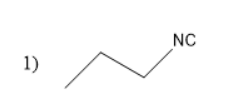
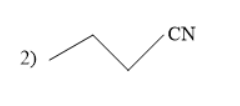
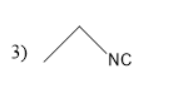
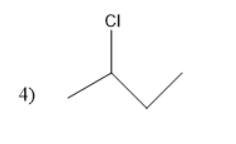
Answer
 Verified
534.6k+ views
Hint: Alkyl halides are the compounds consisting of alkyl parts attached with the halogen atom. The alkyl cyanides upon treatment with potassium cyanide gives alkyl cyanide. The alkyl cyanides upon hydrogenation forms amines. Amines treated with chloroform and potassium hydroxide form isocyanides.
Complete answer:
Given compound is ethyl chloride with the molecular formula of $ {C_2}{H_5}Cl $ . In this the ethyl group is attached with the chlorine atom. The ethyl cyanide upon treatment with potassium cyanide, the chlorine atom in ethyl cyanide was replaced by cyanide group which is a nucleophilic substitution reaction.
Thus, ethyl cyanide was formed with the molecular formula of $ {C_2}{H_5}CN $ . When ethyl cyanide is treated with chloroform and alcoholic potassium hydroxide the unpleasant or pungent smell compounds isocyanates will be formed.
The formation of isocyanate from primary amines is an important reaction called as carbylamine reaction. The fumes of isocyanates are dangerous and should not be inhaled.
Thus, ethyl cyanide forms propyl amine with the molecular formula of $ {C_3}{H_7}N{H_2} $ . This propyl amine undergoes carbylamine reaction to form propyl isocyanates.
The structure of propyl isocyanate is
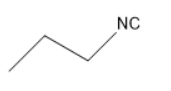
Thus, in the given question the answer matches with the option $ 1 $ .
Thus, option $ 1 $ is the correct one.
Note:
The primary amines only undergo the carbylamine reaction. Propyl amine is the primary amine as the amine group is attached to the only one carbon atom and thus propyl amine undergoes carbylamine reaction. Precautions must be taken while using cyanide compounds in the laboratory.
Complete answer:
Given compound is ethyl chloride with the molecular formula of $ {C_2}{H_5}Cl $ . In this the ethyl group is attached with the chlorine atom. The ethyl cyanide upon treatment with potassium cyanide, the chlorine atom in ethyl cyanide was replaced by cyanide group which is a nucleophilic substitution reaction.
Thus, ethyl cyanide was formed with the molecular formula of $ {C_2}{H_5}CN $ . When ethyl cyanide is treated with chloroform and alcoholic potassium hydroxide the unpleasant or pungent smell compounds isocyanates will be formed.
The formation of isocyanate from primary amines is an important reaction called as carbylamine reaction. The fumes of isocyanates are dangerous and should not be inhaled.
Thus, ethyl cyanide forms propyl amine with the molecular formula of $ {C_3}{H_7}N{H_2} $ . This propyl amine undergoes carbylamine reaction to form propyl isocyanates.
The structure of propyl isocyanate is
Thus, in the given question the answer matches with the option $ 1 $ .
Thus, option $ 1 $ is the correct one.
Note:
The primary amines only undergo the carbylamine reaction. Propyl amine is the primary amine as the amine group is attached to the only one carbon atom and thus propyl amine undergoes carbylamine reaction. Precautions must be taken while using cyanide compounds in the laboratory.
Recently Updated Pages
Master Class 12 Economics: Engaging Questions & Answers for Success

Master Class 12 English: Engaging Questions & Answers for Success
Master Class 12 Social Science: Engaging Questions & Answers for Success
Master Class 12 Maths: Engaging Questions & Answers for Success
Master Class 12 Physics: Engaging Questions & Answers for Success
Master Class 9 General Knowledge: Engaging Questions & Answers for Success
Trending doubts
Which are the Top 10 Largest Countries of the World?
Draw a labelled sketch of the human eye class 12 physics CBSE
Differentiate between homogeneous and heterogeneous class 12 chemistry CBSE
Sulphuric acid is known as the king of acids State class 12 chemistry CBSE
Why is the cell called the structural and functional class 12 biology CBSE
Draw ray diagrams each showing i myopic eye and ii class 12 physics CBSE