




Which of the following is not a polymer?
A. Cholesterol
B. Oxytocin
C. Amylose
D. RNA
Answer
 Verified
649.2k+ views
Hint: Generally we define polymers as very large molecules having high molecular mass. They are also referred to as macromolecules, which are formed by joining repeating structural units together on a large scale.
Complete answer:
Let us discuss one by one these compounds to know their structures then we will be able to know which are polymer or not.
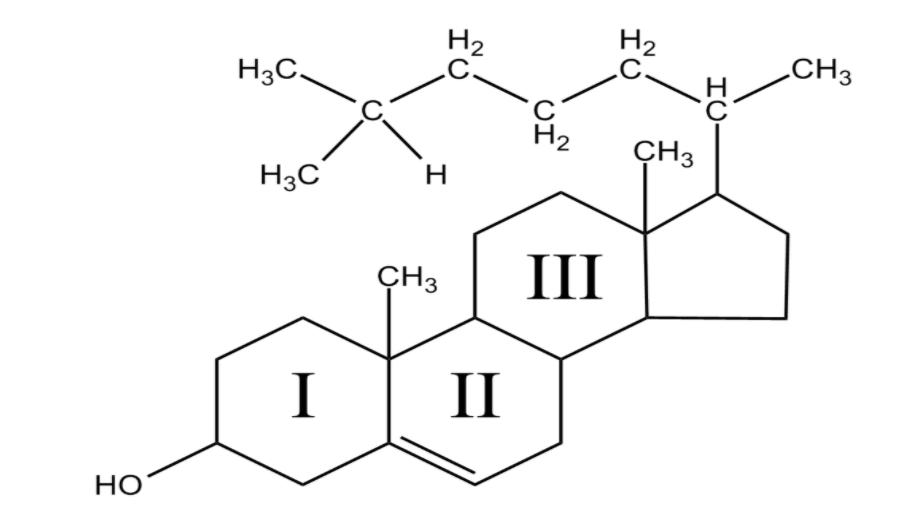
Cholesterol: Cholesterol is a lipid having a unique structure consisting of four hydrocarbon linked hydrocarbon rings which results forming the bulky steroid structure. Cholesterol is also known as sterol because it contains alcohol and steroid.
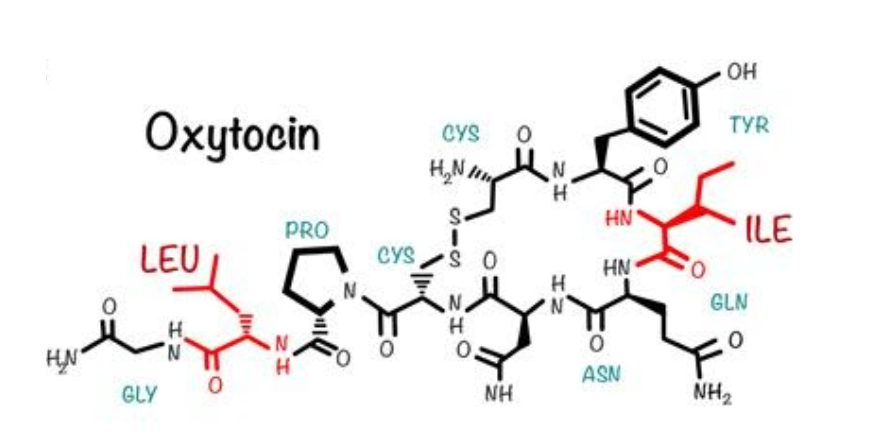
Oxytocin: Oxytocin is a peptide of amino acids in a sequence of cysteine-tyrosine-isoleucine-glutamine-asparagine-cysteine-proline-leucine-glycine-amide.
Oxytocin has a molecular mass of 1007 Da.In the structure we can see it is a polyamide.
Amylose:
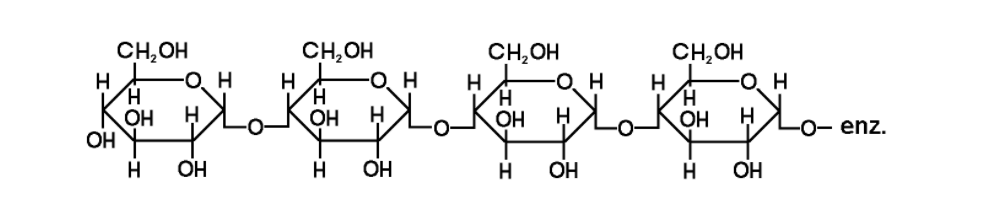
Starch consists of two components amylose and amylose. Amylose is a water soluble component which consists of about 15-20% of starch. Amylose is a long unbranched chain with 200-1000 -D-(+) glucose units held by C1-C4 glycosidic linkage.
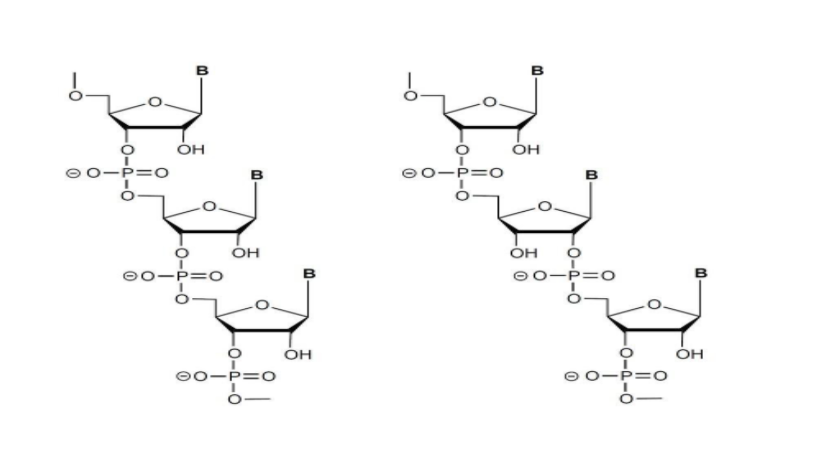
RNA: It forms when many nucleotides are joined together by phosphodiester linkage between 5’ and 3’ carbon atoms of the pentose sugar. It is a polynucleotide.
You have seen and read all the structures and properties and now you get an idea about which is polymer.
So Oxytocin, amylose, RNA all are polymers except cholesterol which is a steroid.
Correct Option: A
Note:
To solve this question we must have to be familiar with all these structures. You can try option elimination methods to solve these questions. You can eliminate those options in which you confirm that it is polymer.
Complete answer:
Let us discuss one by one these compounds to know their structures then we will be able to know which are polymer or not.
Cholesterol: Cholesterol is a lipid having a unique structure consisting of four hydrocarbon linked hydrocarbon rings which results forming the bulky steroid structure. Cholesterol is also known as sterol because it contains alcohol and steroid.
Oxytocin: Oxytocin is a peptide of amino acids in a sequence of cysteine-tyrosine-isoleucine-glutamine-asparagine-cysteine-proline-leucine-glycine-amide.
Oxytocin has a molecular mass of 1007 Da.In the structure we can see it is a polyamide.
Amylose:
Starch consists of two components amylose and amylose. Amylose is a water soluble component which consists of about 15-20% of starch. Amylose is a long unbranched chain with 200-1000 -D-(+) glucose units held by C1-C4 glycosidic linkage.
RNA: It forms when many nucleotides are joined together by phosphodiester linkage between 5’ and 3’ carbon atoms of the pentose sugar. It is a polynucleotide.
You have seen and read all the structures and properties and now you get an idea about which is polymer.
So Oxytocin, amylose, RNA all are polymers except cholesterol which is a steroid.
Correct Option: A
Note:
To solve this question we must have to be familiar with all these structures. You can try option elimination methods to solve these questions. You can eliminate those options in which you confirm that it is polymer.
Recently Updated Pages
Which of the following graphs shows the variation of class 12 physics CBSE

Draw a labelled diagram of the human male reproductive class 12 biology CBSE
Describe the experiment to compare the emf of two cells class 12 physics CBSE
What is standard hydrogen electrode
What is conventional current and electric current class 12 physics CBSE
2Bromopentane is treated with an alcoholic KOH solution class 12 chemistry CBSE
Trending doubts
Draw a labelled sketch of the human eye class 12 physics CBSE
Which are the Top 10 Largest Countries of the World?
Differentiate between homogeneous and heterogeneous class 12 chemistry CBSE
Draw ray diagrams each showing i myopic eye and ii class 12 physics CBSE
Which is the correct genotypic ratio of mendel dihybrid class 12 biology CBSE
What is the Full Form of PVC, PET, HDPE, LDPE, PP and PS ?