




Which of the following exhibit mutarotation?
(this question has multiple correct options)
A.Glucose
B.Maltose
C. Fructose
D. Galactose
Answer
 Verified
658.2k+ views
Hint: For a compound to show mutarotation, presence of a hemiacetal linkage is an essential requirement. For a hemiacetal linkage, a 6 membered ring with a hydroxyl group is needed.
Complete step by step answer:
Mutarotation is the change in optical rotation because of the change in equilibrium of the two anomers, when corresponding stereocenters interconvert.
First, let us take a look at the structures of all the above-mentioned options:
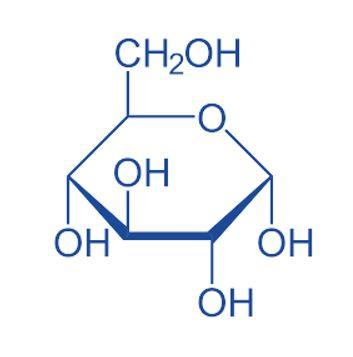
Glucose –
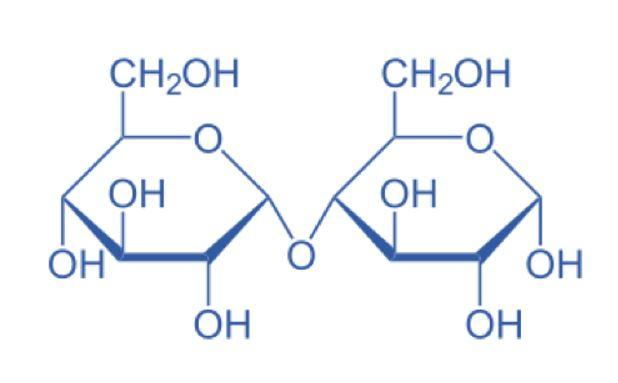
Maltose –
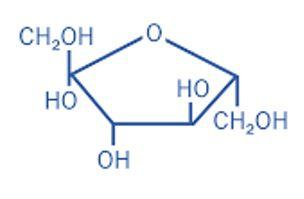
Fructose –
Galactose –
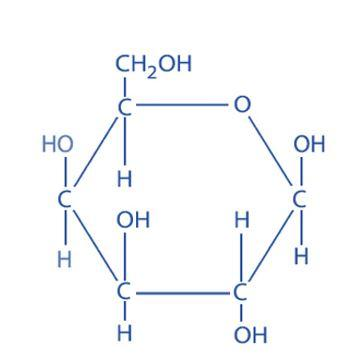
The anomeric carbon is the carbon where the ring forms between the hydroxyl carbon and the carbonyl carbon. Without this hydroxyl group, the ring cannot open and close and therefore not undergo mutarotation.
Glucose, fructose, maltose as well as galactose all have a free hydroxyl group and thus are known as reducing sugars. Hence, all of these will undergo mutarotation.
So, all options are correct.
Additional information: A hemiacetal forms when an aldehyde reacts with an alcohol. When glucose is in cyclic form, we can see hemiacetal linkage but it is not seen in a straight chain of glucose. Under acidic conditions the hemiacetal form of glucose can react with other alcohols to give acetals known as glycosides. These are widely distributed in nature.
Non reducing sugars such as sucrose cannot undergo mutarotation. This is because the glycosidic bond that forms between glucose and fructose in sucrose, eliminates the availability of hydroxyl groups.
Note: To remember it in an easy way, we can keep in mind that compounds which are cyclic and have a free hydroxyl group can only undergo mutarotation.
Complete step by step answer:
Mutarotation is the change in optical rotation because of the change in equilibrium of the two anomers, when corresponding stereocenters interconvert.
First, let us take a look at the structures of all the above-mentioned options:
Glucose –
Maltose –
Fructose –
Galactose –
The anomeric carbon is the carbon where the ring forms between the hydroxyl carbon and the carbonyl carbon. Without this hydroxyl group, the ring cannot open and close and therefore not undergo mutarotation.
Glucose, fructose, maltose as well as galactose all have a free hydroxyl group and thus are known as reducing sugars. Hence, all of these will undergo mutarotation.
So, all options are correct.
Additional information: A hemiacetal forms when an aldehyde reacts with an alcohol. When glucose is in cyclic form, we can see hemiacetal linkage but it is not seen in a straight chain of glucose. Under acidic conditions the hemiacetal form of glucose can react with other alcohols to give acetals known as glycosides. These are widely distributed in nature.
Non reducing sugars such as sucrose cannot undergo mutarotation. This is because the glycosidic bond that forms between glucose and fructose in sucrose, eliminates the availability of hydroxyl groups.
Note: To remember it in an easy way, we can keep in mind that compounds which are cyclic and have a free hydroxyl group can only undergo mutarotation.
Recently Updated Pages
Basicity of sulphurous acid and sulphuric acid are

Onehalf of a convex lens is covered with a black paper class 12 physics CBSE
Differentiate between lanthanoids and actinoids class 12 chemistry CBSE
An object 5 cm in length is held 25 cm away from a class 12 physics CBSE
Name the following halides according to the IUPAC system class 12 chemistry CBSE
What is the Full Form of PVC, PET, HDPE, LDPE, PP and PS ?
Trending doubts
Draw a labelled sketch of the human eye class 12 physics CBSE
Which are the Top 10 Largest Countries of the World?
Draw ray diagrams each showing i myopic eye and ii class 12 physics CBSE
Which is the correct genotypic ratio of mendel dihybrid class 12 biology CBSE
Differentiate between homogeneous and heterogeneous class 12 chemistry CBSE
Give 10 examples of unisexual and bisexual flowers