




Which of the following biomolecules contain non-transition metal ions?
A.Vitamin ${B_{12}}$
B.Chlorophyll
C.Haemoglobin
D.Insulin
Answer
 Verified
553.2k+ views
Hint:The metals belonging to the d-block in the periodic table are called transition metals. Those metals which do not come under this category are called non-transition metals. They are mainly s and p block elements.
Complete step by step answer:
Biomolecules are biological molecules which are produced by biological cells and living organisms. Vitamin ${B_{12}}$, Chlorophyll, Haemoglobin and Insulin are important biomolecules having specific biological functions in the living body.
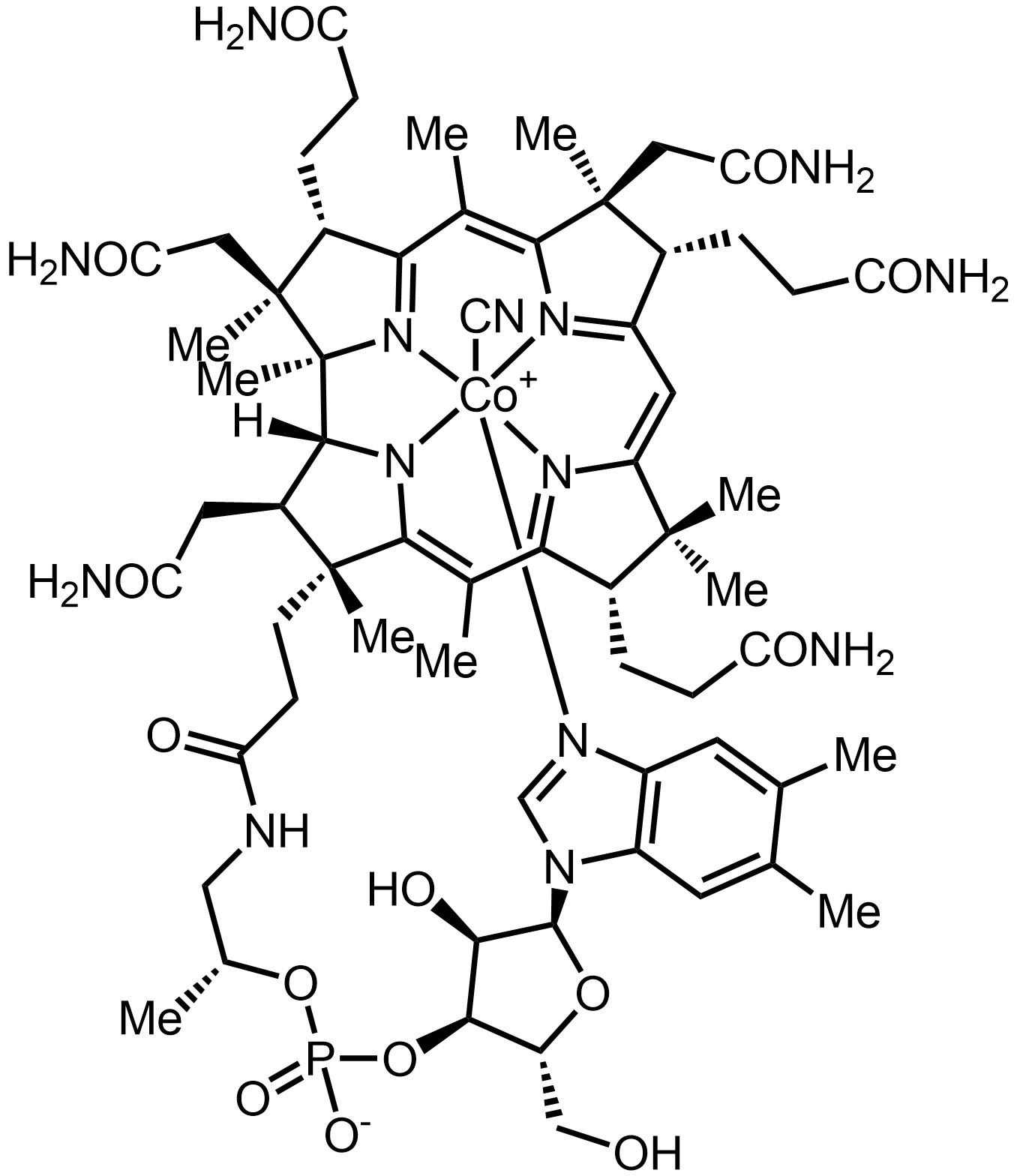
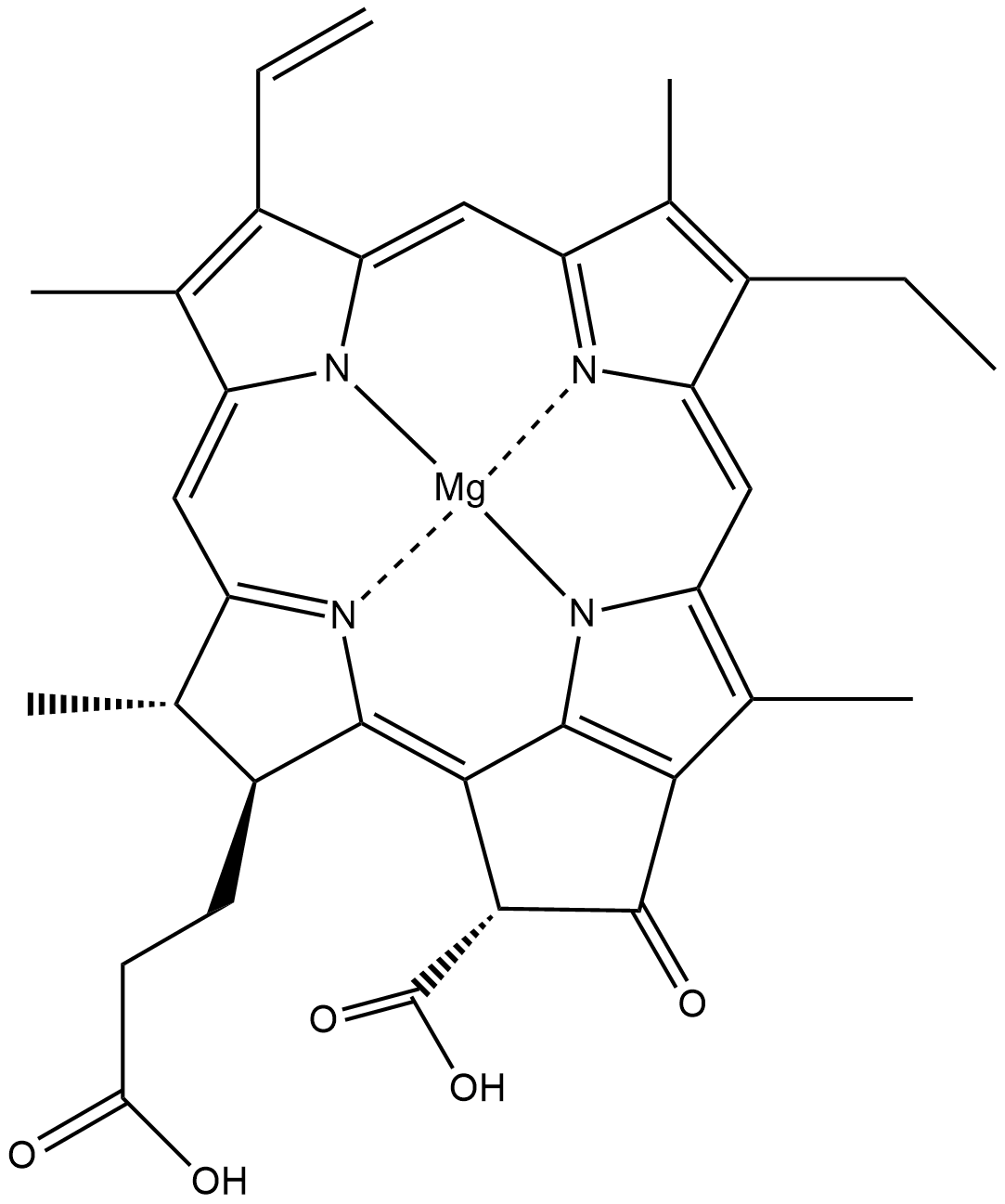
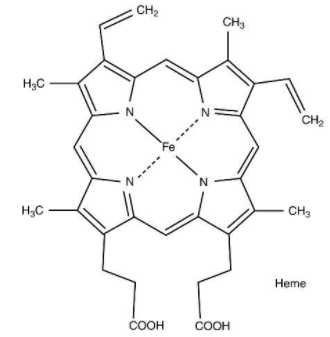
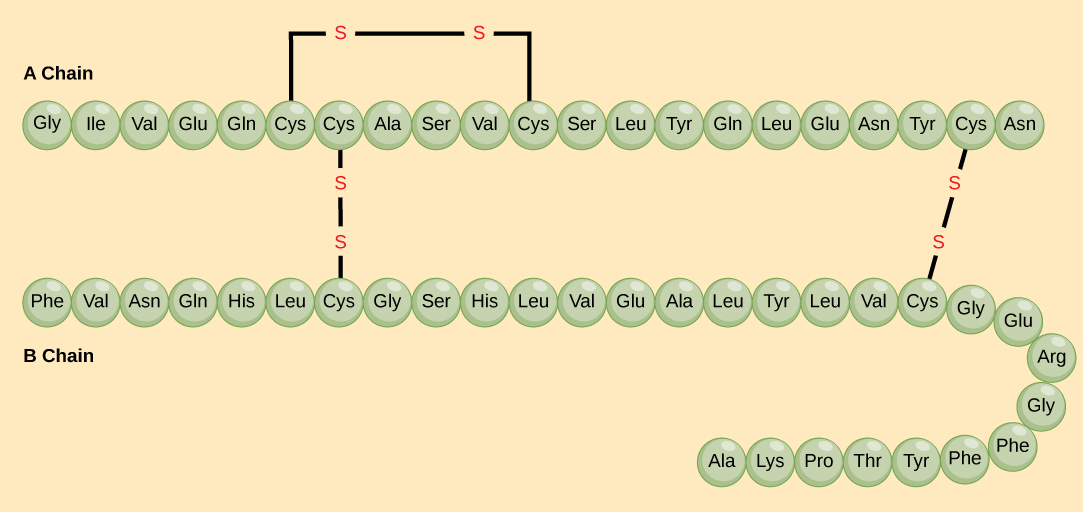
The structures of Vitamin ${B_{12}}$, Chlorophyll, Haemoglobin and insulin are given below.
A.Vitamin ${B_{12}}$
B.Chlorophyll
C.Haemoglobin
D.Insulin
From the figure we can see that the metal present in vitamin ${B_{12}}$, chlorophyll and haemoglobin are cobalt, magnesium and iron respectively. Cobalt and iron belong to the d-block in the periodic table. Hence they are transition metals. But magnesium belongs to the s-block and is not a transition metal ion. Hence the biomolecule containing non-transition metal ions is chlorophyll.
Therefore,the correct option is B.
Additional information-
Chlorophyll is a biomolecule mainly present in leaves of plants and trees. It helps the leaves to absorb sunlight and use this energy for the production of carbohydrates from carbon dioxide and water. This process is called photosynthesis. Structure of chlorophyll contains a magnesium ion trapped inside a porphyrin ring. Nitrogen of porphyrin rings is bonded to magnesium.
Note:
Insulin does not contain any metals. But metals like chromium, copper and zinc help the peptide chain in the production of insulin. Insulin is a peptide hormone that balances the level of sugar in the blood.
Complete step by step answer:
Biomolecules are biological molecules which are produced by biological cells and living organisms. Vitamin ${B_{12}}$, Chlorophyll, Haemoglobin and Insulin are important biomolecules having specific biological functions in the living body.
The structures of Vitamin ${B_{12}}$, Chlorophyll, Haemoglobin and insulin are given below.
A.Vitamin ${B_{12}}$
B.Chlorophyll
C.Haemoglobin
D.Insulin
From the figure we can see that the metal present in vitamin ${B_{12}}$, chlorophyll and haemoglobin are cobalt, magnesium and iron respectively. Cobalt and iron belong to the d-block in the periodic table. Hence they are transition metals. But magnesium belongs to the s-block and is not a transition metal ion. Hence the biomolecule containing non-transition metal ions is chlorophyll.
Therefore,the correct option is B.
Additional information-
Chlorophyll is a biomolecule mainly present in leaves of plants and trees. It helps the leaves to absorb sunlight and use this energy for the production of carbohydrates from carbon dioxide and water. This process is called photosynthesis. Structure of chlorophyll contains a magnesium ion trapped inside a porphyrin ring. Nitrogen of porphyrin rings is bonded to magnesium.
Note:
Insulin does not contain any metals. But metals like chromium, copper and zinc help the peptide chain in the production of insulin. Insulin is a peptide hormone that balances the level of sugar in the blood.
Recently Updated Pages
Master Class 12 Economics: Engaging Questions & Answers for Success

Master Class 12 Physics: Engaging Questions & Answers for Success
Master Class 12 English: Engaging Questions & Answers for Success
Master Class 12 Social Science: Engaging Questions & Answers for Success
Master Class 12 Maths: Engaging Questions & Answers for Success
Master Class 12 Business Studies: Engaging Questions & Answers for Success
Trending doubts
Which are the Top 10 Largest Countries of the World?
What are the major means of transport Explain each class 12 social science CBSE
Draw a labelled sketch of the human eye class 12 physics CBSE
What is a transformer Explain the principle construction class 12 physics CBSE
Why cannot DNA pass through cell membranes class 12 biology CBSE
Differentiate between insitu conservation and exsitu class 12 biology CBSE