




What's the method of alcoholic fermentation?
Answer
 Verified
507.6k+ views
Hint: Fermentation is a metabolic process that uses enzymes to cause chemical changes in organic substrates. It is defined as the extraction of energy from carbohydrates in the absence of oxygen in biochemistry.
Complete answer:
Fermentation is the most common way for microorganisms to produce adenosine triphosphate (ATP) through anaerobic degradation of organic nutrients. Fermentation has been used by humans to make foods and beverages since the Neolithic period.
Ethanol fermentation, also known as alcoholic fermentation, is a biological process that converts sugars like glucose, fructose, and sucrose into cellular energy while also producing ethanol and Carbon dioxide. Alcoholic fermentation is classified as an anaerobic process because yeasts perform this conversion in the absence of oxygen.
Alcoholic fermentation could also be a biotechnological method accomplished by yeast, some sorts of bacterium, or many various microorganisms to convert sugars into alkyl alcohol and acid gas. Alcoholic fermentation begins with the breakdown of sugars by yeasts to form pyruvate molecules, which is additionally mentioned because of the metabolism.
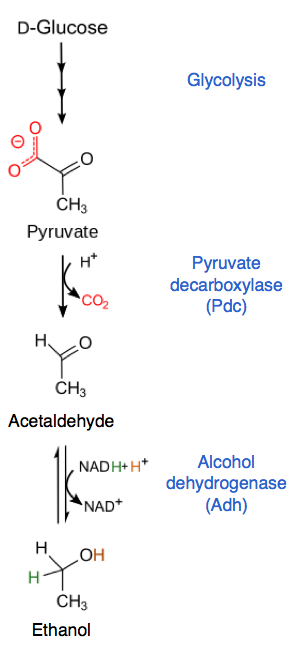
Alcoholic fermentation is a process in which bacteria and yeast convert sugar into ethyl alcohol and carbon dioxide. Sugar is first converted to pyruvic acid, which is then converted by pyruvate decarboxylase and alcohol dehydrogenase into ethanol and carbon dioxide. This method is used to make alcoholic beverages as well as bread.
Note:
Fermentation is a preservation method that creates lactic acid, which can be found in sour foods like pickled cucumbers, kombucha, kimchi, and yogurt, as well as alcoholic beverages like wine and beer. Fermentation takes place in all animals' gastrointestinal tracts, including humans.
Complete answer:
Fermentation is the most common way for microorganisms to produce adenosine triphosphate (ATP) through anaerobic degradation of organic nutrients. Fermentation has been used by humans to make foods and beverages since the Neolithic period.
Ethanol fermentation, also known as alcoholic fermentation, is a biological process that converts sugars like glucose, fructose, and sucrose into cellular energy while also producing ethanol and Carbon dioxide. Alcoholic fermentation is classified as an anaerobic process because yeasts perform this conversion in the absence of oxygen.
Alcoholic fermentation could also be a biotechnological method accomplished by yeast, some sorts of bacterium, or many various microorganisms to convert sugars into alkyl alcohol and acid gas. Alcoholic fermentation begins with the breakdown of sugars by yeasts to form pyruvate molecules, which is additionally mentioned because of the metabolism.
Alcoholic fermentation is a process in which bacteria and yeast convert sugar into ethyl alcohol and carbon dioxide. Sugar is first converted to pyruvic acid, which is then converted by pyruvate decarboxylase and alcohol dehydrogenase into ethanol and carbon dioxide. This method is used to make alcoholic beverages as well as bread.
Note:
Fermentation is a preservation method that creates lactic acid, which can be found in sour foods like pickled cucumbers, kombucha, kimchi, and yogurt, as well as alcoholic beverages like wine and beer. Fermentation takes place in all animals' gastrointestinal tracts, including humans.
Recently Updated Pages
Master Class 11 Social Science: Engaging Questions & Answers for Success

Master Class 11 Physics: Engaging Questions & Answers for Success
Master Class 11 Maths: Engaging Questions & Answers for Success
Master Class 11 Economics: Engaging Questions & Answers for Success
Master Class 11 Computer Science: Engaging Questions & Answers for Success
Master Class 11 Chemistry: Engaging Questions & Answers for Success
Trending doubts
Discuss the various forms of bacteria class 11 biology CBSE
Draw a diagram of nephron and explain its structur class 11 biology CBSE
What organs are located on the left side of your body class 11 biology CBSE
Draw a labelled diagram showing structure of LS of class 11 biology CBSE
How many rings are present in MEDTA+n class 11 chemistry CBSE
Draw the molecular orbital diagram of N2N2 + N2 Write class 11 chemistry CBSE