




Trimerous flower, superior ovary, and axile placentation is characteristic of
(a)Liliaceae
(b)Cucurbitaceae
(c)Solanaceae
(d)Compositae
Answer
 Verified
609.9k+ views
Hint: Trimerous flowers have floral appendages or whorls in threes, like three petals, three sepals, etc. In axile placentation, the placenta is present in axial position and the ovules are attached to in a multilocular ovary.
Complete answer:
Trimerous flower, superior ovary, and axile placentation, all these are characteristic of ‘Liliaceae’. It is generally known as the lily family. The plants owned by this family are monocotyledonous plants. They are extensively distributed worldwide.
Additional information:
Vegetative characters:
-Habit: Perennial herbs with underground bulbs, corms, and rhizomes
-Adventitious, fibrous are present,
-Stem: Aerial or underground, herbaceous or woody
-Leaves are mostly basal, alternate, linear, and exstipulate with the parallel venation.
Floral characters:
-Solitary/cymose type of inflorescence
-The flower is Bisexual and showing actinomorphic symmetry (radial symmetry).
-Perianth: Tepal six (3+3), often united into a tube with valvate aestivation
-Androecium: Stamen six, (3+3)
-Gynoecium: Tricarpellary, syncarpous with the superior ovary, trilocular with many ovules
-Axile placentation is seen.
-Fruit: Capsule
-Endospermic seeds are present.
Economic importance:
-Young shoots and root tubers of Asparagus species are cooked.
-Aloe is a source of medicine.
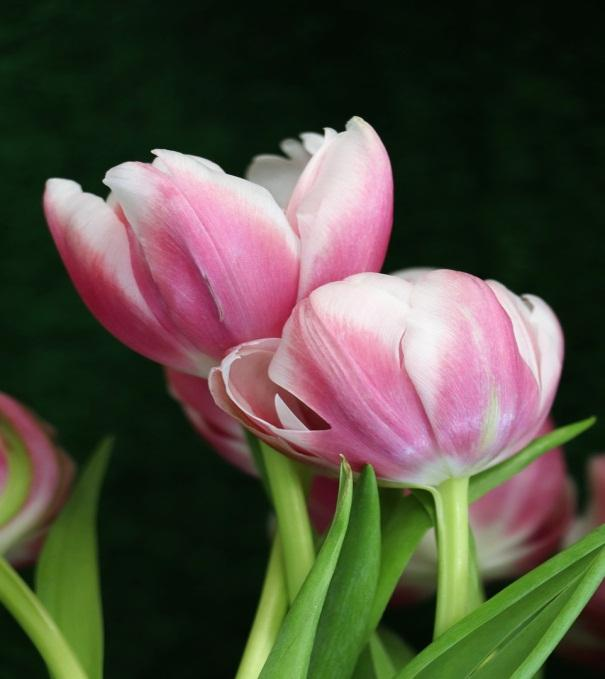
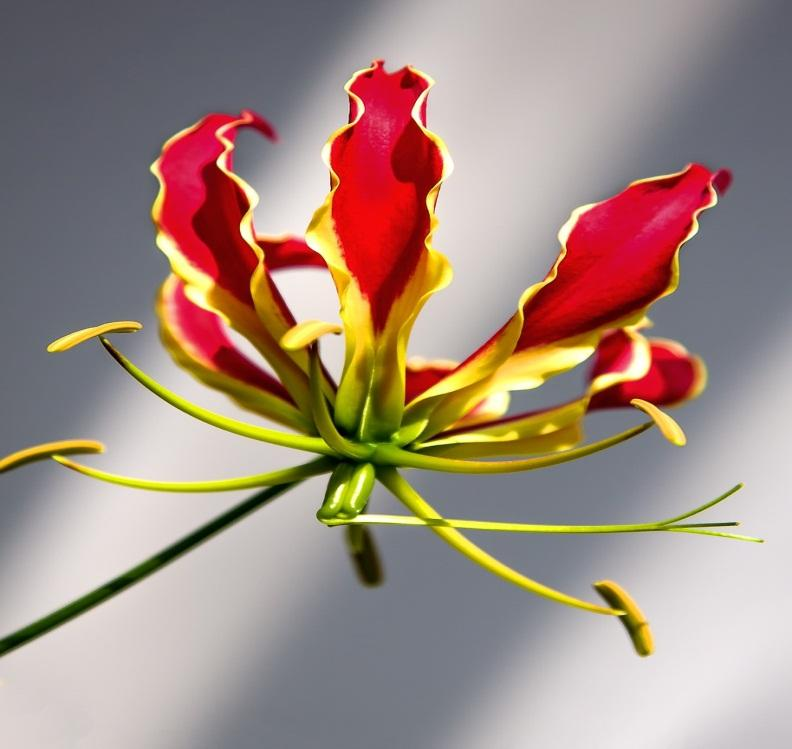
-Gloriosa and Tulip are ornamental flowers.
-Colchicum autumnale yields colchicine which is used in doubling the chromosomes.
So, the correct answer is ‘Liliaceae’.
Note:
-In cymose inflorescence, the main axis or peduncle terminates into a flower and hence shows a limited growth.
-In valvate aestivation, the margin of sepals or petals, present in a whorl just touches each other. There is no overlapping between the sepals or petals.
Complete answer:
Trimerous flower, superior ovary, and axile placentation, all these are characteristic of ‘Liliaceae’. It is generally known as the lily family. The plants owned by this family are monocotyledonous plants. They are extensively distributed worldwide.
Additional information:
Vegetative characters:
-Habit: Perennial herbs with underground bulbs, corms, and rhizomes
-Adventitious, fibrous are present,
-Stem: Aerial or underground, herbaceous or woody
-Leaves are mostly basal, alternate, linear, and exstipulate with the parallel venation.
Floral characters:
-Solitary/cymose type of inflorescence
-The flower is Bisexual and showing actinomorphic symmetry (radial symmetry).
-Perianth: Tepal six (3+3), often united into a tube with valvate aestivation
-Androecium: Stamen six, (3+3)
-Gynoecium: Tricarpellary, syncarpous with the superior ovary, trilocular with many ovules
-Axile placentation is seen.
-Fruit: Capsule
-Endospermic seeds are present.
Economic importance:
-Young shoots and root tubers of Asparagus species are cooked.
-Aloe is a source of medicine.
-Gloriosa and Tulip are ornamental flowers.
-Colchicum autumnale yields colchicine which is used in doubling the chromosomes.
So, the correct answer is ‘Liliaceae’.
Note:
-In cymose inflorescence, the main axis or peduncle terminates into a flower and hence shows a limited growth.
-In valvate aestivation, the margin of sepals or petals, present in a whorl just touches each other. There is no overlapping between the sepals or petals.
Recently Updated Pages
Master Class 11 Social Science: Engaging Questions & Answers for Success

Master Class 11 Physics: Engaging Questions & Answers for Success
Master Class 11 Maths: Engaging Questions & Answers for Success
Master Class 11 Economics: Engaging Questions & Answers for Success
Master Class 11 Computer Science: Engaging Questions & Answers for Success
Master Class 11 Chemistry: Engaging Questions & Answers for Success
Trending doubts
One Metric ton is equal to kg A 10000 B 1000 C 100 class 11 physics CBSE
There are 720 permutations of the digits 1 2 3 4 5 class 11 maths CBSE
1 Quintal is equal to a 110 kg b 10 kg c 100kg d 1000 class 11 physics CBSE
State and prove Bernoullis theorem class 11 physics CBSE
Difference Between Prokaryotic Cells and Eukaryotic Cells
Which among the following are examples of coming together class 11 social science CBSE