




The sexual reproduction in Spirogyra is
a. Oogamous
b. Isogamous
c. Cleistogamous
d. Conjugation
Answer
 Verified
675k+ views
Hint: Sexual reproduction in spirogyra occurs by the fusion of male gamete and female gametes. These two types of gametes i.e. male and female gametes are non-flagellated, non-motile but similar in size.
Complete step-by-step solution:
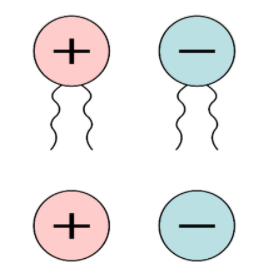
Spirogyra reproduces by all the modes i.e. sexual, asexual, and vegetative where sexual reproduction occurs by fusion of the two gametes, one male and other a female. Here, the gametes are similar in size but non-flagellated and hence non-motile. This type of reproduction involving a similar size of gametes is called Isogamous. A representative diagram of isogamy has been given below –
Additional information
-Asexual reproduction occurs by the formation of different types of spores like azygospores, akinetes, or aplanospores.
-Under favorable conditions, it prefers to reproduce vegetatively which occurs by fragmentation. After fragmentation, the vegetative fragment develops into a new filament by undergoing multiple divisions and elongations.
-Aplanospores are formed in unfavorable conditions by shrinkage of protoplast. Akenetes are also formed similarly to the aplanospores and these are non-motile spores. In favorable conditions, they form new filaments after the decay of parent one.
-Azygospores are parthenospores and in actual sense, these are the gametes that failed to fuse during sexual reproduction and thus they developed in a new filament asexually.
So, the correct answer is ‘Isogamous’.
Note:
-In oogamous type of sexual reproduction, there is a condition of anisogamy because in this type the female gametes are slightly larger than the male gametes.
-Cleistogamous type of reproduction involves self-pollination and is well known in some plants like peas, pancy, and peanuts.
Complete step-by-step solution:
Spirogyra reproduces by all the modes i.e. sexual, asexual, and vegetative where sexual reproduction occurs by fusion of the two gametes, one male and other a female. Here, the gametes are similar in size but non-flagellated and hence non-motile. This type of reproduction involving a similar size of gametes is called Isogamous. A representative diagram of isogamy has been given below –
Additional information
-Asexual reproduction occurs by the formation of different types of spores like azygospores, akinetes, or aplanospores.
-Under favorable conditions, it prefers to reproduce vegetatively which occurs by fragmentation. After fragmentation, the vegetative fragment develops into a new filament by undergoing multiple divisions and elongations.
-Aplanospores are formed in unfavorable conditions by shrinkage of protoplast. Akenetes are also formed similarly to the aplanospores and these are non-motile spores. In favorable conditions, they form new filaments after the decay of parent one.
-Azygospores are parthenospores and in actual sense, these are the gametes that failed to fuse during sexual reproduction and thus they developed in a new filament asexually.
So, the correct answer is ‘Isogamous’.
Note:
-In oogamous type of sexual reproduction, there is a condition of anisogamy because in this type the female gametes are slightly larger than the male gametes.
-Cleistogamous type of reproduction involves self-pollination and is well known in some plants like peas, pancy, and peanuts.
Recently Updated Pages
Master Class 10 Computer Science: Engaging Questions & Answers for Success

Differentiate between voluntary action and reflex class 10 biology CBSE
The uses of bleaching powder are A It is used bleaching class 10 chemistry CBSE
Fill in the blanks with abstract nouns of the words class 10 english CBSE
How many threedigit numbers are there class 10 maths CBSE
What is a reflex arc class 10 biology CBSE
Trending doubts
Explain the Treaty of Vienna of 1815 class 10 social science CBSE
10 examples of evaporation in daily life with explanations
What is the full form of POSCO class 10 social science CBSE
Make a sketch of the human nerve cell What function class 10 biology CBSE
GST is a direct or indirect tax?
The sum of all even numbers between 21 and 51 is a class 10 maths CBSE