




The first plants to reappear in a badly burned forest area will most probably be
A. Liverworts
B. Ferns
C. Grasses
D. Mosses
Answer
 Verified
586.2k+ views
Hint: A fern is a member of a group of vascular plants. Plants that have both xylem and phloem are vascular plants. It reproduces via spores and has neither seeds nor flowers.
Complete answer: Ferns are generally the first colonizers of burnt down forest area because of the persistence of their underground rhizomes, while the above-ground parts get burnt up.
Rhizoids are root-like structures but no true roots.
It consists of single greatly elongated cells, water, and mineral salts and is absorbed over the whole structure. It anchors the prothallus to the soil.
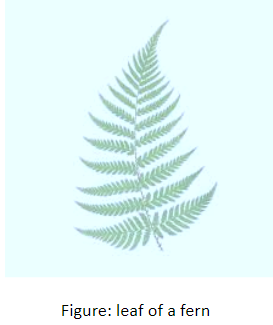
1. Fern stems are known as rhizomes even if it grows underground only in some species.
2. Epiphytic species and many of the terrestrial ones have above-ground creeping stolons.
3. Some groups have above-ground erect semi-woody trunks (e.g., Cyatheaceae).
4. These can grow up to 20 meters (66 ft) tall in a few species (e.g., Cyathea brownie)
5. The leaves of ferns are complex leaves called megaphylls.
It is more complex than the microphylls of clubmosses.
6. Most ferns are leptosporangiate ferns but some are eusporangiate too. They produce coiled fiddleheads that uncoil and expand into fronds.
So, the correct answer is “Option B”.
Note: Some ferns are used for food, medicine, as a biofertilizer, as ornamental plants and for remediating contaminated soil.
They have been the subject of research for their ability to remove some chemical pollutants from the atmosphere. Bracken (Pteridium aquilinum) and water fern (Azolla filiculoides) are significant weeds worldwide. Fern genera, such as Azolla, can fix nitrogen and make a significant input to the nitrogen nutrition of rice paddies.
Complete answer: Ferns are generally the first colonizers of burnt down forest area because of the persistence of their underground rhizomes, while the above-ground parts get burnt up.
Rhizoids are root-like structures but no true roots.
It consists of single greatly elongated cells, water, and mineral salts and is absorbed over the whole structure. It anchors the prothallus to the soil.
1. Fern stems are known as rhizomes even if it grows underground only in some species.
2. Epiphytic species and many of the terrestrial ones have above-ground creeping stolons.
3. Some groups have above-ground erect semi-woody trunks (e.g., Cyatheaceae).
4. These can grow up to 20 meters (66 ft) tall in a few species (e.g., Cyathea brownie)
5. The leaves of ferns are complex leaves called megaphylls.
It is more complex than the microphylls of clubmosses.
6. Most ferns are leptosporangiate ferns but some are eusporangiate too. They produce coiled fiddleheads that uncoil and expand into fronds.
So, the correct answer is “Option B”.
Note: Some ferns are used for food, medicine, as a biofertilizer, as ornamental plants and for remediating contaminated soil.
They have been the subject of research for their ability to remove some chemical pollutants from the atmosphere. Bracken (Pteridium aquilinum) and water fern (Azolla filiculoides) are significant weeds worldwide. Fern genera, such as Azolla, can fix nitrogen and make a significant input to the nitrogen nutrition of rice paddies.
Recently Updated Pages
Master Class 12 Economics: Engaging Questions & Answers for Success

Master Class 12 Physics: Engaging Questions & Answers for Success
Master Class 12 English: Engaging Questions & Answers for Success
Master Class 12 Social Science: Engaging Questions & Answers for Success
Master Class 12 Maths: Engaging Questions & Answers for Success
Master Class 12 Business Studies: Engaging Questions & Answers for Success
Trending doubts
Which are the Top 10 Largest Countries of the World?
What are the major means of transport Explain each class 12 social science CBSE
Draw a labelled sketch of the human eye class 12 physics CBSE
What is a transformer Explain the principle construction class 12 physics CBSE
Why cannot DNA pass through cell membranes class 12 biology CBSE
Differentiate between insitu conservation and exsitu class 12 biology CBSE