




Stem is culm in
(a) Bamboo
(b) Grass
(c) Both A and B
(d) Sunflower
Answer
 Verified
657k+ views
Hint: Stem culm is seen in the fastest growing plants on earth and others are the most common plant on the earth. This type of stem is strong and erect and hollow from inside. Culm stem is referred to as flowering and fruiting stems.
Complete step by step answer:
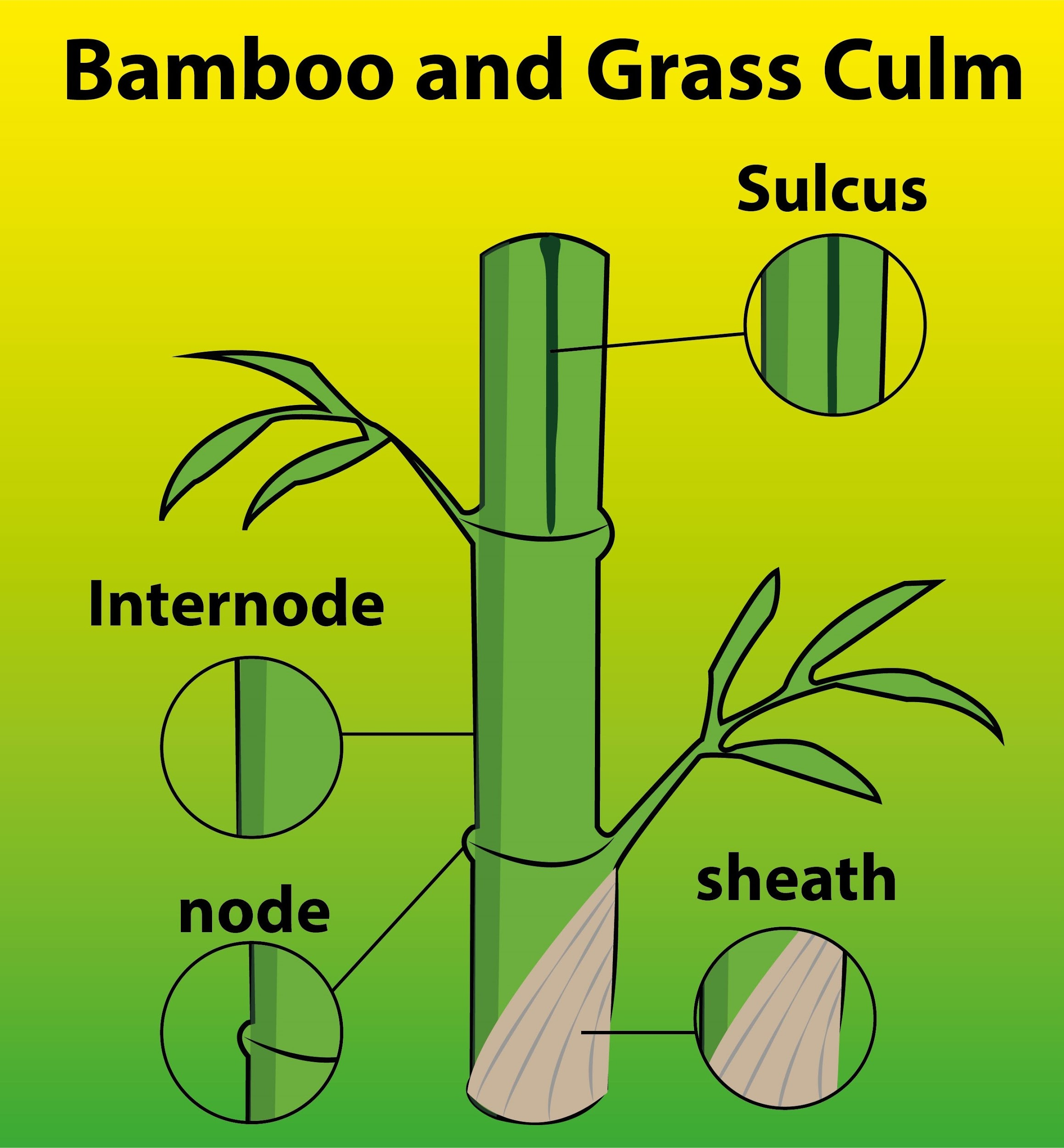
Bamboo and grass show the culm type of stems where it grows above the ground which is usually straight and cylinder formed or to some extent oval. The culm type of stem in grass and bamboo usually hollows inside and forms cavities. These stems have nodes or diaphragms between the two internodes that strengthen the stem. It is the strongest part.
- When bamboo is heated the culm turns black and toxic agents produced by smoke destroy the starch in bamboo making it immune to insect attack.
- Bamboo culms are painted with slaked lime, thereby prolonging their lifespan by delaying and reducing the absorption of moisture while also being repellent against insects.
- The base of the stem in these types of stems have numerous short sections with significant diameter, the adventitious root grows densely on these sections.
- Bamboo has a high silica content of the outer layer resists animal, chemical and mechanical damages which also make bamboo good fire resistance property and if it’s filled with water it can withstand up to 400- degree celsius temperature.
- Cutting bamboo or grass plants near culm and 20cm above root in 3 to 4 years old plants are suitable for propagation.
So, the correct answer is, ‘(c) both A and b.’
Note:
- The lower part in the bamboo stem is extended into the soil and connects to the rhizome and root system.
- The stem petiole is the lowest part of the bamboo and grass stem which consist of tens of short sections.
- The stem petiole is generally solid, with degenerate leaves without buds
Complete step by step answer:
Bamboo and grass show the culm type of stems where it grows above the ground which is usually straight and cylinder formed or to some extent oval. The culm type of stem in grass and bamboo usually hollows inside and forms cavities. These stems have nodes or diaphragms between the two internodes that strengthen the stem. It is the strongest part.
- When bamboo is heated the culm turns black and toxic agents produced by smoke destroy the starch in bamboo making it immune to insect attack.
- Bamboo culms are painted with slaked lime, thereby prolonging their lifespan by delaying and reducing the absorption of moisture while also being repellent against insects.
- The base of the stem in these types of stems have numerous short sections with significant diameter, the adventitious root grows densely on these sections.
- Bamboo has a high silica content of the outer layer resists animal, chemical and mechanical damages which also make bamboo good fire resistance property and if it’s filled with water it can withstand up to 400- degree celsius temperature.
- Cutting bamboo or grass plants near culm and 20cm above root in 3 to 4 years old plants are suitable for propagation.
So, the correct answer is, ‘(c) both A and b.’
Note:
- The lower part in the bamboo stem is extended into the soil and connects to the rhizome and root system.
- The stem petiole is the lowest part of the bamboo and grass stem which consist of tens of short sections.
- The stem petiole is generally solid, with degenerate leaves without buds
Recently Updated Pages
Write structures of the following compounds i 2 Chloro3methylpentane class 11 chemistry CBSE

What is BLO What is the full form of BLO class 8 social science CBSE
Explain the Treaty of Vienna of 1815 class 10 social science CBSE
A Paragraph on Pollution in about 100-150 Words
XIX+XXX A 49 B 51 C 55 D 44 class 5 maths CBSE
If x a + bt + ct2 where x is in meters and t is in class 11 physics CBSE
Trending doubts
One Metric ton is equal to kg A 10000 B 1000 C 100 class 11 physics CBSE
Find the value of the expression given below sin 30circ class 11 maths CBSE
What do you mean by retardation What is its SI uni class 11 physics CBSE
Draw a diagram of nephron and explain its structur class 11 biology CBSE
10 examples of friction in our daily life
Difference between physical and chemical change class 11 chemistry CBSE