




What do you mean by Determinate inflorescence?
Answer
 Verified
564.6k+ views
Hint: Arrangement of the flower or group of flowers on the stem is known as inflorescence. Inflorescence is the characteristics of the plants which help in the classification. The inflorescence is based on natural selection. The determinate inflorescence shows whether the terminal flower is formed and where the flowering starts in the inflorescence.
Complete answer:
The terminal flowers in the plants can grow in different types. The monopodial or the racemose and the cymose and the sympodial type. It indicates whether the flowers are formed or not and where the flowering starts.
Indeterminate inflorescence: It is also known as racemose. In this, the terminal bid grows and forms lateral flowers. The terminal flowers do not form.
Determinate inflorescence: It is also known as cymose. In this, the terminal buds form a terminal flower and then withers off. The lateral buds develop into flowers. In this, the terminal flowers mature first and the others mature at the bottom of the stem [In determinate (cymose) inflorescences, the youngest flowers are at the bottom of an elongated axis or on the outside of a truncated axis.]. This type of maturation is called acropetal maturation. If the maturation of the flower starts at the top it is called basipetal maturation.
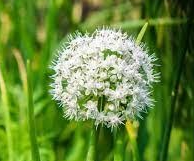
The example of Determinate inflorescence is the umbel of onion is shown below
Note: The Indeterminate pattern is derived from the determinate pattern. They have a mechanism that prevents the growth of the terminal flowers. In the case of indeterminate inflorescence, the true terminal flower is absent and the stem does not have any rudimentary end. The last of the true flower formed by the terminal bud straightens and looks like a terminal flower. An example of the indeterminate inflorescence is the raceme found in snapdragon.
Complete answer:
The terminal flowers in the plants can grow in different types. The monopodial or the racemose and the cymose and the sympodial type. It indicates whether the flowers are formed or not and where the flowering starts.
Indeterminate inflorescence: It is also known as racemose. In this, the terminal bid grows and forms lateral flowers. The terminal flowers do not form.
Determinate inflorescence: It is also known as cymose. In this, the terminal buds form a terminal flower and then withers off. The lateral buds develop into flowers. In this, the terminal flowers mature first and the others mature at the bottom of the stem [In determinate (cymose) inflorescences, the youngest flowers are at the bottom of an elongated axis or on the outside of a truncated axis.]. This type of maturation is called acropetal maturation. If the maturation of the flower starts at the top it is called basipetal maturation.
The example of Determinate inflorescence is the umbel of onion is shown below
Note: The Indeterminate pattern is derived from the determinate pattern. They have a mechanism that prevents the growth of the terminal flowers. In the case of indeterminate inflorescence, the true terminal flower is absent and the stem does not have any rudimentary end. The last of the true flower formed by the terminal bud straightens and looks like a terminal flower. An example of the indeterminate inflorescence is the raceme found in snapdragon.
Recently Updated Pages
If x a + bt + ct2 where x is in meters and t is in class 11 physics CBSE

A car covers the first half distance between two places class 11 physics CBSE
The resultant of two vectors overrightarrow P and overrightarrow class 11 physics CBSE
Find the value of cos 135 class 11 maths CBSE
A mass M is held in place by an applied force F and class 11 physics CBSE
A solution of glucose in water is labelled as 10 dfracwv class 11 chemistry CBSE
Trending doubts
One Metric ton is equal to kg A 10000 B 1000 C 100 class 11 physics CBSE
Find the value of the expression given below sin 30circ class 11 maths CBSE
Draw a diagram of nephron and explain its structur class 11 biology CBSE
10 examples of friction in our daily life
Proton was discovered by A Thomson B Rutherford C Chadwick class 11 chemistry CBSE
Bond order ofO2 O2+ O2 and O22 is in order A O2 langle class 11 chemistry CBSE