




In an n-p-n transistor:
A. The emitter has higher degree of doping compared to collector
B. The collector has higher degree of doping compared to that of emitter
C. Both emitter and collector have same degree of doping
D. Base region is most heavily doped
Answer
 Verified
572.1k+ views
Hint: In an n-p-n transistor, the majority charge carriers are electrons. A lot of current will be passing towards the base, thus, the emitter is forward biased heavily. Whereas, the base is lightly doped because only a few electrons are combined, the other remaining constitutes the base current.
Complete step-by-step answer:
An n-p-n transistor has two diodes connected to each side. The diode one the left is called an emitter-base diode. The emitter on the right side is called a collector-base diode. The base is lightly doped, whereas, the emitter is heavily doped and the collector is moderately doped.
The emitter and the base are forward biased whereas the collector and the base are reverse biased. The current from the emitter and the base enters into the collector region. As the collector region is reverse biased, the high potential attracts the electrons at the collector. The base region controls the amount of current that flows through the emitter to collector. The majority charge carriers in the n-type semiconductor are electrons and p-type semiconductor are holes. That is the reason, electrons carry the current from emitter to base and collector. This transistor is a combination of n-type, p-type and n-type semiconductor.
Therefore, the correct option is c, that is, the emitter has a higher degree of doping than the collector.
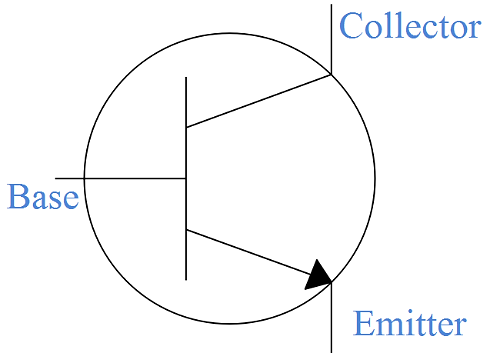
Note: The current in the transistor flows from emitter to collector, but not in the reverse direction, i.e, collector to emitter. The emitter is heavily doped, as more number of electrons pass through it, base is lightly doped as it only carries least current and the collector is moderately doped.
Complete step-by-step answer:
An n-p-n transistor has two diodes connected to each side. The diode one the left is called an emitter-base diode. The emitter on the right side is called a collector-base diode. The base is lightly doped, whereas, the emitter is heavily doped and the collector is moderately doped.
The emitter and the base are forward biased whereas the collector and the base are reverse biased. The current from the emitter and the base enters into the collector region. As the collector region is reverse biased, the high potential attracts the electrons at the collector. The base region controls the amount of current that flows through the emitter to collector. The majority charge carriers in the n-type semiconductor are electrons and p-type semiconductor are holes. That is the reason, electrons carry the current from emitter to base and collector. This transistor is a combination of n-type, p-type and n-type semiconductor.
Therefore, the correct option is c, that is, the emitter has a higher degree of doping than the collector.
Note: The current in the transistor flows from emitter to collector, but not in the reverse direction, i.e, collector to emitter. The emitter is heavily doped, as more number of electrons pass through it, base is lightly doped as it only carries least current and the collector is moderately doped.
Recently Updated Pages
Master Class 12 Business Studies: Engaging Questions & Answers for Success

Master Class 12 Chemistry: Engaging Questions & Answers for Success
Master Class 12 Biology: Engaging Questions & Answers for Success
Class 12 Question and Answer - Your Ultimate Solutions Guide
Master Class 11 English: Engaging Questions & Answers for Success
Master Class 11 Maths: Engaging Questions & Answers for Success
Trending doubts
Which is more stable and why class 12 chemistry CBSE
Which are the Top 10 Largest Countries of the World?
Draw a labelled sketch of the human eye class 12 physics CBSE
Differentiate between homogeneous and heterogeneous class 12 chemistry CBSE
What are the major means of transport Explain each class 12 social science CBSE
Sulphuric acid is known as the king of acids State class 12 chemistry CBSE