




Freshly hatched larva of a housefly is called as
(A) Caterpillar
(B) Maggot
(C) Nymph
(D) Grub
Answer
 Verified
606.3k+ views
Hint: Freshly hatched larva of a housefly is a transparent whitish worm-like larva that has a small mouth at the end of the larva body. It is mostly found in stagnant water bodies, appears to be swimming in water.
Complete step by step answer:
Maggots are the precursors to flies referred to as larva. they're whitish-transparent, worm-like organisms that are, on the average, about 3 to 9 mm long. During their larval stages, they devour rotting organic material like dead animals and animal waste. The body of the maggot is tapered, and therefore the end where their mouth is found is smaller than the remainder of their body. Maggots are a part of the life cycle of the housefly or common housefly.
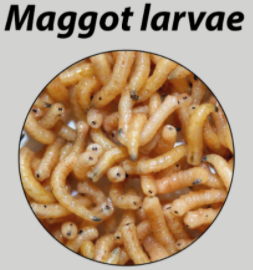
So, the correct answer is ‘Maggot’.
Additional Information: The life cycle of Maggots: The life cycle starts with a fly landing on rotting flesh and laying many eggs. Maggots hatch from these eggs and begin consuming the rotting material. In the aftermath of the Gettysburg battle, maggots weren't only seen eating corpses, they covered the wounded, squirming as they ate the putrid flesh in their wounds. As with fleas and ticks, maggots are often a threat to household pets and livestock, especially sheep. Flies reproduce rapidly within the summer months, and maggots are produced in large numbers, creating a maggot infestation and a high risk of myiasis in sheep and other animals.
Note: Humans aren't resistant to the feeding habits of maggots and may also contract myiasis. Humans usually come in contact with maggots in garbage cans, dead animals, rotten food, and other breeding grounds for maggots.
Complete step by step answer:
Maggots are the precursors to flies referred to as larva. they're whitish-transparent, worm-like organisms that are, on the average, about 3 to 9 mm long. During their larval stages, they devour rotting organic material like dead animals and animal waste. The body of the maggot is tapered, and therefore the end where their mouth is found is smaller than the remainder of their body. Maggots are a part of the life cycle of the housefly or common housefly.
So, the correct answer is ‘Maggot’.
Additional Information: The life cycle of Maggots: The life cycle starts with a fly landing on rotting flesh and laying many eggs. Maggots hatch from these eggs and begin consuming the rotting material. In the aftermath of the Gettysburg battle, maggots weren't only seen eating corpses, they covered the wounded, squirming as they ate the putrid flesh in their wounds. As with fleas and ticks, maggots are often a threat to household pets and livestock, especially sheep. Flies reproduce rapidly within the summer months, and maggots are produced in large numbers, creating a maggot infestation and a high risk of myiasis in sheep and other animals.
Note: Humans aren't resistant to the feeding habits of maggots and may also contract myiasis. Humans usually come in contact with maggots in garbage cans, dead animals, rotten food, and other breeding grounds for maggots.
Recently Updated Pages
Master Class 12 Business Studies: Engaging Questions & Answers for Success

Master Class 12 Biology: Engaging Questions & Answers for Success
Master Class 12 Chemistry: Engaging Questions & Answers for Success
Class 12 Question and Answer - Your Ultimate Solutions Guide
Master Class 11 Social Science: Engaging Questions & Answers for Success
Master Class 11 English: Engaging Questions & Answers for Success
Trending doubts
Which are the Top 10 Largest Countries of the World?
Draw a labelled sketch of the human eye class 12 physics CBSE
Differentiate between homogeneous and heterogeneous class 12 chemistry CBSE
Sulphuric acid is known as the king of acids State class 12 chemistry CBSE
Why is the cell called the structural and functional class 12 biology CBSE
Which is the correct genotypic ratio of mendel dihybrid class 12 biology CBSE