




Each pollen grain produces ______ male gametes.
A. Three
B. Two
C. Four
D. One
Answer
 Verified
635.7k+ views
Hint: Pollen is a fine substance consisting of pollen grains which are male microgametophytes of seed plants, which produce male gametes. In angiosperms, the diploid dust mother cell experiences meiosis-I followed by meiosis II to shape a quadruplicate having 4 haploid microspores.
Complete answer:
The correct answer is B.
This quadruplicate isolates to shape structures 4 haploid dust grains. Every dust experiences mitosis to offer ascent to develop dust with 2 male gametes.
The pollen grains are named microgametophytes, and comprise of a sporopollenin covering which serves to secure the gametophytes’ as they are moved from the stamens (male) or male cone to the pistil (female) or female cone in blooming and coniferous plants, individually.
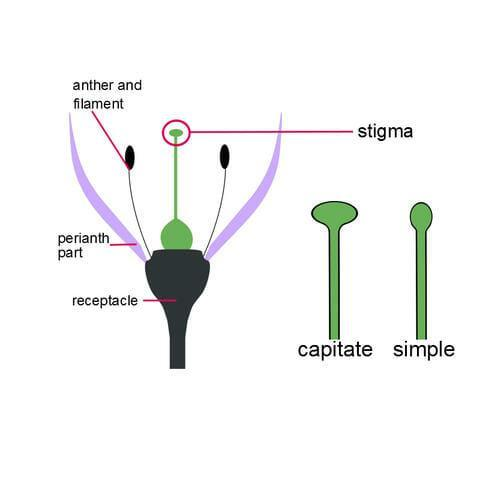
At the point when the dust arrives at the pistil or female cone, a dust tube is shaped, which ships the sperm to the ovule containing the female gametophyte.
The term fertilization alludes to the exchange of dust grains from the anther to the disgrace of a bloom. Cross-fertilization includes the exchange of dust from one blossom to the disgrace of another bloom. Conversely, self-fertilization includes the exchange of dust from one blossom to the disgrace of a similar bloom. In coniferous plants, dust is shaped in the microsporangia of the male cone, while it is created in the anthers of blossoming plants (likewise named angiosperms). Each microsporocyte is diploid and structures four haploid cells, named microspores, by means of meiosis. This procedure is named microsporogenesis.
The four microspores at that point structure the twofold mass of the dust grain inside a structure made of callose. During this procedure, the callose is processed by callase and the dust grains can develop and finish the arrangement of the endospore and exospore.
Note: Aside from on account of some lowered amphibian plants, the developed pollen grain has a twofold divider. The vegetative and generative cells are encircled by a slim fragile mass of unaltered cellulose called the endospore or intine, and an extreme safe external cuticularized divider made to a great extent out of sporopollenin called the exospore or exine.
Complete answer:
The correct answer is B.
This quadruplicate isolates to shape structures 4 haploid dust grains. Every dust experiences mitosis to offer ascent to develop dust with 2 male gametes.
The pollen grains are named microgametophytes, and comprise of a sporopollenin covering which serves to secure the gametophytes’ as they are moved from the stamens (male) or male cone to the pistil (female) or female cone in blooming and coniferous plants, individually.
At the point when the dust arrives at the pistil or female cone, a dust tube is shaped, which ships the sperm to the ovule containing the female gametophyte.
The term fertilization alludes to the exchange of dust grains from the anther to the disgrace of a bloom. Cross-fertilization includes the exchange of dust from one blossom to the disgrace of another bloom. Conversely, self-fertilization includes the exchange of dust from one blossom to the disgrace of a similar bloom. In coniferous plants, dust is shaped in the microsporangia of the male cone, while it is created in the anthers of blossoming plants (likewise named angiosperms). Each microsporocyte is diploid and structures four haploid cells, named microspores, by means of meiosis. This procedure is named microsporogenesis.
The four microspores at that point structure the twofold mass of the dust grain inside a structure made of callose. During this procedure, the callose is processed by callase and the dust grains can develop and finish the arrangement of the endospore and exospore.
Note: Aside from on account of some lowered amphibian plants, the developed pollen grain has a twofold divider. The vegetative and generative cells are encircled by a slim fragile mass of unaltered cellulose called the endospore or intine, and an extreme safe external cuticularized divider made to a great extent out of sporopollenin called the exospore or exine.
Recently Updated Pages
Master Class 11 English: Engaging Questions & Answers for Success

Master Class 11 Social Science: Engaging Questions & Answers for Success
Master Class 11 Maths: Engaging Questions & Answers for Success
Master Class 11 Biology: Engaging Questions & Answers for Success
Master Class 11 Physics: Engaging Questions & Answers for Success
Master Class 11 Chemistry: Engaging Questions & Answers for Success
Trending doubts
One Metric ton is equal to kg A 10000 B 1000 C 100 class 11 physics CBSE
Difference Between Prokaryotic Cells and Eukaryotic Cells
1 ton equals to A 100 kg B 1000 kg C 10 kg D 10000 class 11 physics CBSE
Find the value of the expression given below sin 30circ class 11 maths CBSE
Two of the body parts which do not appear in MRI are class 11 biology CBSE
What are hard magnetic materials class 11 physics CBSE