




How does Malonate affect cellular respiration?
Answer
 Verified
562.5k+ views
Hint: Cellular respiration is the process by which the life sustaining activities are being discarded. The combining of oxygen with food molecules to divert the chemical energy into the physiological activities of the body. It is also called cell respiration tissue. Cellular respiration happens in plant tissues- involving steps like-glycolysis, link reaction, Krebs cycle and electron transport chain.
Complete answer:
Cellular respiration breaks down glucose to produce ATP. The stages of cellular respiration in both autotrophic and heterotrophic organisms are available from the conversion of adenosine diphosphate (ADP) to adenosine triphosphate (ATP).
The chemical malonate is the inhibitor for the enzyme named succinate dehydrogenase, malonate is the binding site of the enzyme without reaction and inhibits the action of the enzyme. It decreases cellular activity.
Malonate is a competitive inhibitor of the enzyme succinate dehydrogenase: it binds to the active site of the enzyme without reacting, and so competes with succinate, the substrate of the enzyme.
Thus chemical malonate decreases cellular respiration.
Malonates in the mitochondria depletes the cytochrome C and glutathione. Malonate is the three-carbon dicarboxylic acid. It is present in biological systems like-legumes and developing rat brains. Apart from decreasing cellular activity, it has a role in symbiotic nitrogen metabolism and brain development.
Malonate induces cell death and affects the respiration in cells. It blocks the active site of the enzymes by which they cannot bind with other complexes and hence break away and perform individual enzymes again.
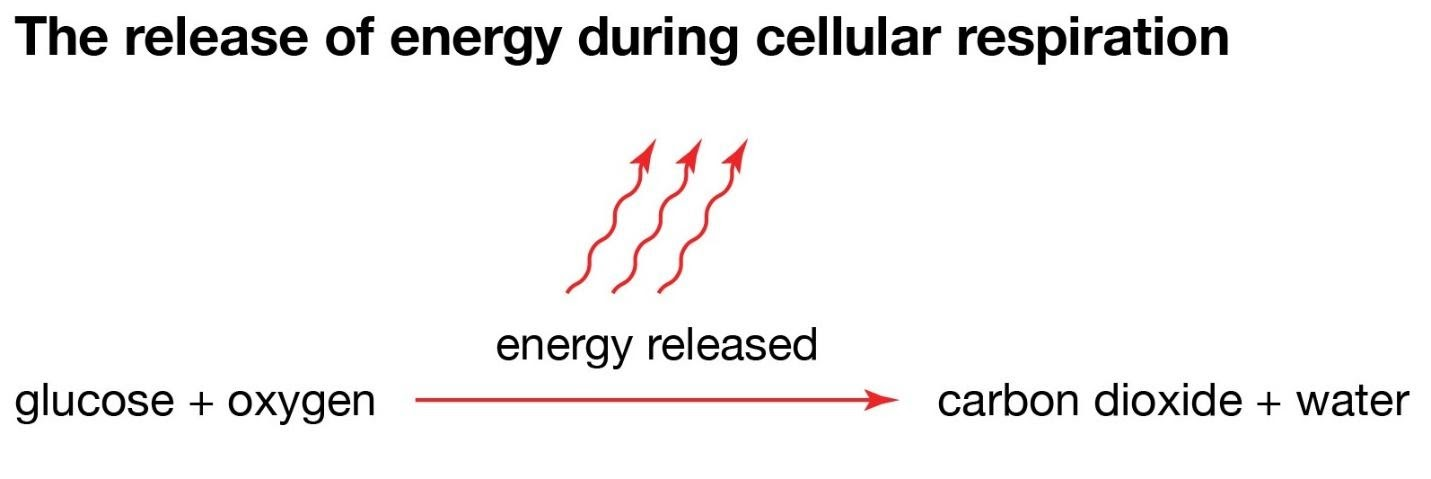
${C_6}{H_{12}}{O_6} + 6{O_2} \to 6C{O_2} + 6{H_2}O$
Note:
Cellular respiration occurs in cytosol and mitochondria. This action of malonate from the cellular level did not meet the demands of plant health and slowly the plant died. Biological fuels are processed enough to convert the chemical energy from oxygen molecules to ATP. They help to release metabolic products and in nutrient cycling too.
Complete answer:
Cellular respiration breaks down glucose to produce ATP. The stages of cellular respiration in both autotrophic and heterotrophic organisms are available from the conversion of adenosine diphosphate (ADP) to adenosine triphosphate (ATP).
The chemical malonate is the inhibitor for the enzyme named succinate dehydrogenase, malonate is the binding site of the enzyme without reaction and inhibits the action of the enzyme. It decreases cellular activity.
Malonate is a competitive inhibitor of the enzyme succinate dehydrogenase: it binds to the active site of the enzyme without reacting, and so competes with succinate, the substrate of the enzyme.
Thus chemical malonate decreases cellular respiration.
Malonates in the mitochondria depletes the cytochrome C and glutathione. Malonate is the three-carbon dicarboxylic acid. It is present in biological systems like-legumes and developing rat brains. Apart from decreasing cellular activity, it has a role in symbiotic nitrogen metabolism and brain development.
Malonate induces cell death and affects the respiration in cells. It blocks the active site of the enzymes by which they cannot bind with other complexes and hence break away and perform individual enzymes again.
${C_6}{H_{12}}{O_6} + 6{O_2} \to 6C{O_2} + 6{H_2}O$
Note:
Cellular respiration occurs in cytosol and mitochondria. This action of malonate from the cellular level did not meet the demands of plant health and slowly the plant died. Biological fuels are processed enough to convert the chemical energy from oxygen molecules to ATP. They help to release metabolic products and in nutrient cycling too.
Recently Updated Pages
If x a + bt + ct2 where x is in meters and t is in class 11 physics CBSE

A car covers the first half distance between two places class 11 physics CBSE
The resultant of two vectors overrightarrow P and overrightarrow class 11 physics CBSE
Find the value of cos 135 class 11 maths CBSE
A mass M is held in place by an applied force F and class 11 physics CBSE
A solution of glucose in water is labelled as 10 dfracwv class 11 chemistry CBSE
Trending doubts
One Metric ton is equal to kg A 10000 B 1000 C 100 class 11 physics CBSE
Find the value of the expression given below sin 30circ class 11 maths CBSE
Draw a diagram of nephron and explain its structur class 11 biology CBSE
10 examples of friction in our daily life
Proton was discovered by A Thomson B Rutherford C Chadwick class 11 chemistry CBSE
Bond order ofO2 O2+ O2 and O22 is in order A O2 langle class 11 chemistry CBSE