









What Are Geometry Shapes Definition Types Formulas and Examples
I was wondering today morning, why do my toys look so different? The ball looks different, and the blocks are so different from each other. Even the fruits and vegetables look different. Why is it so? This is so because they have different shapes. Let us understand with an example:
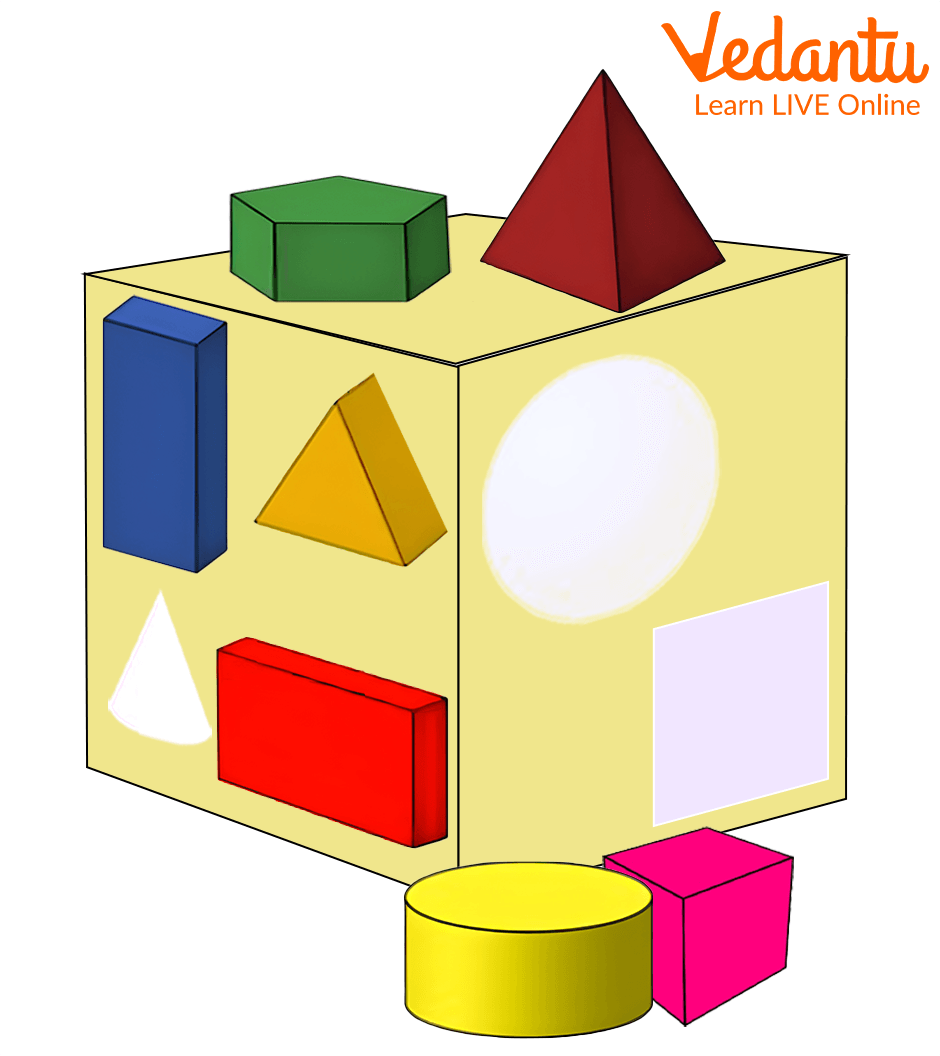
Blocks of different shapes
We can see that all the blocks shown above look different from each other but they have a particular pattern. Let us understand.
What are Different Geometry Shapes?
There are many different patterns, which are called geometric shapes. Every pattern has a particular name. Let’s dive deeper into the shapes:
Square: This is a geometric shape that has four sides. The most interesting thing about this shape is that all the sides of this shape are equal. Do you want to see what it looks like? Here it is:
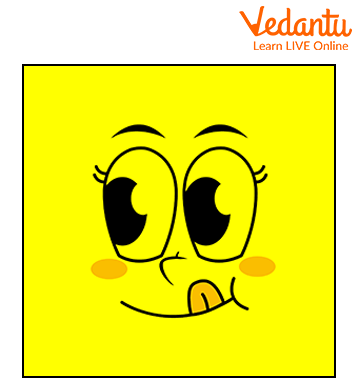
A Square
Rectangle: This shape is like a brother to a square. Rectangle also has four sides but it does not have equal sides. But, the opposite sides of this shape are equal. Have a look what it looks like:
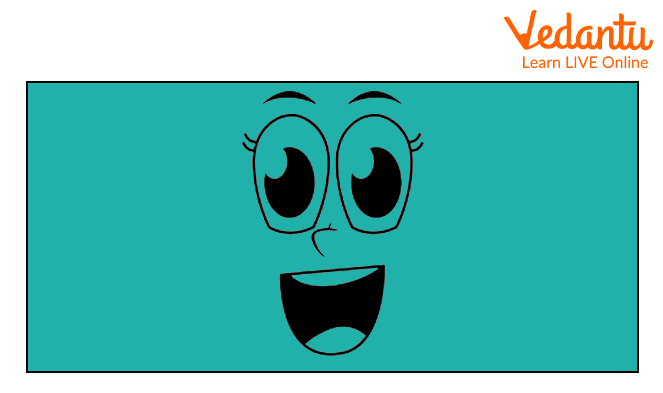
A Rectangle
Triangle: Remember a slice of pizza?
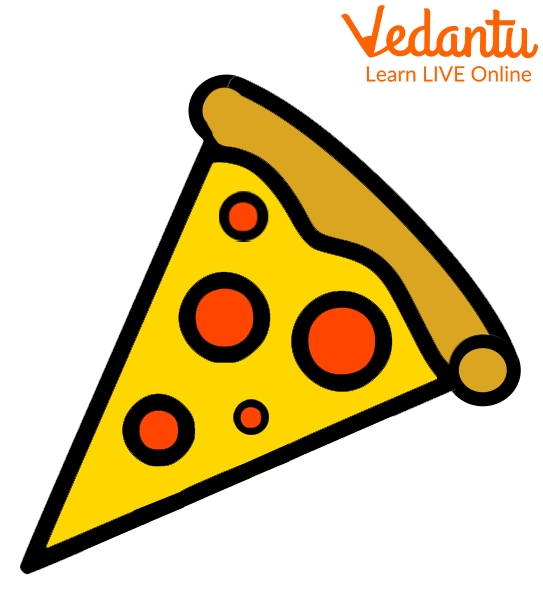
A slice of pizza
This shape is called a triangle. It has three sides.
Circle: This shape is very interesting and you can identify it very easily. Do you know why? Because it does not have any sides. Interesting, right? But you must be wondering if it does not have any sides; what does it look like? So, here it is:
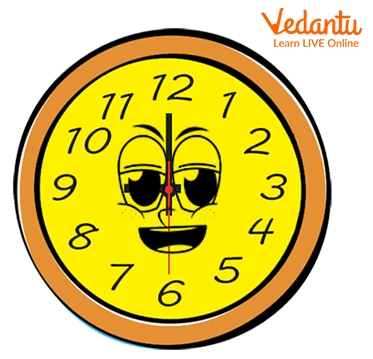
A Circle
Oval: This shape is similar to a circle but not the same. What will happen if you pull the circle from two sides? Tell tell! It will become an oval. Hi Hi Hi!!! Want to see what it looks like? Here it is:
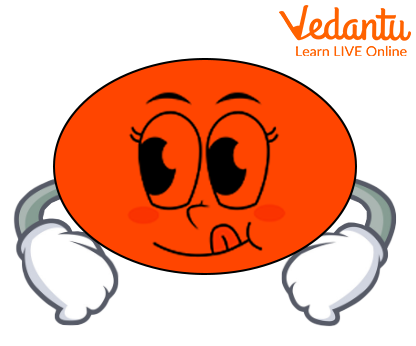
Image: Oval shape
Heart: I am very sure you know what a heart looks like. It is made with two curved lines which meet at a point. And it looks like this:

A heart
Star: You might have seen so many stars twinkling in the night sky. Can you draw that on paper? Draw the star and it will look like this:
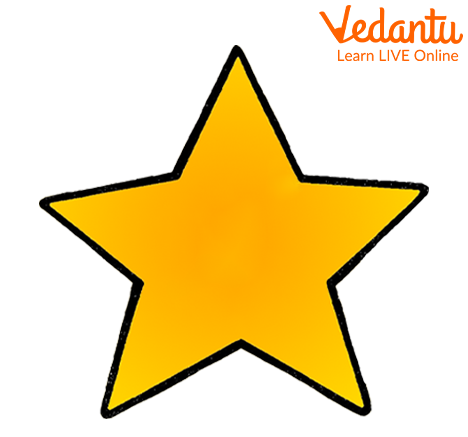
A star
So, now that we have learned the basic shapes, let us have a look at the examples of different shapes.
Real-life Examples of Different Geometry Shapes
Here are some examples of square-shaped objects:
Now, let us look at some circle shaped objects:
Let’s look at some oval shaped objects:
That was really nice, wasn't it? Let us now look at the triangle shaped objects:
Now, it’s time for some rectangle shaped objects around us:
Exercise on Shapes
Today, you have learnt a lot of things and now, it’s time for an exercise. You have to identify the type of shape by looking at the images. Can you do that?
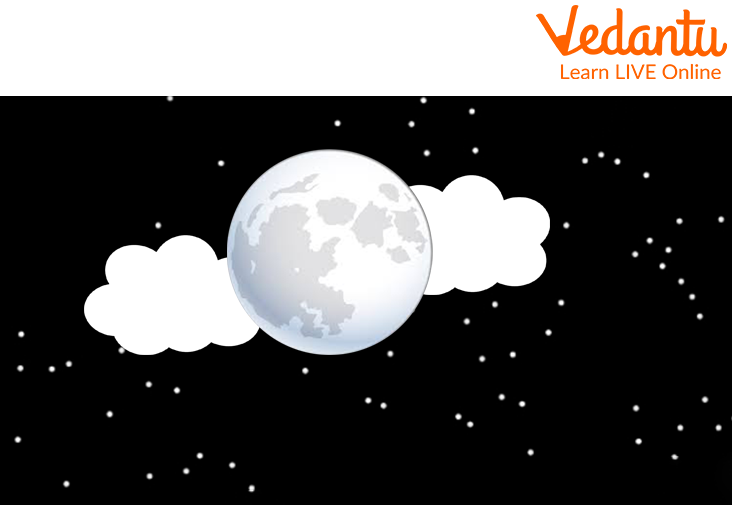
- (The moon) - ______
- (The heart) - ______
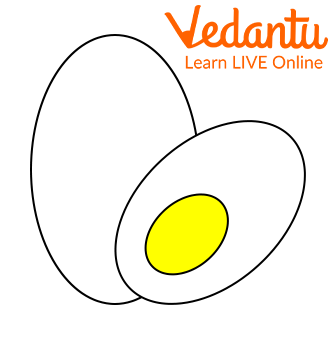
- (The egg) - _____
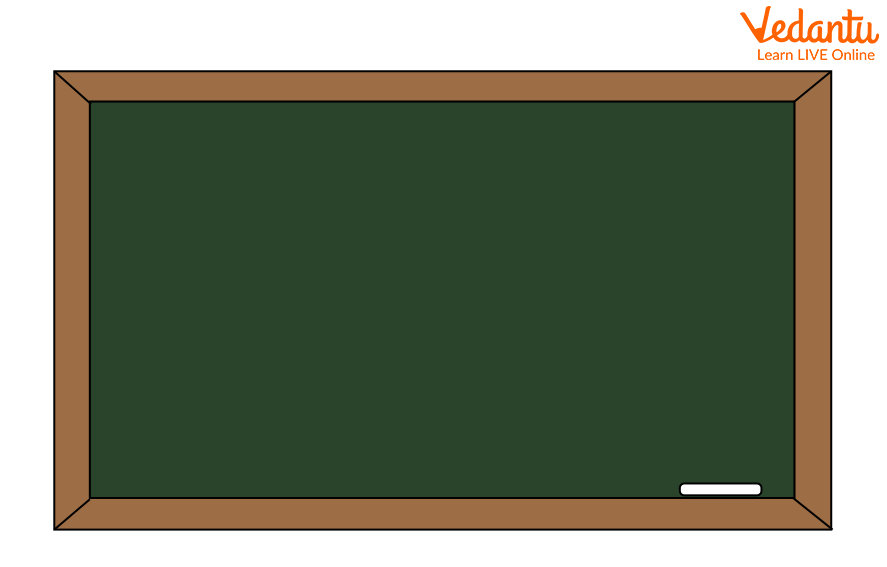
- (The Blackboard) - _____
- (The star) - _____
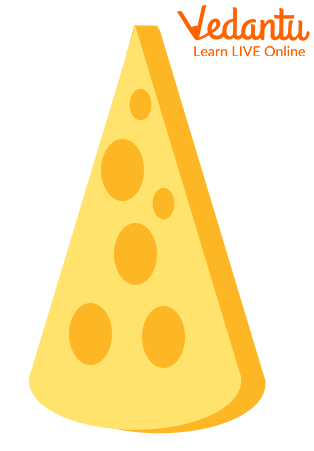
- (Cheese) - _____
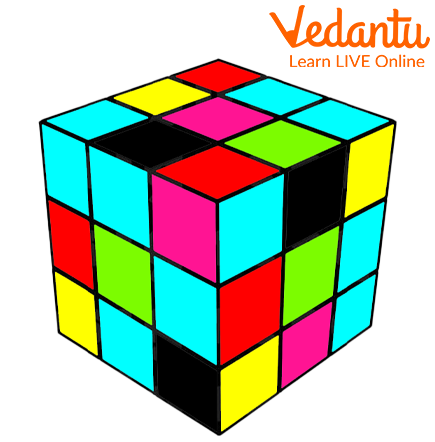
- (Rubik's Cube) - _____
Let us check the answers now.
- (The moon) - Circle
- (The heart) - Heart
- (The egg) - Oval
- (The Blackboard) - Rectangle
- (The star) - Star
- (Cheese) - Triangle
- (Rubic’s Cube) - Square
Rhymes on Different Geometric Shapes
Would you like to learn some rhymes on shapes? Here are a few:
Make a Circle, Make a Square
Make a circle, make a circle,
Draw it high in the sky.
Use your finger, use your finger,
Make it round, as round as pie.
Make a square, make a square,
Make the lines nice and straight.
Make a square, make a square,
You could draw one or draw eight.
Make a triangle, make a triangle,
Always start at the top.
Make a tent shape for a triangle,
Use three lines, and then you stop!
Circle Song
Come on, all join hands,
Make a circle round.
Circle left, circle right,
Turning all around.
Coins, wheels, buttons and rings,
All are circles round.
Everywhere you go today,
Circles can be found.
Conclusion
Did you enjoy learning the shapes? Well, we have a lot more for you. Just like you have learned shapes, you can also learn a lot of things from Vedantu. You can tell your parents to explore our page and enjoy your learning. Have a good day!!
FAQs on Geometry Shapes and Their Properties
1. What are geometry shapes?
Geometry shapes are figures with defined boundaries, lines, angles, and surfaces studied in geometry. They are classified into:
- 2D shapes (flat shapes) like triangles, squares, circles
- 3D shapes (solid shapes) like cubes, spheres, cylinders
2. What are 2D and 3D shapes in geometry?
2D shapes are flat figures with length and width, while 3D shapes have length, width, and height. Examples include:
- 2D shapes: triangle, rectangle, circle, polygon
- 3D shapes: cube, cuboid, cone, sphere, pyramid
3. What is the formula for the area of common geometric shapes?
The area formulas for common geometry shapes give the space inside a 2D figure. Important formulas include:
- Square: Area = side²
- Rectangle: Area = length × width
- Triangle: Area = ½ × base × height
- Circle: Area = πr²
4. How do you find the perimeter of geometric shapes?
The perimeter of a geometric shape is the total length of its outer boundary. To calculate it:
- Square: Perimeter = 4 × side
- Rectangle: Perimeter = 2(length + width)
- Triangle: Add all three sides
- Circle: Circumference = 2πr
5. What are the properties of a triangle?
A triangle is a 3-sided polygon with specific angle and side properties. Key properties include:
- The sum of interior angles is 180°
- It has three sides and three vertices
- Types include equilateral, isosceles, and scalene
6. What is the difference between a square and a rectangle?
The main difference is that a square has all four sides equal, while a rectangle has only opposite sides equal. Both shapes have:
- Four right angles (90° each)
- Opposite sides parallel
7. What is a polygon in geometry?
A polygon is a closed 2D shape made of straight line segments. Polygons are classified by number of sides:
- 3 sides: Triangle
- 4 sides: Quadrilateral
- 5 sides: Pentagon
- 6 sides: Hexagon
8. How do you calculate the volume of 3D shapes?
The volume of a 3D shape measures the space it occupies. Common volume formulas include:
- Cube: Volume = side³
- Cuboid: Volume = length × width × height
- Cylinder: Volume = πr²h
- Sphere: Volume = 4/3 πr³
9. What are the types of quadrilaterals?
Quadrilaterals are 4-sided polygons with different properties. Common types include:
- Square – all sides equal, all angles 90°
- Rectangle – opposite sides equal, all angles 90°
- Parallelogram – opposite sides parallel and equal
- Rhombus – all sides equal, opposite angles equal
- Trapezium (Trapezoid) – at least one pair of parallel sides
10. Why are geometric shapes important in real life?
Geometric shapes are important because they help in measuring, designing, and understanding space in everyday life. Applications include:
- Architecture and construction (area, volume calculations)
- Engineering and design (structural shapes)
- Art and graphics (patterns and symmetry)
- Navigation and mapping (spatial geometry)
