







Deer: A Beautiful Wild Animal
Hello kids, today we are going to talk about a very cute and beautiful animal. Any guesses? Yes, it's Deer. Have you ever seen a deer? Deer are large animals that have a white patch on their head, long legs, and slender body. Some also have brown stripes or spots.
They live in woodland, savannas, and grasslands and can be seen by the roadside, grazing on leaves. In the evening, they sleep in the shade of trees or shrubs. Deers have two horns, two beautiful eyes, and four legs. Now we will check out everything about the deer. You might have read the story of the clever deer. He used his mind and saved his life from the crocodile.
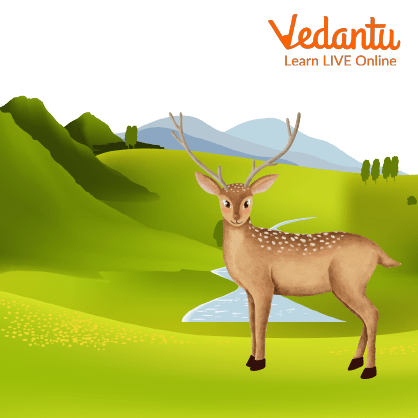
Deer
General Characteristics of Deer
Deer are found in many places throughout the world, although they can be found most often in open forests. Deer can grow up to a height of 6 feet. They are carnivorous species and feed mostly on plants, leaves, nuts, etc. Predators of Deer include Lion, Tiger, Snake, etc.
Deer are such animals that can be found in forests. They get food to eat and a place to live inside the forest. They love to live inside the forest. You might spot a deer in fields, and sometimes even on highways. The national park with the most deer is Hovenweep National Monument, Corbett National Park, Tambopata Rainforest Reserve in Peru, and over 17 places in India.
General Information About Deer
Deer, being adaptable animals, are found in various conditions; in any case, they are the most ideal for forested natural surroundings. Forests give deer a spot to eat, rest, getaway, bear, and rear young. Like all animals, deer have specific living necessities fundamental to their reality; nourishment for sustenance and cover for assurance are the two generally significant. To a deer, home is the woodland.
The significance of food to deer is undoubted; deer should eat to get by. How well they live relies upon the quality, amount, and accessibility of food.
During the mating season, male deer will frequently utilise their prongs to battle for the consideration of female deer. Numerous types of deer have been pursued throughout the years for their horns. A male deer is generally called a 'buck'. An enormous male deer is in many cases called a 'stag'. A female deer is generally called a 'doe'.
Food for Deer
Even though deer eat an extraordinary variety of vegetative material, not all plants or portions of plants are great deer forage; nor is each plant, or part of a plant, similarly nutritious and tasteful to deer consistently of year. Deer are equipped for perceiving these healthful contrasts and select food in a like manner.
A general posting of liked and non-favoured food sources would be a distortion of the complicated idea of deer eating fewer carbs. Food or scrounge preferences should be viewed as comparative with accessibility in a specific region at a particular time. For instance, in one review, deer favoured regular vegetation over a healthfully complete deer pellet proportion in spring when new leaves arose.
Deer Facts for Kids
Following are some of the Deer facts for kids:
Deers’ eyes are on the side of the head.
Deer walk in groups called herds, they are social animals.
Deers are elusive prey and difficult to spot from dense cover like forests or woodlands where they would otherwise conceal themselves from danger.
Deer can run over 35 miles per hour, making them one of the fastest animals in the world!
When a deer is happy, it may "dance." This is also called pronking. The deer will leap high into the air and then do a little shake now and then.
Deer are often referred to as the four-legged animal without fear because of their curious and cheerful nature.
Fun Fact About Deer
Following are some of the fun facts about deer:
Some species of the deer have been recorded on film eating infant birds, this is uncanny as deer are primarily herbivores.
The tissues present in the antlers of a deer grow faster than any other tissue on the planet.
Chinese water deer do not possess an antler. They are the only deer species that do not have antlers, they use a very long canine tooth that they show off to impress their female mates.
Some trees have a defensive mechanism where they produce an excess amount of acid to become bitter and make the deer lose interest in consuming them, they can identify deer saliva.
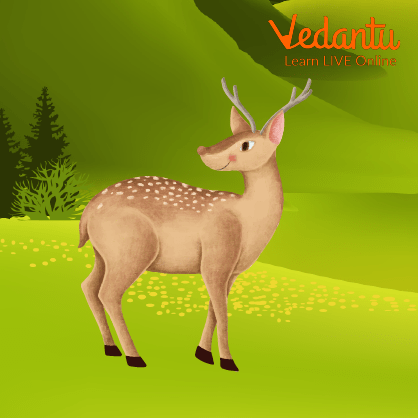
A Wandering Deer
Summary
Deer are large animals having four legs. There are 43 types of deer present. Except for Australia and Antarctica, deer are native to all countries. Reindeer deer are used as domestic deer. You can see deer in zoos, grassland, and many other places. Deers have two beautiful horns. In this article, we have discussed all the important points related to deer and some interesting facts about deer have also been discussed. In case of further doubts, feel free to ask in the comments.
FAQs on Amazing Deer Facts
1. What are some unique features that help a deer survive in the wild?
Deer have several special features for survival. Their eyes are on the sides of their head, giving them a wide field of vision to spot danger. They have large ears that can rotate to catch sounds from any direction. Additionally, their long, powerful legs allow them to run at high speeds to escape from predators.
2. What kind of food do deer eat and where do they typically live?
Deer are herbivores, which means they only eat plants. Their diet includes a variety of vegetation such as:
- Grasses and leaves
- Twigs and shoots
- Fruits and nuts
- Mushrooms
3. Why are baby deer, known as fawns, born with white spots?
The white spots on a fawn's coat are a form of camouflage. When a fawn lies still on the forest floor, these spots look like dapples of sunlight filtering through the trees. This helps the fawn blend in with its surroundings and stay hidden from predators like foxes and wolves while its mother is away foraging for food. These spots typically fade as the deer gets older and stronger.
4. What is the main difference between deer antlers and the horns on other animals?
The primary difference is that antlers are temporary, while horns are permanent. Antlers, found on male deer, are made entirely of bone and are shed and regrown every year. Horns, found on animals like sheep and goats, have a bony core covered by a layer of keratin (the same material as human fingernails) and they grow throughout the animal's life.
5. What is a deer's role in the forest food chain?
In the food chain, deer are primary consumers. As herbivores, they get their energy by eating plants (producers). They, in turn, become a vital source of food for secondary consumers (carnivores and omnivores) such as tigers, leopards, wolves, and bears, thus playing a crucial role in balancing the ecosystem.
6. Why do male deer grow and shed their antlers every year?
Male deer grow antlers primarily for the mating season. A large, impressive set of antlers can help a male attract a female and also serves as a weapon to fight off rival males. They shed their antlers after the mating season because carrying them requires a lot of energy. Shedding allows them to conserve energy during the winter, and they regrow a new, often larger, set the following year.
7. How do deer help their environment beyond just being part of the food chain?
Deer contribute to the health of their habitat in several ways. By eating fruits and berries, they help with seed dispersal, as the seeds pass through their digestive system and are deposited in new areas, helping forests to regenerate. Their grazing also helps to prune plants and control vegetation, which can prevent certain species from overgrowing and dominating the landscape.
