




How to Use Uppercase Letter Worksheets for Tracing and Writing Practice
Upper–case is an alphabet written in capital form. An uppercase alphabet is always used at the start of a sentence or at the beginning of the name and place.
For example: ‘A’ is uppercase, and ‘a’ is lowercase.
Questions:
1. Colour the balls with uppercase letters.

an image of some balls with B,D and C written on it using uppercase letters and a, and r is written on it using the lower letters..
2. Write the uppercase letters for the following lowercase letters.
i. a
ii. f
iii. g
iv. r
3. Write a word starting with the following uppercase letters:
i. A
ii. M
iii. C
iv. D
4. Write the missing uppercase letters.
___, B, C, D, __, F, __, H, I, J, ___, ___, M, N, O, __, Q, R, __, __, U, V, W, X, ___, Z.
5. Match the following uppercase letters with the lowercase letters:
6. Write the following words using all uppercase alphabets:
i. cat
ii. dog
iii. sister
iv. brother
7. Circle the word which doesn’t start with an uppercase letter:
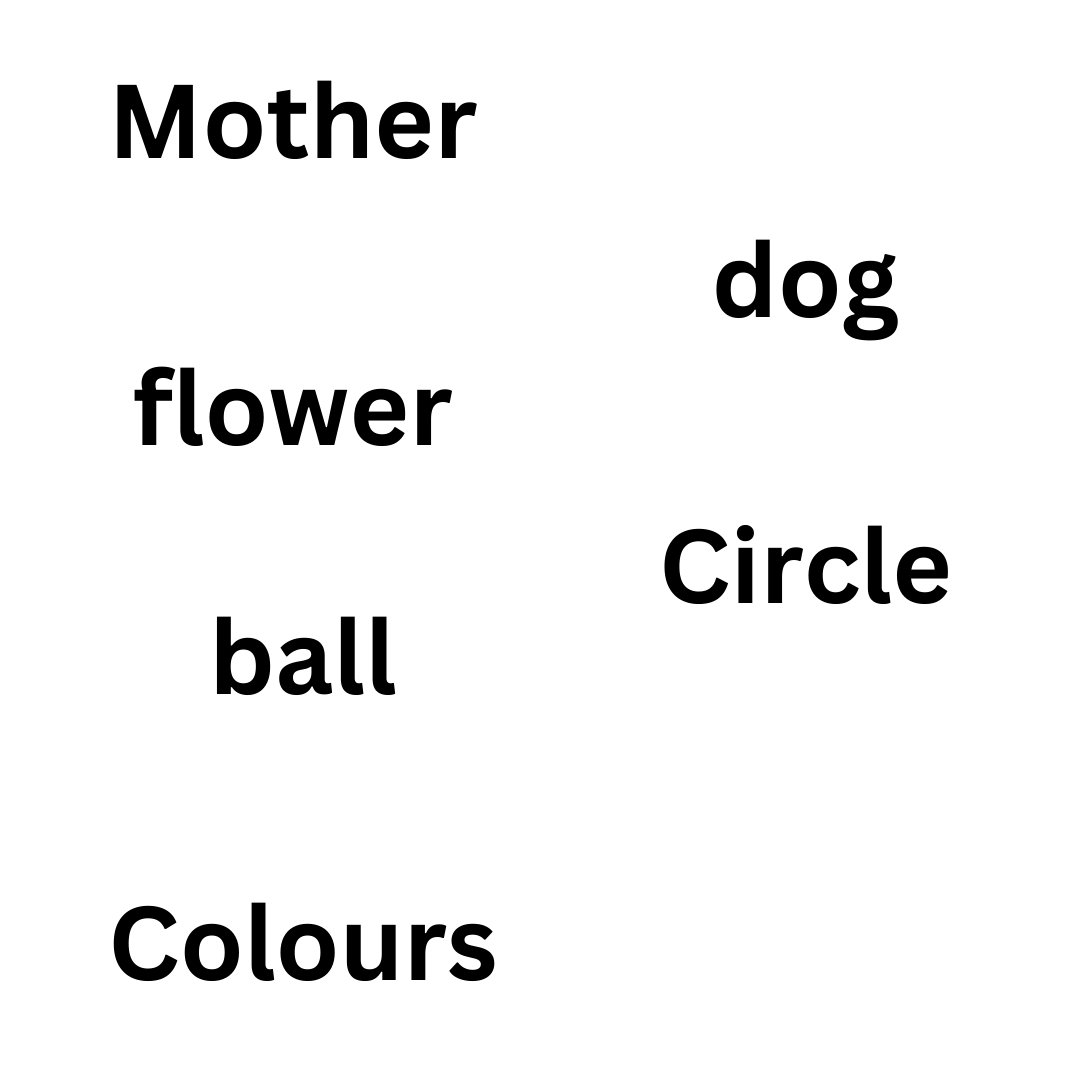
an image showing Mother, dog, ball, flower, circle, colors, using the upper and lower case alphabets written in it.
8. Identify by writing yes or no if the following alphabets are in uppercase or not:
i. C
ii. b
iii. A
iv. f
v. y
9. Identify the shapes given below and write their names using uppercase letters only:
i.

an image of a star
ii.

an image of a circle
iii.

an image of a rectangle
10. Write the uppercase letter which comes “After” the given letter:
i. D
ii. V
iii. T
iv. O
11. Identify the uppercase letter and write it in lowercase:
i. T
ii. F
iii. W
iv. K
12. Match the same uppercase letters:
13. Write the following sentences using the uppercase alphabets:
a. today i woke up at 8:00 a.m. then i got ready and went to school.
b. my name is vishika and i am 9 years old.
c. if you give me your pencil i will give you my pencil.
14. Match the given lower case alphabets with their upper case alphabets:
15. Write the following sentences using lowercase letters only.
a. MY NAME IS ANSHIKA AND I AM 15 YEARS OLD.
b. I DIDN’T GONE TO SCHOOL TODAY AS I HAD A FEVER IN THE MORNING.
c. IF YOU GIVE THE PENCIL I WILL GIVE YOU MY PENCIL.
Answers:
1.

an image of some balls with B,D and C written on it using uppercase letters and a, and r is written on it using the lower letters. B, D and C is colored with pink
2.
i. A
ii. F
iii. G
iv. R
3.
i. a
ii. m
iii. c
iv. d
4.
A, B, C, D, E , F, G, H, I, J, K, L, M, N, O, P , Q, R, S , T ,U, V, W, X, Y , Z.
5.
6.
i. CAT
ii. DOG
iii. SISTER
iv. BROTHER
7.

an image showing Mother, dog, ball, flower, circle, colors, using the upper and lower case alphabets written in it. dog, ball and flower is circled.
8.
i. Yes
ii. No
iii. Yes
iv. No
v. No
9.
i. STAR
ii. CIRCLE
iii. RECTANGLE
10.
i. E
ii. W
iii. U
iv. P
11.
i. t
ii. f
iii. w
iv. k
12.
13.
(a) TODAY I WOKE UP AT 8:00 A.M. THEN I GOT READY AND WENT TO SCHOOL.
(b) MY NAME IS VISHIKA AND I AM 9 YEARS OLD.
(c) IF YOU GIVE ME YOUR PENCIL I WILL GIVE YOU MY PENCIL.
14.
15. Writing the sentences using the lowercase alphabet.
a. my name is anshika and i am 15 years old.
b. i didn’t gone to school today as i had a fever in the morning.
c. if you give the pencil i will give you my pencil.
Importance of Letter Writing Worksheet for Kids
The writing alphabet worksheet contains exercises and fun activities for students who want to learn the English alphabet and use upper-case letters. They can practice writing the letters and also pronounce the sound of the letter. Practising the worksheet thoroughly will also enable students to improve their writing skills. They can also practice pronunciation with the help of the worksheets. The worksheet provides upper case letters that students can copy and practice their skills.
For KG-3 students, it is important to learn how the upper case letters are written. From A to Z, all the letters are provided in the worksheet and students can practice writing in the black spaces. This will help them learn different words that begin with these letters.
Benefits of Letter Writing Worksheet for Students
Vedantu experts have provided the worksheets for upper case letters to help children understand the English alphabet. They can learn the letters and their importance from these worksheets.
Writing upper-case letters will help them boost their writing skills. They can also improve their reading ability by pronouncing the letters and the sounds properly. This will help them learn challenging words easily.
Proper capital letter writing practice will enable students to score better marks in their tests. Whether it is a class test or the final exam, students can fetch good marks if they practice writing properly.
Download Upper Case Letter Writing Worksheets for Better Knowledge
Get the letter writing worksheet from Vedantu and start practising the letters now. You can easily learn how to write the letters from the worksheet and practice more to earn good marks. You can impress your teachers and parents with your new skills.
FAQs on Uppercase Letter Worksheets for Alphabet Practice
1. What are uppercase letter worksheets?
Uppercase letter worksheets are printable or digital practice sheets designed to help learners recognize, trace, and write capital letters (A–Z) correctly. These worksheets typically include:
- Letter tracing activities for proper formation
- Matching uppercase to lowercase letters
- Coloring and identifying capital letters
- Writing practice with guided lines
2. Why are uppercase letter worksheets important for early learners?
Uppercase letter worksheets are important because they help children learn correct letter formation and improve early reading and writing skills. They support:
- Alphabet recognition
- Hand-eye coordination
- Fine motor skill development
- Understanding of capital letter usage
3. How do you teach uppercase letters using worksheets?
You can teach uppercase letters using worksheets by combining tracing, repetition, and guided practice. Follow these steps:
- Start with letter recognition (identify the letter and its sound).
- Use tracing activities to model correct strokes.
- Encourage independent writing on blank lines.
- Reinforce learning with words that begin with the capital letter (e.g., A – Apple).
4. What is the difference between uppercase and lowercase letters?
The difference between uppercase and lowercase letters is that uppercase letters, also called capital letters, are larger and used at specific positions in writing. Key differences include:
- Uppercase letters: Used at the beginning of sentences and for proper nouns (e.g., London).
- Lowercase letters: Used for most other letters in a sentence (e.g., cat).
5. When should children learn uppercase letters?
Children typically learn uppercase letters during preschool or kindergarten, around ages 3 to 5. Uppercase letters are often taught first because:
- They are generally easier to form.
- They have simpler and more consistent shapes.
- They appear at the beginning of sentences and names.
6. What are the rules for using uppercase letters in English?
The main rule for uppercase letters in English is that they are used to begin sentences and for specific important words called proper nouns. Common capitalization rules include:
- At the beginning of a sentence
- For names of people, places, and organizations (e.g., Emma, Paris)
- For days, months, and holidays (e.g., Monday, December)
- For the pronoun I
7. How can uppercase letter worksheets improve handwriting?
Uppercase letter worksheets improve handwriting by guiding learners through correct stroke order and letter spacing. They help by:
- Providing dotted or dashed tracing lines
- Encouraging consistent letter size
- Practicing alignment on writing lines
- Building muscle memory through repetition
8. What activities are included in uppercase letter worksheets?
Uppercase letter worksheets typically include tracing, matching, and identification activities for capital letters A–Z. Common worksheet activities are:
- Trace and write exercises
- Circle or highlight the uppercase letter
- Match uppercase to lowercase letters
- Color the correct capital letter
- Write words that begin with the uppercase letter
9. Are uppercase letters easier to learn than lowercase letters?
Yes, uppercase letters are often easier to learn because they have simpler and more uniform shapes. For example:
- Many uppercase letters use straight lines (e.g., E, F, L).
- They are visually distinct and easier to identify.
- They do not change shape within words.
10. How often should children practice uppercase letter worksheets?
Children should practice uppercase letter worksheets regularly, ideally 10–15 minutes a day, to build strong letter recognition and handwriting skills. Effective practice includes:
- Focusing on 1–2 letters at a time
- Reviewing previously learned letters
- Combining tracing with independent writing
- Using fun reinforcement activities
