






Practice Worksheets: A Gift of Chappals – Class 7 English (CBSE, 2026-27)
1. Fill in the blanks:
(backyard, Madras, kind, chappals, bitter berry bush, Mahendra Varma Pallava Poonai, backyard)
Mridu was a young girl who lived in _______.
Ravi dragged Mridu back to the_________behind a _________.
We should be ____to animals.
The little kitty's name is______________.
The music teacher searched for his_______ in the verandah.
2. Match the words with their correct meanings:
3. Multiple Choice Questions:
" Go inside, this minute".Who said to whom?
Ravi said to Rukku Mani.
Ravi said to the music master.
" You gave the music master's chappal to the old beggar who turns up here."Who said these words to whom?

Chappal
Meena said to Mridu.
Ruku Mani said to Ravi.
"But my chappals wouldn't have fitted the beggar's feet." Who said these words?
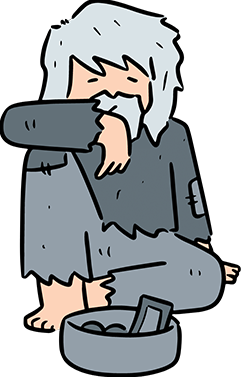
Beggar
Mridu
Ravi
Synonym for brashly:
In a confident but aggressive way
rash
Antonym for brash:
Timid/shy
Rough
4. Who was Mridu?
5. Where was she being taken one afternoon and why?
6. What did Mridu protest for?
7. What did she see while taking off her slippers?
8. What did Ravi want to show Mridu?
9. Why was the kitten kept hidden from Paati?
10. How did Ravi manage to get the milk for the kitten from the kitchen?
11. What was the cat named after?

Cat
12. Why did the cat get frightened?
13. Why did Ravi say that Lalli is not going to learn a single thing?
14. How did Mridu like the notes played by the music master?
15. Why did Amma ask Ravi to send the beggar away?
16. Why had the beggar come there?
17. What request did the beggar make to Amma?
18. What did Mridu tell Meena and Ravi?
19. What were Meena's eyes filled with and why?
20. What was suggested by Ravi?
21. What did Mridu find in the verandah and what did they do next?
22. Whose slippers were those?

Slippers
23. What was given to the music master to wear?
24. Why did Amma feel harassed?
25. Do you think the music master was not really happy to get the slippers that Amma gave him?
Answers to the Worksheet
1.
Madras
Backyard, bitter berry bush
Kind
Mahendra Varma Pallava
Chappals
2.
3.
(a) Ravi said to Rukku Mani.
(b) Ruku Mani said to Ravi.
(b) Ravi
(a) in a confident but aggressive way
(a) timid/ shy
4. Mridu was a young girl living in Madras(now Chennai) with her grandmother and grandfather.
5. One afternoon her grandmother took her to her aunt Rukku Manni's house to meet her cousins.
6. Mridu protested to allow her to take off her slippers outside after which she neatly set them out.
7. A pair of large black slippers that had turned grey because of a lot of dust on it.
8. Ravi wanted to show her the kitten, lying in the torn football in the backyard, that they found outside the gate in the morning.
9. The kitten was kept a secret from Paati as Amma warned them that Paati would go to Paddu Mama's house if came to know they had a cat.
10. Ravi went to the kitchen to grab a glass of milk. On be saying caught by Paati he said that he was too hungry and wanted to drink milk. Paati looked at him in a way that he had to drink half of the milk so that she doesn't get suspicious of him and said that I would wash the tumbler on my own. He then rushed to the backyard and poured the remaining milk into the coconut shell for the kitten.
11. The cat was named Mahendravarma Pallava Poonai after the Pallava king.
12. The cat got frightened by the screeching noise made by Lalli while playing the violin.
13. Ravi said so as the music master used to play the violin so fast that Lalli couldn't catch him up and always went off track.
14. Mridu was really very impressed with the way the music master played the violin. Mridu stared at that huge beringed hand moving effortlessly on the violin stem, making lovely music.
15. She said so as the beggar had been coming to their house for the whole week.
16. He came there as he was very hungry and wanted someplace to get some relief from the scorching heat.
17. He requested to let him have some rest under the neem tree as it was so hot outside that the tar on the road had melted and caused him blisters on the soles of his bare feet.
18. Mridu told them that the beggar may not have money to buy slippers and asked if they had any old pairs in the house.
19. Meena's eyes were filled with tears as she was upset to see the beggar's agony and thought that it was not fair.
20. Ravi suggested that they should look for a pair of slippers that would fit him.
21. She found a pair of slippers which then they gave to the beggar.
22. Those slippers belonged to the music master.
23. Gopu Mama's hardly worn new chappals.
24. Because the music master's slippers that he took off outside her house went missing.
25. The music master was actually happy to get Gopu Mama's chappals as his own slippers were worn out.
A Gift of Chappals Summary
The second chapter of the Class 7 NCERT English book is titled ‘A Gift of Chappals.’ The chapter is a tale of innocence, kindness, and familial camaraderie. It is a humorous story of four cousins – Mridu, Lalli, Ravi, and Meena, who help a beggar in an uncanny fashion. Mridu, the story’s protagonist, lives with her grandparents and goes to visit her aunt – Rukku Manni’s house. One day, while playing in the backyard, a beggar who frequents Rukku Manni’s house knocks on the door and asks for a pair of chappals. He had blisters on his feet, and the children took pity on the man’s condition. But, they could not find any usable pair of chappals.
But, Mridu had seen the music teacher’s chappals (he was also in Rukku Manni’s house at the time) and gave them away to the beggar. When the music master enquired about his footwear, the children told him the story and he was upset. So, the kids handed him Gopu Mama’s new chappals to the master. Thereafter, they narrated the incident to Rukku Manni whose anger soon gave away to amusement. The story ends with Rukku Manni laughing and thinking how Gopu Mama will react when he realises that his new chappals were given away to the music master.
In today’s day and age, solely sticking to NCERT textbooks is not enough. Students must go the extra mile to excel in their academics. Therefore, parents and teachers should ensure that young minds of Class 7 have enough ancillary study materials, such as A Gift of Chappals worksheets to expand their horizons.
Importance of Studying Class 7 English Chapter 2 Honeycomb – A Gift of Chappals
Every chapter of the English Honeycomb book not only helps a student strengthen their English but also teaches important life lessons. Below are some of the benefits of referring to the PDFs:
Students learn various new words such as scrawny, stowaway, beringed, etc.
Students learn the essential values of being moral, kind, and giving, especially to those in need.
The chapter – A Gift of Chappals class 7 – also introduces students to comprehension and other types of exercises.
Exercises from A Gift of Chappals PDF
Comprehension
Read the following paragraph and answer the questions.
“Mridu didn’t have much time to wonder about whose slippers they were, because Ravi dragged her to the backyard, behind a thick bitter-berry bush. There, inside a torn football lined with sacking and filled with sand, lay a very small kitten, lapping up milk from a coconut half-shell.”
1. Where had Mridu gone?
Ans: Mridu had gone to visit her Aunt Rukku Manni’s house.
2. What was the kitten doing?
Ans: The kitten was drinking milk from a coconut half-shell.
3. What name had Ravi given to the kitten?
Ans: Ravi had named the kitten – Mahendravarma Pallava Poonai.
4. What slippers are being referred to in the passage?
Ans: The music teacher’s slippers that Mridu gave to the beggar are being referred to in the paragraph.
All exercises from A Gift of Chappals worksheet with answers PDF contain exercises like the one given above.
Learn English with PDFs Curated by Experts
Become an English language maestro with Vedantu’s A Gift of Chappals Worksheet with answers PDFs. Meticulously prepared by adept and experienced subject matter experts, the PDFs are the one-stop destination for all children aiming to improve their English.
The PDFs will help students hone their command over English with unique exercises.
The PDFs are free to download and you can access them from the web or from your phone.
The content of the Class 7 A Gift of Chappals Question Answer PDFs has been devised in accordance with the latest CBSE guidelines.
English does not have to be tough anymore with academic PDFs. Say goodbye to conventional tutors and embrace a guide that will be there for you at all times. Vedantu has brought out English academic PDFs for Class 7 students that will ensure that they not only get better scores in exams but also can speak fluently and write confidently in English. So, download Vedantu’s PDFs now and revolutionise your learning experience.

FAQs on Practice Worksheets: A Gift of Chappals – Class 7 English (CBSE, 2026-27)
1. What are the most important topics from 'A Gift of Chappals' for the Class 7 English exam?
For the CBSE Class 7 English exam (2026-27), important questions from 'A Gift of Chappals' typically focus on the characters, plot, and underlying themes. Key areas to prepare are:
The character traits of the children—Mridu, Ravi, and Meena—and their innocent perspective.
The justification and consequences of their decision to give the music master's chappals to the beggar.
The central theme of kindness and compassion versus adult practicality.
The reactions of the adults, particularly Rukku Manni's blend of anger and understanding.
Ravi’s imaginative and humorous stories about the kitten, Mahendran.
2. What was the beggar's condition that moved the children to help him?
The children were deeply moved when the beggar showed them his bare feet. The soles had large, pink, peeling blisters from walking on the hot tar road. Seeing these painful, raw sores made the children feel immense sympathy and prompted their urgent search for a pair of chappals to give him.
3. How did Ravi try to prove that the kitten was of a superior lineage?
Ravi used his vivid imagination to build a grand history for the kitten. He named it Mahendravarma Pallava Poonai (MP Poonai) and claimed it was a descendant of the lion emblem of the Pallava kings. He further linked its ancestry to the Rishi-Cat of Mahabalipuram and even the cat-goddess Bastet from ancient Egypt, all to impress his cousins.
4. What is the central message or moral conveyed in the story 'A Gift of Chappals'?
The central message of 'A Gift of Chappals' is the value of true compassion and selfless charity. It highlights how children's innocence allows them to act on kindness without hesitation. The story also subtly teaches that while generosity is a great virtue, it is important to consider the consequences of our actions, as the children's well-intentioned gift created a difficult situation for the adults.
5. Do you think the children did the right thing by giving away the music master’s chappals? Justify your answer.
This is a value-based question. While the children's motive was pure and noble, stemming from genuine empathy for the beggar, their action was not entirely correct. They gave away someone else's property without asking, which is a form of stealing, and it led to conflict. This teaches an important lesson: kindness must be balanced with responsibility and respect for others' belongings.
6. How did Rukku Manni resolve the conflict over the missing chappals?
Rukku Manni resolved the conflict with practical wisdom. Although initially cross with the children, she understood their kind intentions. To pacify the furious music master, she decisively went inside and brought out her husband's (Gopu Mama's) almost-new chappals, offering them as a replacement. This quick thinking defused the situation effectively, even though she would have to face her husband's questions later.
7. Why is the title 'A Gift of Chappals' considered highly appropriate for this chapter?
The title is highly appropriate because the central event that drives the entire plot is the 'gift' of the chappals. This single act serves as a catalyst, revealing:
The innocent and selfless charity of the children.
The plight of the poor, represented by the beggar.
The differing reactions and values of the adults.
The story's conflicts, character revelations, and moral lessons all revolve around this simple but significant gift.
8. Compare the attitudes of the children and the adults towards the beggar.
The story presents a clear contrast in attitudes. The children reacted with pure, unfiltered empathy; their immediate response to the beggar's suffering was a desire to help, leading to their impulsive action. The adults, like Rukku Manni, were more pragmatic. While not unkind, their response was shaped by social norms and practical concerns. Rukku Manni's first instinct was to manage the situation by asking the beggar to leave, and her solution was aimed at resolving a social conflict rather than just expressing emotion.
